
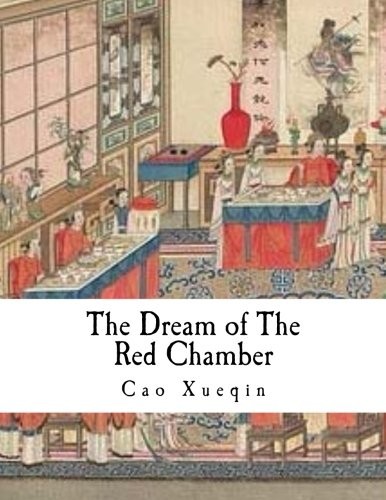
Dream of the Red Chamber
Cao Xueqin · 1715–1763 · China
Originally Hongloumeng (Chinese) · translated by David Hawkes
Why it matters
A great Qing household declines through the doomed love of its pampered heir, amid hundreds of characters and the whole Confucian world. China's supreme classic novel, left unfinished at Cao's death: melancholy, encyclopedic, endlessly reread.
At a glance
Vast cast, embedded poetry, and classical allusion across an unfinished epic.
Deep dive
A novel obsessed with predicting its own tragedy in advance — Baoyu is shown the fates of the women around him in a dream long before any of it happens — and then still manages to devastate on arrival.
Written for readers who have finished the book. No plot recap, and nothing here is safe to read first.
Themes & symbolism
The stone frame that opens the novel — this entire story as the earthly incarnation of a leftover fragment from Nüwa's repair of the sky, come down to experience human passion before returning to emptiness — is not decorative myth but the novel's actual thesis, restated at ground level a thousand times over in its hundreds of characters and its exhaustive rendering of aristocratic ritual, cuisine, medicine, and poetry. All of that splendor is the point and also exactly what the novel intends to show as illusory: the Jia household's wealth and refinement are rendered with such loving specificity that their eventual collapse lands as a genuine loss even though the book has been telling us, from its very first pages, that all of it was always going to dissolve. Baoyu's early dream-vision of the female characters' fates, delivered as riddling poems and songs he doesn't yet understand, means the entire novel unfolds under a kind of foreknowledge that the characters themselves lack — the reader knows, roughly, what's coming for Daiyu and the other women long before the narrative catches up, which turns the story's central tragedy into something closer to ritual fulfillment than surprise.
Daiyu and Baochai are not simply a love triangle's two options but two entire modes of being laid against each other: Daiyu's fragile brilliance, her poetry, her refusal to perform conventional social ease, versus Baochai's composure, tact, and family-approved suitability. The novel's sympathies are clearly with Daiyu's mode even as it stages her defeat by Baochai's, which is exactly the kind of loss the Buddhist frame predicts — the more delicate, authentic attachment is the one the material world has no room for. The Grand View Garden, built for the younger generation's poetry societies and idle afternoons, functions as a walled pocket of grace inside the larger household's slow financial and moral decay, and its eventual falling into disrepair alongside the family's fortunes makes the garden itself a kind of barometer for how much of the old refinement is still salvageable.
An Unfinished Novel and Its Ending
Cao Xueqin died having completed roughly the first eighty chapters; the forty that bring the novel to its familiar conclusion were added later by Gao E, and their authorship and fidelity to Cao's intentions remain disputed. This matters for how the ending should be read — some of its neatness, particularly the tidiness of who marries whom and when, may reflect Gao E's hand rather than Cao's original design, whatever that was. The dispute has fed an entire scholarly field, "Redology," devoted to reconstructing what the lost original ending might have looked like from clues embedded in the surviving chapters, especially the early dream-vision's prophetic poems, which some readers believe hint at darker or more scattered fates for several characters than the completed text ultimately delivers.
The last seal: what actually happens, and why it lands the way it does.
The ending, explained
The Jia family, without securing Baoyu's real consent, arranges his marriage to Baochai while deceiving him into believing, until the wedding itself, that his bride is Daiyu. Daiyu, already ill and brokenhearted, dies alone on the very night of the wedding — her death and his marriage occurring in the same hours, robbing him of any real choice in either. Once Baoyu understands the deception and grasps the full scope of what he's lost, and as the Jia family's fortunes finish collapsing into poverty and disgrace, he renounces the world entirely and becomes a Buddhist monk, vanishing from ordinary life. The stone has completed its circuit: fully immersed in worldly splendor and attachment, then permanently disenchanted by it.
Where to go next
 Su Tong · 1990Raise the Red LanternLvl 4Medium pace
 Ba Jin · 1933FamilyLvl 3Medium pace
 Luo Guanzhong · 1400Romance of the Three KingdomsLvl 8Fast paced
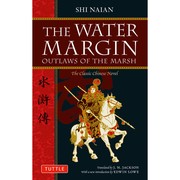 Shi Nai'an · 1370Water MarginLvl 7Fast paced
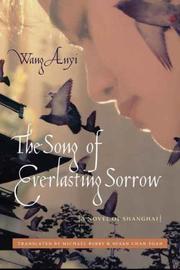 Wang Anyi · 1995The Song of Everlasting SorrowLvl 6Slow burn
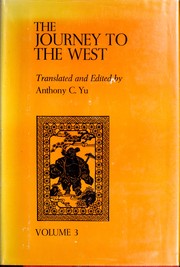 Wu Cheng'en · 1592Journey to the WestLvl 6Fast paced