
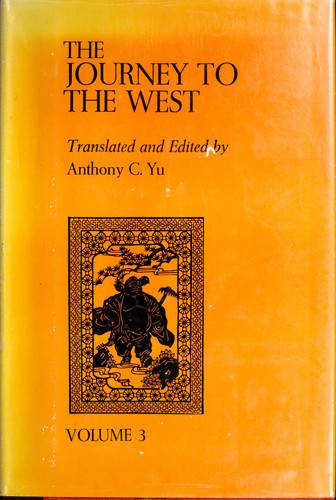
Journey to the West
Wu Cheng'en · 1500–1582 · China
Originally Xiyou Ji (Chinese) · translated by Anthony C. Yu
Why it matters
A monk, a mischievous immortal monkey, and their fellow pilgrims cross demon-haunted lands to retrieve Buddhist scripture from India. China's most beloved story, endlessly retold in opera, film, and animation ever since.
At a glance
Episodic classical prose dense with Buddhist and Taoist allegory across 100 chapters.
Deep dive
Underneath the slapstick and shape-shifting sits a fairly strict allegorical ledger: every pilgrim's flaw is a debt that has to be paid off, in full, before the journey is allowed to end.
Written for readers who have finished the book. No plot recap, and nothing here is safe to read first.
Themes & symbolism
The novel's comic surface — demons, disguises, endless capture-and-rescue cycles — sits over a deliberate Buddhist scaffolding in which the pilgrimage itself is the path to enlightenment and each companion's personal defect is an obstacle to be worked through rather than simply written out of the story. Sun Wukong's arc is the clearest case: his rebellion against Heaven, his declaration of himself as Great Sage Equal to Heaven, and his eventual imprisonment under a mountain establish him as raw, nearly limitless power unmoored from any discipline. His five hundred years of confinement don't erase that power; they set up the terms under which it will finally be put to use. The restraining headband that Tang Sanzang can tighten with a mantra is the novel's cleverest running joke and its clearest moral device at once — proof that Wukong's pride is being managed, not cured, chapter by chapter, trial by trial, until the discipline finally sticks on its own.
Pigsy's gluttony and lust and Sandy's more passive, dutiful obedience map the same idea onto lesser scales: these are not villains but flawed servants of Heaven working off a demotion, and their comic failures throughout the journey are exactly the kind of low-grade backsliding the narrative expects and forgives, in contrast to the outright malice of the demons who want to eat Tang Sanzang's flesh for immortality. That the great majority of those demons turn out to be escaped pets or subordinates of gods and bodhisattvas is not a throwaway twist — it collapses the distance between chaos and celestial order, implying that evil in this cosmos is less an external force than something that leaks out whenever the hierarchy above gets careless. Tang Sanzang himself, for all his nominal authority over the group, is the character with the least practical power and the most persistent gullibility, repeatedly mistaking demons in disguise for suffering mortals — a human frailty the narrative treats gently, since his faith and his flesh, not his cunning, are what the whole quest actually depends on.
Comedy as Vehicle, Not Distraction
It's worth resisting the modern instinct to read the novel's constant comedy as undercutting its religious content. The two registers are fused rather than competing: Wukong's vanity and trickster wit are inseparable from his status as the story's spiritual centerpiece, and the book's willingness to be genuinely funny about monks, gods, and bureaucratic Heaven is part of what has let it travel so easily into opera, film, television, and anime across centuries, without the allegory ever being lost in translation to newer forms. Heaven itself is drawn as a vast, faintly absurd civil-service bureaucracy, forever issuing edicts and losing track of its own subordinates, and the joke lands precisely because it never tips into blasphemy — the cosmos is silly and sacred at the same time, and the novel never asks you to choose between laughing at it and believing in it.
The last seal: what actually happens, and why it lands the way it does.
The ending, explained
After the pilgrims complete the full, symbolically exact count of eighty-one trials, they reach India and receive the scriptures directly from the Buddha. Back in China, each is rewarded according to how fully he has mastered his particular flaw: Tang Sanzang and Sun Wukong both attain Buddhahood, with Wukong specifically freed of his headband now that discipline no longer needs to be externally enforced; Pigsy and Sandy, whose failings were never fully overcome, receive real but lesser honors; and the dragon prince is restored to his true form. The ending isn't a reward for surviving adventures — it's a graduation, with each pilgrim's rank calibrated exactly to how much of himself he managed to change.
Where to go next
 Shi Nai'an · 1370Water MarginLvl 7Fast paced
 Luo Guanzhong · 1400Romance of the Three KingdomsLvl 8Fast paced
 Pu Songling · 1766Strange Tales from a Chinese StudioLvl 5Fast paced
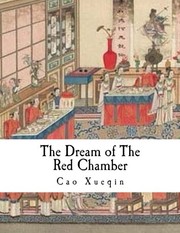 Cao Xueqin · 1791Dream of the Red ChamberLvl 9Slow burn
 Álvaro Mutis · 1993The Adventures and Misadventures of MaqrollLvl 6Medium pace
 Wang Anyi · 1995The Song of Everlasting SorrowLvl 6Slow burn