
Virgin Soil Upturned
Mikhail Sholokhov · 1905–1984 · Russia
Originally Поднятая целина (Russian)
Why it matters
A Cossack village is forced through violent collectivization by an outside Communist organizer who believes wholly in the cause. Sholokhov's other major epic, prized in the Soviet Union and still read as a document of the era's upheaval.
At a glance
A large cast of village characters across a straightforward chronological plot.
Deep dive
A city organizer arrives in a Don Cossack village to force it into a collective farm, and Sholokhov, writing with full state approval, still lets the human cost of that campaign show through the propaganda he was assigned to produce.
Written for readers who have finished the book. No plot recap, and nothing here is safe to read first.
Themes & symbolism
Semyon Davidov, a Leningrad factory worker sent to the Don village of Gremyachy Log as one of the thousands of urban Communists dispatched to organize collectivization, arrives with no farming knowledge and a mandate to force the local Cossacks into a kolkhoz over whatever resistance he meets. Sholokhov, unlike almost every other officially sanctioned novelist of the collectivization campaign, does not flatten that resistance into simple class enmity: Yakov Lukich, the peasant Davidov comes to rely on as a local organizer, is secretly sheltering a White officer in hiding and quietly sabotaging the very kolkhoz he appears to be building, and the novel lets his double life run for most of its length without tipping its hand.
Andrei Razmyotnov, one of the village's own Bolshevik organizers, is given the novel's clearest moment of conscience: ordered to evict a family, including small children, from their home during the depths of dekulakization, he refuses to finish the job and walks away, a scene Sholokhov stages without punishing Razmyotnov's hesitation as weakness. For a novel written explicitly to celebrate collectivization, the willingness to let one of its own organizers balk at the policy's human cost is a small but real crack in the propaganda it was commissioned to deliver.
Nagulnov's English Notebook
Makar Nagulnov, the village's most fervent revolutionary, spends his evenings teaching himself English from a battered grammar book, convinced that a world revolution is close enough that he will soon need to speak with the international proletariat directly. Sholokhov plays the detail for both comedy and pathos: Nagulnov's earnest, isolated study, conducted in a village where nobody else has any use for the language at all, is the clearest picture in the novel of a true believer whose faith has entirely outrun the material world around him, including his own collapsing marriage to Lushka, who leaves him for a life his ideology has no language for.
The Cattle Massacre
Faced with handing their livestock over to the collective, Gremyachy Log's peasants slaughter their own cattle and horses en masse rather than surrender them, a documented historical response to collectivization across the Soviet countryside that Sholokhov renders with unusual, visceral attention: animals killed not for meat or profit but purely so the state cannot have them. It is the novel's most honest scene of resistance, an act with no ideological cover story, and Sholokhov lets it stand largely without editorial comment, a rare instance of the book simply showing what collectivization actually cost its subjects.
The last seal: what actually happens, and why it lands the way it does.
The ending, explained
The counter-revolutionary conspiracy Yakov Lukich has been quietly protecting finally surfaces on the eve of harvest: the hidden White officer and an accomplice murder both Davidov and Nagulnov, striking down the novel's two central organizers within pages of each other. Sholokhov frames both deaths as martyrdoms for the collectivization project the novel was written to endorse, but the killings land with more grief than triumph, Nagulnov's abandoned English notebook and Davidov's unfinished harvest left as the actual last images, evidence that Sholokhov's sympathy for his characters as people kept outrunning his brief to write them as symbols.
Where to go next
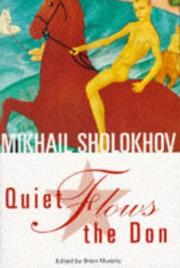 Mikhail Sholokhov · 1928And Quiet Flows the DonLvl 5Medium pace
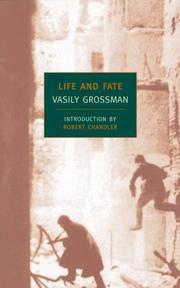 Vasily Grossman · 1980Life and FateLvl 7Medium pace
 Aleksandr Solzhenitsyn · 1962One Day in the Life of Ivan DenisovichLvl 3Fast paced
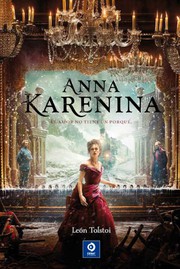 Leo Tolstoy · 1878Anna KareninaLvl 5Medium pace
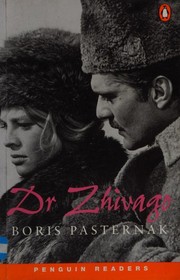 Boris Pasternak · 1957Doctor ZhivagoLvl 6Slow burn
 Maxim Gorky · 1906MotherLvl 3Medium pace