
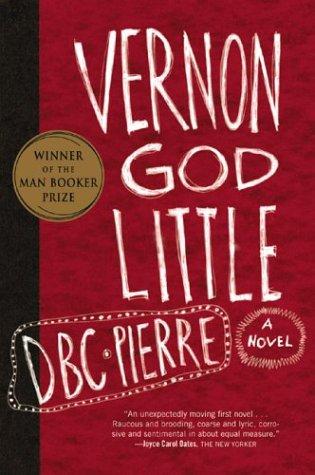
Vernon God Little
DBC Pierre · b. 1961 · Australia
Why it matters
A Texan teenager wrongly swept up as an accomplice in a friend's school shooting flees toward Mexico while American media turns his trial into a circus. Pierre's manic satire of tabloid culture and capital punishment won the Booker on his very first novel.
At a glance
Manic, slang-heavy first-person narration and satirical excess ask readers to keep pace with its own chaos.
Deep dive
A death-row satire that stages an execution in queasy real time — and dares you to laugh anyway.
Written for readers who have finished the book. No plot recap, and nothing here is safe to read first.
Themes & symbolism
Pierre's target isn't really Vernon's innocence, which the reader never doubts; it's the machinery that doesn't care about it. Lally Ledesma, the true-crime producer who essentially stage-manages Vernon's wrongful conviction into content, is the novel's real villain, and he wins for almost the entire book precisely because the truth is boring compared to the story he's selling. The town's hysteria after Jesus Navarro's massacre and suicide isn't really about grief; it's about the relief of having a simple monster to blame, and Vernon — awkward, foul-mouthed, guilty of nothing but bad luck and a smart mouth — fits the role the media needs filled far better than the actual complexity of what happened. Vernon's manic, profane, slang-saturated narration is the novel's formal argument: America's media culture has trained even its victims to narrate their own lives in the same hyperbolic, entertainment-ready register that's about to convict them.
The satire refuses to let the death penalty read as straightforwardly tragic, which is the most unsettling choice in the book. Pierre keeps the tone cartoonish even as the stakes turn lethal, insisting that spectacle-driven justice is not a solemn failure of the system but the system working exactly as designed — profitable, absurd, and nearly fatal all at once.
Lally Ledesma and the shape of American spectacle
Lally isn't an outside manipulator corrupting an otherwise sound process; he's simply the first person in the novel savvy enough to see that the town's grief and the justice system's procedures are both raw material for a better story. He needs Vernon guilty more than the town does, because a guilty Vernon is the ending his show requires, and Pierre keeps finding grimly funny ways to show due process bending itself around that need rather than the reverse. The satire lands because it never treats Lally as an aberration — he's just the logical endpoint of a culture that has already decided real events are worth less than well-produced ones, and a small-town Texas courtroom turns out to be exactly as vulnerable to that logic as anywhere else.
The last seal: what actually happens, and why it lands the way it does.
The ending, explained
Vernon is marched to the point of lethal injection, Pierre rendering the process in excruciating, almost hallucinatory detail rather than cutting away — the novel's one moment where the comedy goes fully silent and the reader is made to sit inside the machinery it's spent the whole book satirizing. A last-minute reprieve arrives just before the injection, driven by new evidence that exposes Lally's manipulations and fabrications, and Vernon is exonerated and released. Pierre refuses to let the rescue feel triumphant, though — the tone stays sardonic even in relief, because the point was never really whether Vernon survives the system but that the system nearly killed an innocent teenager purely for ratings, and would do it again to the next kid unlucky enough to be interesting.
Where to go next
 Kiran Desai · 2006The Inheritance of LossLvl 6Slow burn
 Michel Houellebecq · 1998The Elementary ParticlesLvl 5Medium pace
 Percival Everett · 2001ErasureLvl 6Fast paced
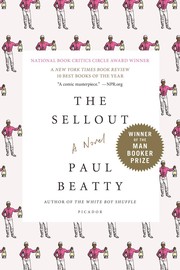 Paul Beatty · 2015The SelloutLvl 6Fast paced
 John Kennedy Toole · 1980A Confederacy of DuncesLvl 4Fast paced
 Jaroslav Hašek · 1923The Good Soldier ŠvejkLvl 3Fast paced