
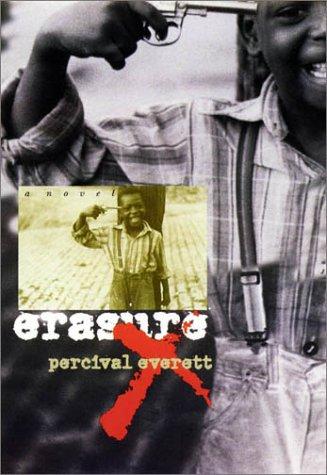
Erasure
Percival Everett · b. 1956 · United States
Why it matters
A frustrated novelist writes a parody of 'authentic' Black urban fiction as a joke, then watches it become the very success he despised. Satire sharp enough to double as prophecy, later adapted into the film American Fiction.
At a glance
A novel-within-a-novel structure satirizing publishing's racial expectations.
Deep dive
What happens when a novelist writes the book he despises most as a joke, and the industry can't tell the difference between satire and the real thing.
Written for readers who have finished the book. No plot recap, and nothing here is safe to read first.
Themes & symbolism
Monk Ellison's crisis is that he writes difficult, allusive literary fiction — Aeschylus retellings, structuralist wordplay — and is told, over and over, that it isn't "Black enough," as if Blackness were a genre with mandatory content rather than a fact about the person holding the pen. "My Pafology" (retitled "Fuck") is Monk's furious parody of the ghetto-misery novel the industry keeps asking him for instead, dashed off in a rage he assumes is so grotesquely overdone that no one could mistake it for sincere — and Everett's cruelest joke is that the industry can't tell parody from product, because it was never actually listening for quality, only for a marketable silhouette of suffering. The novel indicts a literary marketplace that claims to want authentic Black voices while actually wanting a specific, profitable caricature, and it does this from inside a novel that is itself formally restless — interpolated short stories, a fragmentary academic paper, screenplay pages — daring its own publisher to prove it can tolerate the difficulty Monk keeps getting punished for.
The novel-within-the-novel structure — full chapters of "My Pafology" reproduced verbatim, dialect and all — forces the reader into the same trap Monk springs on the publishing world: you have to sit with the parody long enough to feel its ugliness work on you, which is exactly how satire curdles into complicity. Everett never lets Monk off the hook as a pure victim, either; his contempt for the book he's writing, and for the audience he assumes is beneath it, has its own condescension baked in, so the satire cuts in two directions — at an industry that commodifies Black pain, and at an intellectual who can't quite hide his own disdain for the readers that pain might actually speak to.
From Page to Oscar: American Fiction
Everett published Erasure in 2001 to strong reviews and modest sales, a fate that mirrors Monk's own inside the novel — the serious book ignored, the machinery of taste rewarding something cruder. Its 2023 film adaptation, American Fiction, won the Oscar for Best Adapted Screenplay and made the novel a bestseller more than two decades after its original release, an irony Everett has pointed out with the same dry exactness he brings to the book itself: the satire about a novel becoming a hit for the wrong reasons became, itself, a hit that drew new readers for reasons partly disconnected from the book's harder edges. The film smooths some of Everett's formal experiments — the interpolated fiction, the Euripides retelling that runs alongside Monk's family plot — into a more conventional dramedy, which only sharpens what's distinctive about the source: Erasure is a novel that refuses to resolve into a tidy moral even when its own adaptation found one.
The last seal: what actually happens, and why it lands the way it does.
The ending, explained
"Fuck" explodes into a phenomenon Monk never intended — a huge advance, a film deal, glowing reviews from critics who praise its unflinching authenticity — while his own serious work continues to gather dust, and Everett lets this success spiral without ever letting Monk enjoy it; every payoff arrives coated in disgust. The novel's final turn of the screw puts Monk, in his identity as himself rather than as his pseudonym, on the judging panel for a major fiction prize, where his own fraudulent book — the one thing he was sure was unpublishable garbage — becomes a finalist he must now evaluate alongside real, serious work, including fiction he respects. Everett refuses to resolve the standoff: the novel ends with the prize decision essentially suspended, Monk caught between exposing his own hoax and watching it complete itself, because the point was never to punish or vindicate him cleanly but to strand him inside the same absurd machine he built to mock, with no exit that isn't also an admission of defeat.
Where to go next
 Percival Everett · 2024JamesLvl 5Fast paced
 Charles Johnson · 1990Middle PassageLvl 5Fast paced
 Joshua Cohen · 2021The Netanyahus: An Account of a Minor and Ultimately Even Negligible Episode in the History of a Very Famous FamilyLvl 6Medium pace
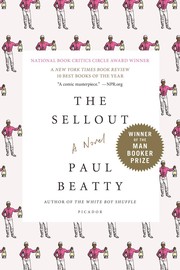 Paul Beatty · 2015The SelloutLvl 6Fast paced
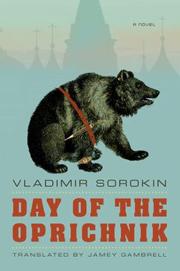 Vladimir Sorokin · 2006Day of the OprichnikLvl 5Fast paced
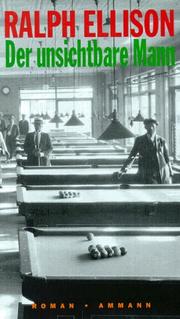 Ralph Ellison · 1952Invisible ManLvl 7Medium pace