
The Good Soldier Švejk
Jaroslav Hašek · 1883–1923 · Czechoslovakia
Originally Osudy Dobrého Vojáka Švejka (Czech) · translated by Cecil Parrott
Why it matters
An amiable, possibly-feigning-idiot conscript navigates the Austro-Hungarian army's bureaucratic absurdity with unstoppable cheerfulness. Pacifist satire disguised as slapstick, and Czech literature's great comic monument.
At a glance
Episodic, anecdote-driven comedy told in plain, accessible colloquial prose.
Deep dive
An endlessly cheerful conscript drowns every officer who tries to discipline him in folksy anecdotes — and the novel never quite settles whether he's a fool or the war's shrewdest saboteur.
Written for readers who have finished the book. No plot recap, and nothing here is safe to read first.
Themes & symbolism
Švejk's great comic weapon is garrulousness: whatever situation he's dropped into, arrest, an absurd post as an army chaplain's batman, a misdirected troop train, he produces a folksy story about some acquaintance from his Prague neighborhood, delivered with total sincerity and at the worst possible moment, and it functions as camouflage, deflecting every attempt by the officer class to actually communicate with or punish him. Hašek never resolves whether Švejk genuinely is the 'official idiot' the army discharged him as, taking every order at hyper-literal face value and generating chaos by accident, or a sly saboteur performing idiocy on purpose, using exaggerated obedience as a weapon against a war and an empire he privately regards as absurd. That irresolution is the entire mechanism of the joke, since it lets the same behavior read simultaneously as harmless incompetence and devastating satire, depending on how much credit you're willing to give him.
The real target throughout is the Austro-Hungarian imperial bureaucracy itself — vain, drunk, obsessed with protocol that means nothing, staffed by officers more dangerous to their own men than to any enemy — rather than any single nation or side of the war, and the bawdy, deeply colloquial Czech vernacular Hašek writes in, a real departure from formal literary Czech at the time, is part of the satire's target too: this is a book written to be funny to ordinary people, not admired by literary gatekeepers, and that populist register is exactly what let it become a genuinely mass phenomenon rather than a merely respected one.
An Unfinished Monument
Hašek died of heart failure in 1923 before completing the planned multi-volume novel, and the text simply stops mid-episode — there's no climax to withhold, because none was written. That incompleteness suits the book better than a tidy ending would have: Švejk's war has no destination, only an endless supply of fresh absurdity, and the manuscript trailing off mid-anecdote is oddly true to a character defined by never actually arriving anywhere.
Švejk's Afterlife
The novel's influence runs directly through Joseph Heller's Catch-22 and every subsequent absurdist anti-war satire, but its deepest legacy is domestic: Švejk became a genuine Czech folk figure, with statues in Czech towns and pubs, and his brand of passive, deniable resistance under an occupying bureaucracy read as prophetic once Czechoslovakia spent much of the following century under German and then Soviet domination. 'Švejking' entered the language as a term for exactly the survival strategy the book depicts — smiling, obedient noncompliance as a weapon of the powerless.
Where to go next
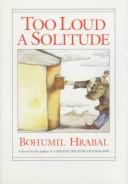 Bohumil Hrabal · 1976Too Loud a SolitudeLvl 6Slow burn
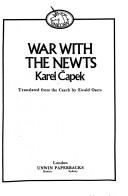 Karel Čapek · 1936War with the NewtsLvl 4Medium pace
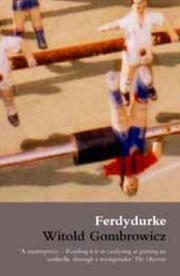 Witold Gombrowicz · 1937FerdydurkeLvl 7Fast paced
 Milan Kundera · 1984The Unbearable Lightness of BeingLvl 5Slow burn
 DBC Pierre · 2003Vernon God LittleLvl 5Fast paced
 Ivan Goncharov · 1859OblomovLvl 4Slow burn