

The Inheritance of Loss
Kiran Desai · b. 1971 · India / United States
Why it matters
A retired judge and his orphaned granddaughter's household in the Himalayan foothills unravels alongside their cook's son's precarious life as an undocumented immigrant in New York. Winner of the 2006 Booker Prize, tracking globalization's costs from both ends at once.
At a glance
Dual storylines and a large cast shift between the Himalayas and New York, woven with wry, digressive humor.
Deep dive
How Desai pairs a self-hating colonial judge with an invisible immigrant cook's son to show humiliation working the same machine from opposite ends.
Written for readers who have finished the book. No plot recap, and nothing here is safe to read first.
Themes & symbolism
Jemubhai Popatlal Patel's Cambridge education left him fluent in English disdain for everyone, including himself: he bleaches his own skin with his wife's cosmetics, beats her for reminding him where he came from, and ends up an old man who loves his dog Mutt with a tenderness he's never once extended to a human being. That displaced devotion is the novel's cruelest symbol — colonialism didn't just subordinate him, it rewired his capacity for love toward a creature that asks nothing about his origins. Desai builds Biju, the cook's son grinding through illegal kitchen work in New York, as the judge's structural mirror rather than his opposite: both men are humiliated by a Western order they can't fully enter, but the judge assimilated enough to despise his own people from the inside, while Biju never assimilates at all, remaining permanently, invisibly outside — no inheritance of privilege to soften the loss for him.
The Gorkhaland insurgency erupting around Kalimpong isn't background noise; it's the novel's argument that postcolonial nations reproduce the very ethnic hierarchies that colonialism installed, with Nepali-origin Indians demanding recognition from an Indian state that treats them exactly as Britain once treated India. Sai and Gyan's romance collapses under this pressure precisely because it can't survive as a private matter once Gyan is pulled into the insurgency — Desai insisting throughout that intimacy in this world is never insulated from politics for long.
Two Displacements, One Machine
Read side by side, the judge's story and Biju's function as a diptych spanning two generations of the same colonial wound: the judge, humiliated abroad decades earlier, comes home to inflict that humiliation on his household; Biju, humiliated in real time in New York's basement kitchens, has nowhere to bring his version home to except failure. Desai refuses either man a redemptive arc — the novel's real subject is how loss compounds across generations rather than resolving in any of them.
Food as Ledger of Status
Almost every relationship in the novel is negotiated through what's cooked, served, and eaten — the cook's decades of devoted labor for a judge who barely acknowledges his existence, Sai's Anglicized tastes versus Gyan's family's simpler meals, Biju rotating through New York kitchens that serve cuisines he'll never be invited to sit down to as a guest. Desai uses food less as texture than as a running measurement of who has power over whom, since in this novel proximity to someone else's table is rarely the same thing as belonging at it.
The last seal: what actually happens, and why it lands the way it does.
The ending, explained
The insurgency's violence keeps encroaching on the judge's crumbling household in Kalimpong even as the novel closes, offering no restoration of the order Jemubhai spent his life mourning. Biju, robbed of his money and papers in a final indignity before leaving America, returns to India diminished rather than triumphant, and his reunion with his father the cook is muted and awkward rather than joyful — Desai denying the immigrant narrative its expected uplift on purpose. The novel ends on loss distributed rather than redeemed, insisting that globalization's costs, on both the sending and receiving end, land hardest on people with the least inheritance to cushion them.
Where to go next
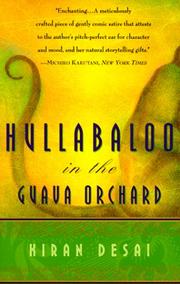 Kiran Desai · 1998Hullabaloo in the Guava OrchardLvl 3Fast paced
 Anita Desai · 1980Clear Light of DayLvl 5Slow burn
 Salman Rushdie · 1981Midnight's ChildrenLvl 8Medium pace
 Aravind Adiga · 2008The White TigerLvl 4Fast paced
 Shehan Karunatilaka · 2022The Seven Moons of Maali AlmeidaLvl 6Fast paced
 Zadie Smith · 2000White TeethLvl 5Medium pace