
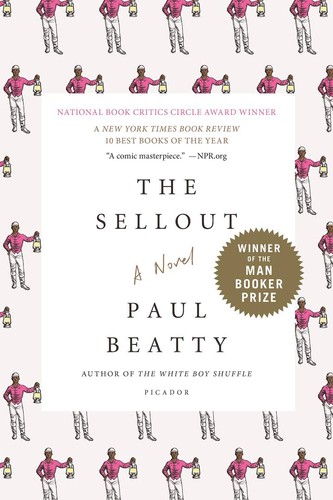
The Sellout
Paul Beatty · b. 1962 · United States
Why it matters
A Black farmer in a Los Angeles suburb erased from the map tries reinstating slavery and segregation to put it back on, and ends up before the Supreme Court. Beatty's Booker winner is American satire at its most gleefully purposeful.
At a glance
Dense, rapid-fire satirical riffing demands close attention to land every joke.
Deep dive
Why a Black narrator reinstating slavery and segregation reads as protest art, not self-hatred, and what putting his hometown back on the map is really an argument for.
Written for readers who have finished the book. No plot recap, and nothing here is safe to read first.
Themes & symbolism
Beatty's premise is a dare: the narrator, raised on an "agrarian ghetto" farm in Dickens, a majority-Black Los Angeles suburb quietly erased from the map by an embarrassed city government, responds to that erasure by owning a slave (Hominy, a washed-up Little Rascals actor who begs for the role out of nostalgia for a clarity he thinks segregation gave him) and painting segregation signs back onto local buses and the high school. The joke's edge is that it works — Dickens's crime rate drops, its residents rally around a shared identity — which is the novel's real argument: color-blind "post-racial" America, this is written squarely inside the Obama years, hasn't ended racial hierarchy, it's just stopped narrating it, and an entire town can improve the moment someone starts telling the truth about where it stands.
The narrator's father, a self-styled "liberation psychologist" who ran incendiary experiments on his own son to prove Black self-hatred could be cured or induced at will, supplies the intellectual scaffolding the son inherits and can't quite escape — the whole novel is staged, formally, as a Supreme Court hearing, the narrator on trial for his sign-painting and slaveholding, which lets Beatty structure page after page of stand-up-paced riffing as a kind of legal defense of satire itself. Hominy's willing, joyful servitude is the book's most uncomfortable symbol: a man choosing bondage as an act of nostalgia and control, which the novel refuses to either fully condemn or fully excuse, because doing either would let the reader off the hook too easily.
Unmapping and Remapping Dickens
The city literally strikes Dickens from Los Angeles's official map before the novel starts — a bureaucratic erasure of a whole Black community's existence that mirrors, in miniature, the historical erasures the book keeps circling: slavery's absence from textbooks, the vanished specificity of segregation-era case law. Repainting borders, planting a whites-only sign on the town's welcome placard, and restoring a segregated school are all, in this light, acts of cartography as much as provocation — an insistence on being visible again, on the town's own terms, even if the terms are grotesque.
Satire That Refuses to Resolve
Beatty never gives the Supreme Court case, or the reader, a clean verdict. The novel's closing passages keep circling back to the same unresolved question — whether America's supposedly post-racial moment is a genuine advance or just a more sophisticated cover story — without settling it, because settling it would betray the book's whole method. The comedy is relentless precisely so the absence of resolution can't be mistaken for a failure of nerve; it's the point.
Where to go next
 Percival Everett · 2001ErasureLvl 6Fast paced
 Joshua Cohen · 2021The Netanyahus: An Account of a Minor and Ultimately Even Negligible Episode in the History of a Very Famous FamilyLvl 6Medium pace
 Jonathan Franzen · 2001The CorrectionsLvl 6Medium pace
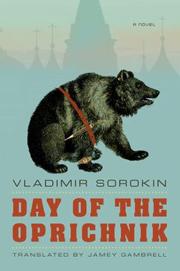 Vladimir Sorokin · 2006Day of the OprichnikLvl 5Fast paced
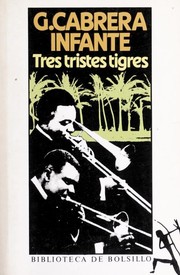 Guillermo Cabrera Infante · 1967Three Trapped TigersLvl 9Slow burn
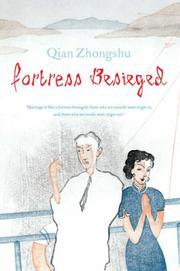 Qian Zhongshu · 1947Fortress BesiegedLvl 5Medium pace