
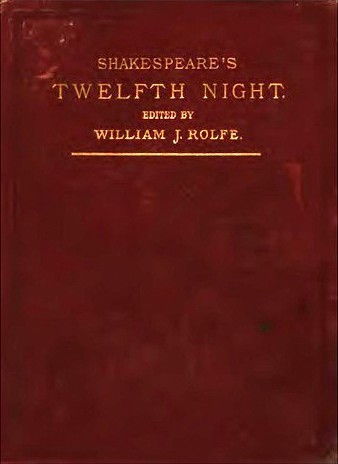
Twelfth Night
William Shakespeare · 1564–1616 · England
Why it matters
Shipwrecked and disguised as a boy, Viola serves a lovesick duke while a countess falls for her in trousers. Shakespeare's most bittersweet comedy braids cross-dressing farce with real melancholy, and lets Malvolio's humiliation cut deeper than the laughter around it can fully absorb.
At a glance
Comic wordplay and a layered disguise plot reward attention without demanding it constantly.
Deep dive
A shipwrecked young woman disguises herself as a boy to survive, and the household she ends up serving falls in love with her performance in ways that leave one of its members humiliated far past what the comedy can fully laugh off.
Written for readers who have finished the book. No plot recap, and nothing here is safe to read first.
Themes & symbolism
Viola's disguise as Cesario is played for romantic farce, Duke Orsino sends his new page to woo Olivia on his behalf, and Olivia falls for the messenger instead of the message, but Shakespeare keeps the comedy honest about what the disguise costs Viola personally: she has to watch the man she's fallen for pine after another woman while she herself can say nothing, trapped inside a persona built for someone else's romantic errand. The gender confusion resolves the plot but doesn't erase what it revealed along the way, that Olivia's attraction to Cesario and Orsino's growing, half-acknowledged comfort with his new page both suggest desire moving toward a person rather than strictly toward the gender that person is presenting, an ambiguity the ending's tidy heterosexual pairings don't fully close off.
Malvolio runs alongside this as the play's darker double plot: tricked by a forged letter into believing Olivia loves him, he responds by cross-gartering himself in yellow stockings and grinning absurdly at her, and the household's prank escalates from mockery into something closer to genuine cruelty, locking him in a dark room and gaslighting him about his own sanity. Shakespeare lets the joke curdle on purpose. Malvolio's puritanical self-regard makes him an easy target, but the punishment massively outscales the offense, and his final, furious promise of revenge on the whole company is one of the few moments in Shakespearean comedy where the audience is left uncertain whether it was actually supposed to be laughing that hard.
Feste's Songs as the Comedy's Undertow
Feste, Olivia's professional fool, gets some of the play's funniest wordplay and also its saddest music, closing the entire comedy not on a wedding scene but on a solo song about wind and rain and growing old, sung directly to an audience that's just watched three marriages resolve everything neatly. That closing note is deliberate: Feste has spent the play observing every character's foolishness from just outside it, paid to entertain rather than to participate, and his final song insists that the world keeps turning, indifferently, past the tidy ending comedy usually promises.
The last seal: what actually happens, and why it lands the way it does.
The ending, explained
Viola's twin brother Sebastian, believed drowned in the shipwreck that separated them, turns out to have survived and washed ashore separately, and Olivia, mistaking him for Cesario in a case of confused identity the play never quite makes plausible outside its own dream logic, marries him within hours of meeting him. The mix-up sorts itself out once Viola and Sebastian finally appear together, proving neither of them is a ghost, and Orsino, discovering the page he'd grown fond of is a woman who's loved him the whole time, redirects his affection to Viola with a speed the play doesn't pretend is earned so much as generically required. Malvolio alone refuses to be folded into the general reconciliation, storming off with his vow of revenge unresolved, a loose thread Shakespeare leaves visibly untied while everyone else pairs off.
Where to go next
 William Shakespeare · 1593Richard IIILvl 6Fast paced
 William Shakespeare · 1595Romeo and JulietLvl 4Fast paced
 William Shakespeare · 1596A Midsummer Night's DreamLvl 3Fast paced
 William Shakespeare · 1601HamletLvl 6Medium pace
 William Shakespeare · 1603OthelloLvl 6Fast paced
 William Shakespeare · 1606King LearLvl 7Medium pace