
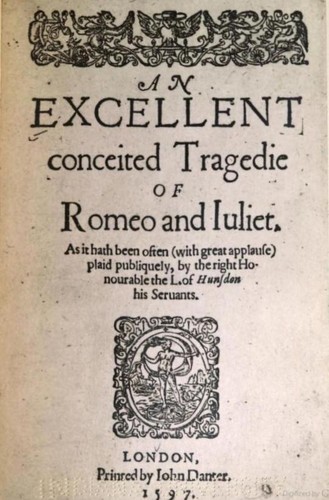
Romeo and Juliet
William Shakespeare · 1564–1616 · England
Why it matters
Two teenagers from feuding households fall in love inside a single week and are dead within it. Shakespeare's most quoted love story is also his bleakest civic fable: a city's inherited hatred, not fate alone, kills its children.
At a glance
Frequently taught first for a reason: swift plotting and comparatively plain verse.
Deep dive
Shakespeare tells you in the opening lines exactly how this ends, then spends the rest of the play daring you to keep hoping anyway, and to notice how little the two lovers' choices actually determine the outcome.
Written for readers who have finished the book. No plot recap, and nothing here is safe to read first.
Themes & symbolism
The Chorus's opening sonnet announces the star-crossed lovers' fate before either of them has spoken a word, which means the play's real suspense was never going to be about whether Romeo and Juliet survive; it's about watching how thoroughly an entire city's inherited hatred, not fate in any mystical sense, manufactures an outcome that individual love and individual choice can't outrun. The feud between the Montagues and Capulets is never explained, which is exactly the point: nobody on stage, least of all the two households themselves, can say what started it, and that untraceable origin is what makes the violence feel structural rather than personal, a habit the city keeps performing because it has forgotten how to stop.
Shakespeare compresses the entire courtship and catastrophe into less than a week, and the speed is doing real work: Romeo and Juliet fall in love, marry in secret, and die within days, which reads less as adolescent recklessness than as the only timeline available to two people trying to build something private and durable inside a city that keeps interrupting every private thing with public violence. Mercutio's dying curse on both houses, and Friar Laurence's well-meaning plans collapsing at every turn through bad timing rather than bad intentions, both reinforce the same argument: this isn't a tragedy of flawed individuals so much as a tragedy of a civic structure that leaves no room, and no time, for two people to simply be left alone.
Mercutio's Wit as the Play's Real Casualty
Mercutio has no counterpart in Shakespeare's source material and no romantic plot of his own; he exists almost entirely to talk, brilliantly and cynically, about a love he plainly doesn't believe in the way Romeo does, and his death midway through the play, provoked by a duel he picks mostly out of loyalty and boredom, is the hinge the whole tragedy turns on. Once Mercutio is dead, Romeo's furious revenge killing of Tybalt makes the earlier comic register impossible to sustain, and Shakespeare loses his wittiest voice at exactly the moment the play needs to stop being able to laugh at anything.
The last seal: what actually happens, and why it lands the way it does.
The ending, explained
Friar Laurence's plan, a sleeping potion meant to fake Juliet's death so she can wake in the family tomb and escape with Romeo, fails only because a plague quarantine delays the message explaining it, and Romeo hears instead, from his servant, the false report that Juliet has actually died. He buys poison and reaches her tomb before the friar can catch up to correct the mistake, drinks it beside her body, and dies moments before she wakes, discovers him dead, and stabs herself with his dagger rather than survive without him. Shakespeare gives the surviving families a final reconciliation over the children's bodies, the Montagues and Capulets finally ending their feud, but the play refuses to present that peace as worth the price: two households achieve in one morning of grief what years of ordinary reason apparently couldn't manage, which is less redemption than an indictment of how long they let the alternative go on.
Where to go next
 William Shakespeare · 1593Richard IIILvl 6Fast paced
 William Shakespeare · 1596A Midsummer Night's DreamLvl 3Fast paced
 William Shakespeare · 1601HamletLvl 6Medium pace
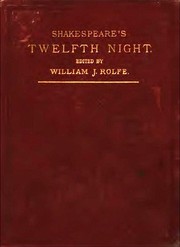 William Shakespeare · 1602Twelfth NightLvl 4Fast paced
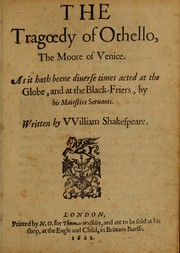 William Shakespeare · 1603OthelloLvl 6Fast paced
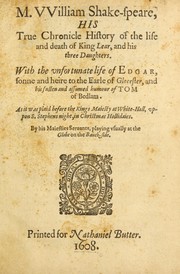 William Shakespeare · 1606King LearLvl 7Medium pace