
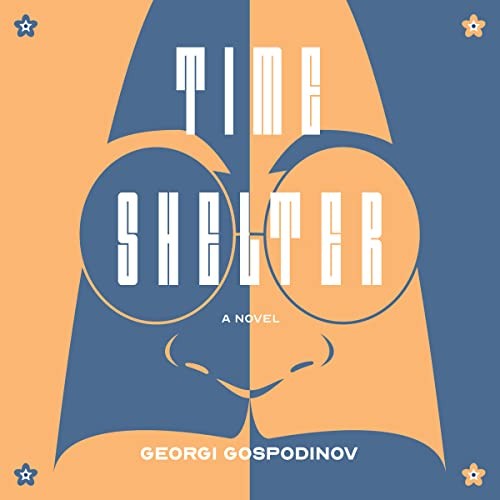
Time Shelter
Georgi Gospodinov · b. 1968 · Bulgaria
Originally Vremeubezhishte (Bulgarian) · translated by Angela Rodel
Why it matters
A clinic recreates past decades floor by floor to calm dementia patients, a therapy so popular that whole nations start voting on which decade to move back into. Gospodinov's tender, absurdist allegory for Europe's retreat into nostalgia, and the first Bulgarian novel to win the International Booker Prize.
At a glance
Essayistic digressions and a conceptual, allegorical structure outweigh plot in the traditional sense.
Deep dive
A clinic built floor by floor out of the past becomes Europe's referendum on which decade it would rather live in than face its present.
Written for readers who have finished the book. No plot recap, and nothing here is safe to read first.
Themes & symbolism
Gaustine's clinic reconstructs entire decades in period-perfect detail — furniture, newspapers, radio static — as therapy for dementia patients who can no longer locate themselves in the present but light up the moment they're handed their youth back. Gospodinov literalizes a metaphor everyone already uses: the past as a room you can walk back into. The novel's real subject is what happens once that comfort proves contagious to people whose memories are perfectly intact, who start choosing a decade the way you'd choose a holiday.
That contagion scales upward with mordant logic — clinic floors become whole wings, then towns, then countries holding referenda on which past to move back into collectively. It's a direct, barely disguised satire of the nostalgia politics driving Brexit and the continent's resurgent nationalisms: the novel takes "take our country back" at its most literal, and shows that a politics organized around a remembered golden age has no working brakes, because everyone's golden age excludes something everyone else's includes.
The narrator, an unnamed assistant of Gaustine's, becomes the novel's most unsettling evidence for its own argument: his memory grows less reliable as the book proceeds, blurring whether he's recording a documented history or inventing one, and whether Gaustine — a figure who recurs across Gospodinov's other work as a kind of authorial double — is a visionary, a symptom, or a fiction the narrator needed. A book about the unreliability of memory keeps enacting that unreliability in its own telling, refusing the reader a stable ledger to check the story against.
The title carries a double sense worth sitting with: shelter as therapeutic refuge, but also shelter as bunker, the makeshift architecture people build against something they're afraid is coming back. Gospodinov wrote and published the novel as a real European war was already reopening old borders and old resentments, and that timing collapses the satirical distance he'd built in: referenda that read as absurdist exaggeration on the page start to feel, by the time most readers reach them, less like invention than like an early bulletin.
Nostalgia as Political Technology
The national referenda are the novel's sharpest device: countries don't just remember a decade, they vote to re-enter one, complete with its period technology, its clothing, eventually its politics and its threats. Gospodinov's satire lands because it isolates the actual mechanism beneath "make the country great again" rhetoric — selective memory, the golden past kept golden only by forgetting what made it unbearable to the people who lived through it the first time.
A Novel Built From Fragments
Gospodinov, a poet before he was a novelist, structures the book as essayistic fragments rather than continuous narrative — clinic scenes interleaved with the narrator's own childhood memories of Communist Bulgaria, digressions, near-footnotes. The form mirrors the argument: a book about memory's instability that keeps losing its own thread is not failing at continuity, it's declining to fake a wholeness the subject doesn't actually have.
Where to go next
 Viktor Pelevin · 1992Omon RaLvl 5Fast paced
 Vladimir Sorokin · 2006Day of the OprichnikLvl 5Fast paced
 Michel Houellebecq · 1998The Elementary ParticlesLvl 5Medium pace
 Olga Tokarczuk · 2007FlightsLvl 7Slow burn
 Witold Gombrowicz · 1937FerdydurkeLvl 7Fast paced
 Bohumil Hrabal · 1976Too Loud a SolitudeLvl 6Slow burn