
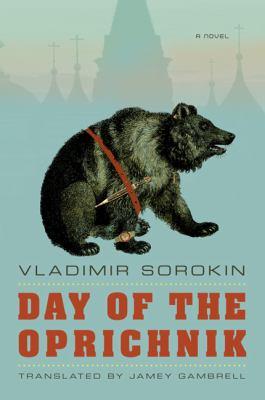
Day of the Oprichnik
Vladimir Sorokin · b. 1955 · Russia
Originally Den Oprichnika (Russian)
Why it matters
A single day in the life of a secret policeman serving a restored, fascist-czarist future Russia unfolds with grotesque, gleeful precision. Sorokin's banned dystopia has only grown more prophetic with time.
At a glance
Invented archaic-futurist vocabulary and grotesque set pieces require adjustment despite a clear day-structure.
Deep dive
One representative day inside a restored, high-tech czarist police state, and the quiet suggestion that Russia's authoritarian cycle never actually needed to end to come back.
Written for readers who have finished the book. No plot recap, and nothing here is safe to read first.
Themes & symbolism
Sorokin sets the novel in a near-future Russia that has walled itself off from the West, allied itself economically with China, and rebuilt the oprichnina, Ivan the Terrible's personal terror squad, as the modern state's enforcement arm, narrated by the oprichnik Andrei Komiaga across a single day of raids, bribes, censorship, and ceremony. The world Sorokin builds mixes eras without apology: oprichniks travel by hypersonic car and carry government-issue 'mobilov' phones while still practicing boyar-era etiquette, public flogging, and a restored absolute monarchy, and the mixture is the joke and the argument at once. Nothing about Russian authoritarianism, Sorokin suggests, actually requires the trappings of any particular century to keep functioning.
Chinese loanwords run through Komiaga's Russian throughout the book, a small linguistic detail standing in for a much larger one: the state's alliance has quietly shifted east while its self-mythology remains fixed on an imagined, purely Russian past. The oprichniks' culminating group ritual, a drug-fueled, snake-like chain of physical intimacy performed by the entire corps together, functions as their most literal loyalty oath, a display of total, bodily submersion into the collective that leaves no man able to claim later that he stood apart from what the group did. Komiaga narrates all of it, the raids and the ritual alike, in the same brisk, satisfied first person, a voice with no capacity for guilt built into it because the state has never asked him to develop one.
A Novelist the State Had Already Tried to Burn
Sorokin was no stranger to state hostility toward his fiction by the time Day of the Oprichnik appeared: a pro-Kremlin youth movement had publicly dumped copies of his earlier novel Blue Lard into a giant prop toilet outside the Bolshoi Theatre in 2002, and prosecutors briefly investigated him for obscenity. Day of the Oprichnik answered that history by escalating rather than retreating, imagining a future in which such censorship and violence are not fringe harassment but the government's actual daily operating procedure, carried out by men who consider the work an honor rather than a crime.
The last seal: what actually happens, and why it lands the way it does.
The ending, explained
The day closes the way it began, with ritual rather than reflection: Komiaga returns home for the household's nightly recitation of loyalty to the Sovereign before the family goes to bed, the same devotional structure that opened his morning raid on a disgraced nobleman's household. Sorokin declines to give the day any culminating event bigger than its opening one; the raid, the bribes, the censorship office, the banquet, and the group ritual are presented as ordinary, repeatable units of a single working day, not a crisis building toward anything. That flatness is the final, deliberate point: a system this thoroughly restored doesn't need drama to sustain itself, only the same day, performed correctly, over and over, with tomorrow already guaranteed to look exactly the same.
Where to go next
 Vladimir Sorokin · 1983The QueueLvl 6Medium pace
 Viktor Pelevin · 1992Omon RaLvl 5Fast paced
 Georgi Gospodinov · 2020Time ShelterLvl 6Medium pace
 Ludmila Ulitskaya · 2010The Big Green TentLvl 5Medium pace
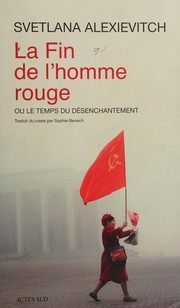 Svetlana Alexievich · 2013Secondhand TimeLvl 4Medium pace
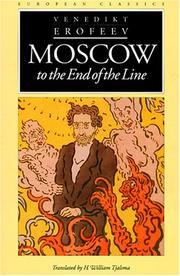 Venedikt Yerofeev · 1970Moscow-PetushkiLvl 7Fast paced