
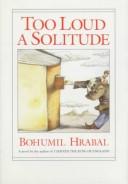
Too Loud a Solitude
Bohumil Hrabal · 1914–1997 · Czechia
Originally Příliš Hlučná Samota (Czech) · translated by Michael Henry Heim
Why it matters
For thirty-five years Haňťa has compacted banned books, rescuing the best and drinking the rest: a hymn to reading by the man who pulps it. A hundred pages of beer-soaked, heartbreaking Prague sublime.
At a glance
Long, breathless, unpunctuated-feeling sentences in a compressed, allusion-dense monologue.
Deep dive
Thirty-five years spent compacting wastepaper and condemned books in a Prague cellar have turned Haňťa into an accidental philosopher, and a new, efficient, book-hating world is finally coming to take his press away from him.
Written for readers who have finished the book. No plot recap, and nothing here is safe to read first.
Themes & symbolism
Haňťa has operated the same hydraulic baling press for thirty-five years, crushing wastepaper and the officially discarded books that pass through it for pulp, and has spent that whole time secretly rescuing volumes from the crush, reading them by the single bulb over his press, getting drunk enough most evenings to quote Kant, Hegel, and Lao-tzu in the same breath without quite distinguishing them. Hrabal makes the contradiction the whole point: the state's machinery for erasing unwanted books has, almost by accident, produced the most genuinely well-read man in Prague, an autodidact built entirely out of what the censors meant to destroy.
Haňťa decorates each finished bale with a great painting reproduction, Rembrandt or an old master centerfold torn from a ruined art book, wrapped around the crushed pages like a burial shroud, a small private ceremony that turns an act of destruction into something closer to a funeral rite. His memory of a Gypsy girl he loved before the war runs underneath the whole book as its quietest, most unresolved grief, surfacing without warning in the middle of his digressions on paper and philosophy, proof that the compacted, disposable material moving through his hands every day includes losses no press can process.
The New Press and the Brigade in White Gloves
Haňťa visits a vast, modern recycling plant staffed by a young, efficient socialist labor brigade who wear white gloves, take regular milk breaks, and never read a page of what passes through their machine, treating paper purely as material to be processed at maximum output. The scene reads as Hrabal's clearest elegy for Haňťa's whole obsolete mode of existence: a world that has industrialized his job precisely by stripping out the one part of it, the reading, that gave his thirty-five years of crushing paper any meaning at all.
Hrabal's Own Years in a Wastepaper Cellar
Hrabal worked an actual wastepaper-compacting job in Prague in the early 1950s after being barred from publishing under the Communist regime, and drew Haňťa's cellar and press directly from that experience, writing three separate versions of the novella across more than a decade before its 1976 samizdat publication, since it too fell outside what censors would allow. Hrabal dedicated the finished book to himself as 'the sad king of the Czech baroque,' a private joke about a writer whose own books had, for years, faced the same machinery Haňťa operates on everyone else's.
The last seal: what actually happens, and why it lands the way it does.
The ending, explained
Transferred against his will to the new mechanized plant, Haňťa finds he can't function inside its clean, book-blind efficiency, and can't bring himself to keep working once reading is no longer part of the job at all. He returns to his own condemned cellar and climbs into his beloved press one last time, arranging himself among his favorite rescued volumes and a reproduction of a painting he loved, and sets the machine running with himself inside it, narrating his own end in the same wondering, digressive voice that's carried the whole book, imagining Jesus and Lao-tzu meeting at last inside the wreckage. Hrabal leaves it genuinely ambiguous whether to read this as despair or as a kind of final, willed union with the only life Haňťa ever valued, but he's unambiguous about the cause: a world that industrialized reading out of existence left no room in it for a man whose entire self had been built out of rescued pages.
Where to go next
 Bohumil Hrabal · 1971I Served the King of EnglandLvl 4Fast paced
 Milan Kundera · 1984The Unbearable Lightness of BeingLvl 5Slow burn
 Franz Kafka · 1915The MetamorphosisLvl 4Medium pace
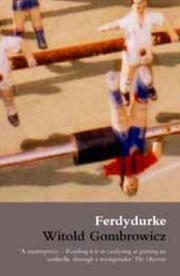 Witold Gombrowicz · 1937FerdydurkeLvl 7Fast paced
 Jaroslav Hašek · 1923The Good Soldier ŠvejkLvl 3Fast paced
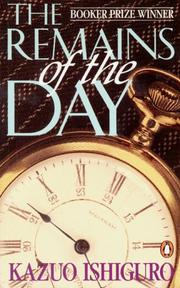 Kazuo Ishiguro · 1989The Remains of the DayLvl 5Slow burn