
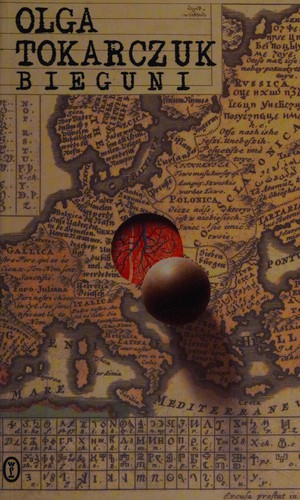
Flights
Olga Tokarczuk · b. 1962 · Poland
Originally Bieguni (Polish) · translated by Jennifer Croft
Why it matters
Over a hundred fragments (travelers, anatomists, a plastinated body) held together by a hidden gravity into a meditation on motion and the perishable flesh. Tokarczuk's 'constellation novel' that carried her toward the Nobel.
At a glance
A fragmented mosaic of over a hundred disconnected pieces with no linear plot to hold onto.
Deep dive
A woman who vanishes into a subway system for days, a heart smuggled across borders in a jar, a leg its own former owner kept and studied: what a novel with no single plot is actually assembling out of all of them.
Written for readers who have finished the book. No plot recap, and nothing here is safe to read first.
Themes & symbolism
Flights refuses the shape of a novel on purpose, working instead as a constellation of short essays, fragments, and self-contained stories, unified less by character than by a single conviction the narrator states outright: that movement preserves and stillness decays. Bodies, borders, and stories alike are treated as things that spoil if they stop, an argument the book makes formally as much as thematically, since it never lets its own narration settle into one sustained plot long enough to calcify.
The historical fragments carry that argument furthest. Philip Verheyen, the seventeenth-century anatomist who amputated his own gangrenous leg and then dissected and preserved it for years afterward, corresponding with it, discovering the phantom-limb nerve pathways in the process, becomes Tokarczuk's model for how grief and curiosity can occupy a severed thing at once. Chopin's heart, smuggled out of Paris in a jar of alcohol under his sister's skirts and sealed inside a church pillar in Warsaw, gets the same treatment: preservation as a way of refusing a death the status of being final, a body kept partly in motion by never being allowed to simply rest.
The contemporary strand that gives the book its most unsettling scene, a woman named Annushka who disappears into the Moscow metro for days, leaving behind a disabled son and a husband who reports her missing, reframes flight as something closer to compulsion than freedom: travel here isn't escape from a bad life so much as an addiction the body develops once it's tasted what stillness costs.
Plastination and the Refusal to Decay
Tokarczuk threads the historical material about anatomical preservation, wax models, specimen jars, Gunther von Hagens's modern plastinated bodies on museum display, alongside the fragmentary travel narration because both are versions of the same wish: to stop a body's clock without pretending it's still alive. The narrator's own visits to anatomical museums read less like tourism than research into an alternative to burial, a way of keeping the dead legible instead of letting them dissolve into whatever a grave dissolves things into.
A Novel Built to Resist One Language
Tokarczuk has described her method here as 'constellation' rather than narrative, and the English title itself is a translator's choice: the Polish original, Bieguni, names a real, obscure Slavic sect who believed that staying in one place invites the devil, so they kept permanently moving as a form of religious practice. That belief gives the whole loose structure its organizing myth without ever being explained outright inside the book, a piece of folk theology quietly running underneath every fragment about anatomists, defectors, and travelers who can't stop.
Where to go next
 Olga Tokarczuk · 2009Drive Your Plow Over the Bones of the DeadLvl 4Fast paced
 Mircea Cărtărescu · 1989NostalgiaLvl 8Slow burn
 Milan Kundera · 1984The Unbearable Lightness of BeingLvl 5Slow burn
 Witold Gombrowicz · 1937FerdydurkeLvl 7Fast paced
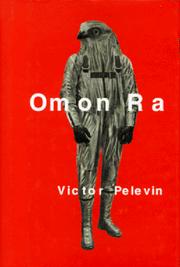 Viktor Pelevin · 1992Omon RaLvl 5Fast paced
 László Krasznahorkai · 1985SatantangoLvl 9Slow burn