
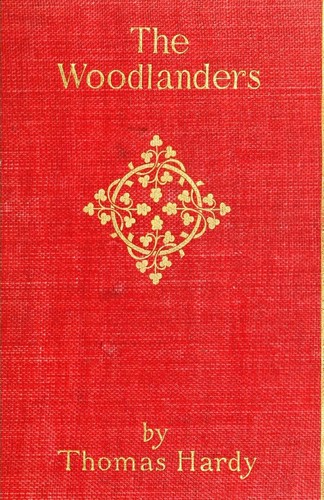
The Woodlanders
Thomas Hardy · 1840–1928 · England
Why it matters
In a Wessex forest, a loyal woodsman loves a woman drawn upward into a marriage beyond her station, while a woman who loves him goes entirely unseen. One of Hardy's quietest and saddest novels: devotion mismatched at every turn, with no villain to blame but circumstance.
At a glance
Dense arboreal description and a wide cast of quietly interlocking heartbreaks.
Deep dive
Why Hardy structures an entire novel around grafting fruit trees, and what that horticultural metaphor ends up saying about who ends up with whom in Little Hintock.
Written for readers who have finished the book. No plot recap, and nothing here is safe to read first.
Themes & symbolism
Giles Winterborne's expert skill at grafting fruit trees, planting an orchard, and managing woodland with a patience measured in decades rather than seasons gives the novel its controlling metaphor: Hardy keeps returning to the image of one variety grafted onto rootstock not native to it, since Grace Melbury, sent away for a superior education her father's timber fortune could newly afford, has effectively been grafted onto a social class that doesn't quite suit either her origins or her actual temperament, and the mismatch produces exactly the kind of stunted, uneasy growth an unsuccessful graft would. Her father's ambition to marry her above her station, first breaking an old understanding with Giles in favor of the more fashionably educated Dr. Fitzpiers, treats Grace's marriage prospects with the same improving, acquisitive logic he once applied to timber.
Marty South, in love with Giles from the novel's opening pages and never once acknowledged by him as anything but a fellow woodworker, sells her own hair early in the book to a wigmaker for money, hair that resurfaces, unbeknownst to either woman, on the head of Mrs. Charmond, the wealthy widow Fitzpiers pursues even after marrying Grace; Hardy uses that grim, literal transaction to link two women across a class divide they never directly acknowledge, one selling a physical piece of herself to survive, the other purchasing borrowed beauty to keep a husband neither woman particularly deserves the trouble of.
Fitzpiers, a restless, intellectually ambitious doctor with more interest in abstract philosophy and casual seduction than in the actual patients and community around him, treats Little Hintock's woodland society as a temporary posting to be endured rather than a place to belong, and his repeated infidelities, first with a local woman and then with Mrs. Charmond, confirm what Marty and Giles already embody without needing to say it: that rootedness in a specific place and its specific work is a form of character Fitzpiers, for all his education, entirely lacks.
Marty's Final Word, Spoken to No One Who Can Hear It
Hardy gives the novel's closing lines not to Grace, who survives and even reconciles uneasily with Fitzpiers, but to Marty South alone at Giles's grave, delivering an unwitnessed monologue of devotion he never once returned in life; the choice is a deliberate rebuke to the marriage plot's usual reward structure, since the one character whose love was most constant, most rooted, and most entirely unglamorous is left with nothing but a headstone to address, while the more socially advantageous match survives to an uneasy, compromised continuation instead.
The last seal: what actually happens, and why it lands the way it does.
The ending, explained
Giles, having given up his own cottage to protect Grace's reputation while she hides from her estranged husband, is left exposed to a fever in the woods rather than risk any scandal by sharing shelter with her, and dies of the resulting illness before Grace, arriving too late to nurse him properly, can do anything but grieve. Fitzpiers, chastened but not fundamentally changed by Mrs. Charmond's own accidental death abroad, returns to Little Hintock and persuades Grace back into their marriage, and Hardy lets her accept him with a resignation the novel never dresses up as a happy ending. Marty South, the one character whose devotion never wavered and was never once requited, is left tending Giles's grave alone in the closing pages, planting flowers he will never see, the novel's actual emotional center relegated to the margin the marriage plot has no room for.
Where to go next
 Thomas Hardy · 1874Far from the Madding CrowdLvl 4Medium pace
 Thomas Hardy · 1878The Return of the NativeLvl 6Slow burn
 Thomas Hardy · 1886The Mayor of CasterbridgeLvl 5Medium pace
 Thomas Hardy · 1891Tess of the d'UrbervillesLvl 4Medium pace
 Thomas Hardy · 1895Jude the ObscureLvl 5Slow burn
 George Eliot · 1872MiddlemarchLvl 6Slow burn