
Jude the Obscure
Thomas Hardy · 1840–1928 · England
Why it matters
A stonemason's hunger for learning, punished by every institution in his path. The reception was so savage (a bishop burned it) that Hardy quit fiction forever. The bleakest and most modern of Victorian novels.
At a glance
Bleak, dense argumentation about class and religion woven through the plot.
Deep dive
Why Hardy builds two mismatched marriages instead of one thwarted romance, and what that doubling is actually arguing about the marriage law of his own day.
Written for readers who have finished the book. No plot recap, and nothing here is safe to read first.
Themes & symbolism
Jude Fawley teaches himself Latin and Greek by lamplight as a stonemason's apprentice, with the single goal of entering Christminster's colleges, and Hardy is precise that the university never formally rejects him on the page: a master simply advises him by letter to remain in his own class and trade rather than attempt matriculation, a closed door delivered so politely it barely registers as cruelty until the reader notices Jude has already given the place a decade of unpaid devotion for nothing.
Jude's early marriage to Arabella Donn, contracted after she deceives him about a pregnancy, and Sue Bridehead's marriage to the much older schoolmaster Phillotson, entered largely to prove to herself she can tolerate convention, are the twin traps the novel is built around: both marriages are legally binding and emotionally hollow, and English law in the 1890s offers Jude and Sue almost no route back to each other except open, socially catastrophic adultery, since divorce remained slow, expensive, and reputation-destroying for people without Arabella's or Phillotson's money.
Sue Bridehead is Hardy's most modern character by design: intellectually free-thinking, sexually skittish, capable of dismantling marriage as an institution in conversation while remaining unable to actually live outside its psychological grip. Her contradictions are not authorial confusion so much as Hardy's most exact portrait of a woman genuinely ahead of the social machinery available to house her, undone less by any single villain than by simply having nowhere to put the freedom she has already achieved in her own head.
Christminster's Colleges, Never Once Opened
Hardy models Christminster closely on Oxford and gives Jude an entire architecture of longing built around buildings he is allowed to walk past but never enter. Keeping Jude permanently outside the actual institution, rather than staging one dramatic rejection scene, is the novel's sharpest formal decision: there is no single gatekeeper to blame, only an accumulation of quiet, structural closures that add up to the same result a slammed door would, without ever handing Jude, or the reader, a scene to be angry at.
The last seal: what actually happens, and why it lands the way it does.
The ending, explained
Jude and Sue's unmarried domestic life together, and the arrival of Jude's son by Arabella, a solemn, prematurely aged boy nicknamed Little Father Time, collapses when the boy, believing the family's poverty and social exclusion are his own fault for existing, kills Jude and Sue's two younger children and himself, leaving a note reading only, done because we are too menny. The catastrophe breaks Sue completely: she reads it as punishment for living outside marriage, returns in penitent self-abasement to Phillotson's bed, and rejects Jude entirely, while Jude, sick and without hope, remarries the returned Arabella out of sheer exhaustion before dying alone, still reciting lines from the Book of Job, having never once set foot inside a Christminster college. Hardy's bleakest ending offers no reconciliation between the couple's genuine love and the institutions, marriage, the university, that made it impossible to sustain.
Where to go next
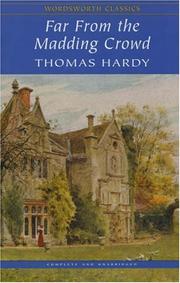 Thomas Hardy · 1874Far from the Madding CrowdLvl 4Medium pace
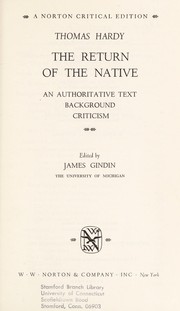 Thomas Hardy · 1878The Return of the NativeLvl 6Slow burn
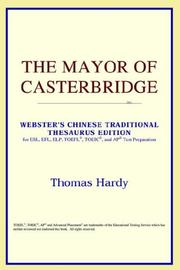 Thomas Hardy · 1886The Mayor of CasterbridgeLvl 5Medium pace
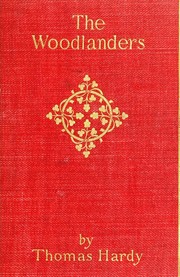 Thomas Hardy · 1887The WoodlandersLvl 5Slow burn
 Thomas Hardy · 1891Tess of the d'UrbervillesLvl 4Medium pace
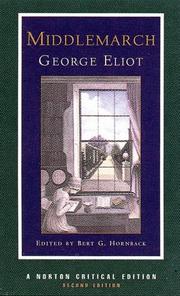 George Eliot · 1872MiddlemarchLvl 6Slow burn