
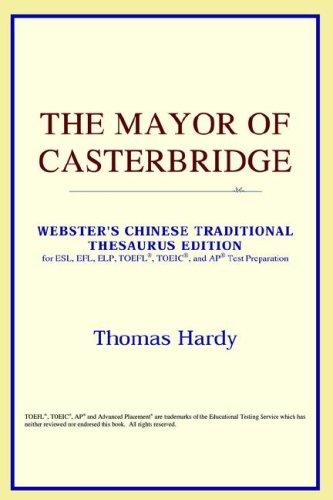
The Mayor of Casterbridge
Thomas Hardy · 1840–1928 · England
Why it matters
Michael Henchard sells his wife at a country fair while drunk, then spends the rest of his life as a self-made mayor undone by that one irreversible act. Hardy's starkest character study: a tragedy built almost entirely from one man's temperament.
At a glance
A tightly focused single-protagonist tragedy, more compact than Hardy's other major novels.
Deep dive
Why Hardy's subtitle calls this a story of character rather than circumstance, and what that claim does to the man who sells his own wife at a country fair.
Written for readers who have finished the book. No plot recap, and nothing here is safe to read first.
Themes & symbolism
Michael Henchard, drunk and humiliated at a country fair, auctions off his wife Susan and infant daughter to a passing sailor for five guineas in the novel's opening pages, and Hardy spends the rest of the book demonstrating that this single impulsive act, rather than any later misfortune, is the true engine of everything that eventually destroys him; the subtitle, A Man of Character, is Hardy's own gloss on the novel's argument, that Henchard's ruin belongs to his own volatile, proud, generous-to-a-fault temperament far more than to bad luck, even once he has become Casterbridge's wealthiest grain merchant and mayor.
Donald Farfrae, the young Scottish manager Henchard hires and then grows jealous of, embodies a newer, cooler, more rational style of business that steadily outcompetes Henchard's older, instinctive, sentiment-driven methods, and Hardy is careful to make the rivalry about temperament and economic modernization at once: Henchard's generosity and his rages come from the same unguarded impulsiveness, while Farfrae's calm, methodical competence, genuinely likeable rather than coldly calculating, simply belongs to a version of commerce that has less and less use for a man who runs his business and his relationships on the same volatile passion.
When Susan and their now-grown daughter Elizabeth-Jane return to Casterbridge years later, Henchard's attempt to reclaim a stable family life keeps colliding with his own inability to leave well enough alone, concealing truths, manipulating relationships, and repeatedly sabotaging exactly the security he claims to want; Hardy builds his tragedy less around any external antagonist than around a man whose worst enemy, in every scene, keeps turning out to be his own next impulsive decision.
The Furmity Woman Who Remembers Everything
The itinerant furmity-seller who witnessed Henchard sell his wife at the fair resurfaces decades later, now an old woman testifying in Henchard's own courtroom as mayor, and casually exposes his entire buried past in open session; Hardy uses the coincidence deliberately rather than apologetically, since the novel's whole argument is that character produces consequences that outlast any effort to outrun them, and a man's worst act eventually finds its way back to the exact civic position he built to bury it.
The last seal: what actually happens, and why it lands the way it does.
The ending, explained
Having lost his business, his position, and eventually Elizabeth-Jane's affection once she learns how he manipulated her sense of her own parentage, Henchard leaves Casterbridge entirely and takes up itinerant labor under an assumed humility, returning only once, uninvited, to Elizabeth-Jane's wedding to Farfrae, where his presence is coldly rejected. He dies alone shortly afterward in a laborer's cottage, leaving behind a will that asks, in specific and devastating detail, that no one mourn him, that no flowers be planted on his grave, and that his death not even be mentioned to Elizabeth-Jane, a final act of self-erasure from a man who spent the whole novel unable to stop asserting himself into other people's lives. Hardy grants him that one request; Elizabeth-Jane, informed of his death only after the fact, is left to build her own quieter, more settled happiness with Farfrae on ground her father's own character made sure he could never share in.
Where to go next
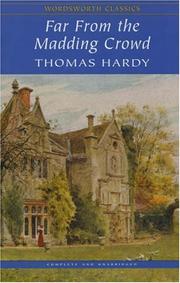 Thomas Hardy · 1874Far from the Madding CrowdLvl 4Medium pace
 Thomas Hardy · 1878The Return of the NativeLvl 6Slow burn
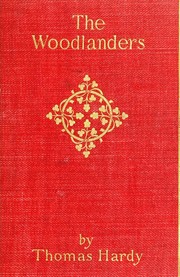 Thomas Hardy · 1887The WoodlandersLvl 5Slow burn
 Thomas Hardy · 1891Tess of the d'UrbervillesLvl 4Medium pace
 Thomas Hardy · 1895Jude the ObscureLvl 5Slow burn
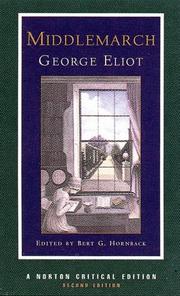 George Eliot · 1872MiddlemarchLvl 6Slow burn