
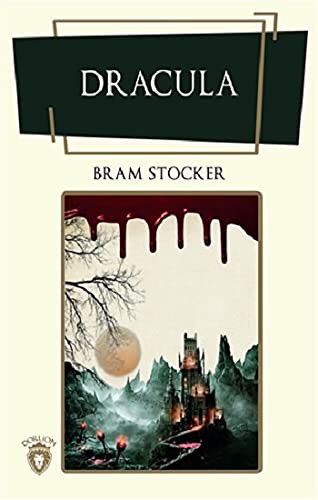
Dracula
Bram Stoker · 1847–1912 · Ireland
Why it matters
Diaries, letters, and phonograph recordings assemble into the account of a Transylvanian count's invasion of London. Victorian anxieties about contagion, empire, and female desire, poured into the century's most durable monster.
At a glance
Multiple documentary voices to track, but each is plainly written.
Deep dive
An epistolary invasion story in which the most frightening thing about the Count is how well he understands modern paperwork.
Written for readers who have finished the book. No plot recap, and nothing here is safe to read first.
Themes & symbolism
Stoker tells the whole novel through diaries, letters, telegrams, phonograph recordings, and newspaper clippings, a documentary method that isn't just period gimmickry — it stages the vampire hunt as an information war, with Mina Harker's shorthand transcriptions and Dr. Seward's wax cylinders standing in for exactly the kind of modern, bureaucratic, typewritten competence that Dracula, an ancient predator who nonetheless studies English etiquette books and train timetables before invading London, has to be defeated by. The novel's real anxiety isn't superstition versus science so much as old world versus new — Van Helsing wins by combining folk knowledge (garlic, the host, a stake) with up-to-date tools (blood transfusion, telegraphy, Mina's own analytical mind), refusing to let either alone be sufficient.
Dracula's assaults on Lucy Westenra and then Mina are staged with unmistakably sexual imagery — penetration, exchanged fluids, a swooning loss of control, three suitors gathered around a woman's bed — and Stoker uses vampirism to smuggle in a Victorian anxiety about female desire that proper drawing-room fiction couldn't address directly: Lucy, established early as more overtly flirtatious than the studious Mina, is punished by being made into an aggressively sexual 'Bloofer Lady' who preys on children, and has to be violently re-purified by Arthur's stake through the heart, watched approvingly by the men who once courted her. Mina, by contrast, survives her own violation because the novel insists on her intellect and self-discipline — she narrates her own psychic bond with Dracula as data to be used against him rather than surrendering to it — making her the book's model of how a 'good' Victorian woman is allowed to touch the monstrous and return.
Dracula himself is barely present as a character with interiority; he exists mostly as an effect other people register — a shadow that falls wrong, an aristocrat with hair on his palms, a fog that seeps under doors — which keeps him closer to a natural disaster or a foreign invasion than to a rounded villain. Stoker's Transylvania, filtered through Jonathan Harker's tourist unease at the novel's opening, reads as a specifically fin-de-siècle British fear of reverse colonization: an ancient, aristocratic Eastern power crossing the Channel to multiply quietly inside the imperial capital, defeated only by an international coalition of English, American, and Dutch expertise pooling its resources against him.
Van Helsing's Broken English
Van Helsing is the novel's source of authority and also its most linguistically odd figure, speaking in tangled, occasionally comic syntax that Stoker never smooths out even as the professor delivers the book's central exposition on how to kill a vampire. The choice reads less like a slip than a deliberate signal: real expertise, Stoker suggests, doesn't have to sound like an English gentleman to be trusted, and Van Helsing's foreignness — like Dracula's, but inverted — is framed as an asset precisely because it lets him see past English rationalism's blind spots about what might actually be loose in London.
The last seal: what actually happens, and why it lands the way it does.
The ending, explained
Having fled back to Transylvania after Mina forces the group to track him through her residual psychic link, Dracula is run to ground just short of his castle at sunset. Jonathan Harker and Quincey Morris cut down the gypsy escorts guarding the Count's box, and Harker's knife slices Dracula's throat while the dying Quincey Morris drives his own blade through Dracula's heart, at which the Count crumbles to dust in the setting light. The killing is deliberately split between two men, spreading the labor of destroying the threat across the whole coalition rather than crowning a single hero. Stoker closes with a brief epilogue years later: Mina and Jonathan have a son partly named Quincey, and Van Helsing reflects the boy will one day be told what his mother endured — a domestic, reassuring coda that reasserts the family the invasion had threatened to unmake.
Where to go next
 Horace Walpole · 1764The Castle of OtrantoLvl 3Fast paced
 Robert Louis Stevenson · 1883Treasure IslandLvl 3Fast paced
 Emily Brontë · 1847Wuthering HeightsLvl 6Medium pace
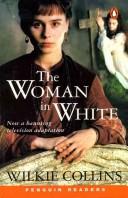 Wilkie Collins · 1859The Woman in WhiteLvl 4Fast paced
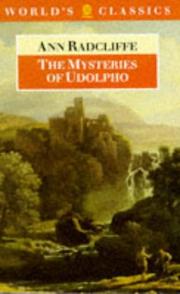 Ann Radcliffe · 1794The Mysteries of UdolphoLvl 5Slow burn
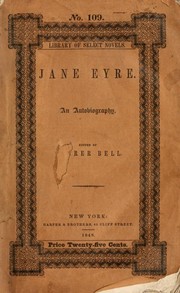 Charlotte Brontë · 1847Jane EyreLvl 4Medium pace