
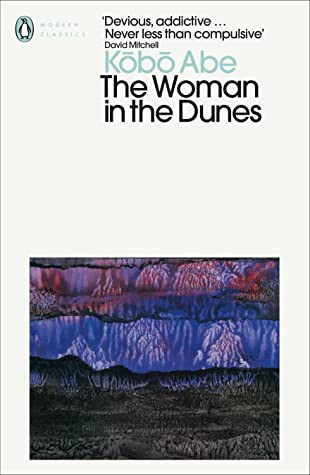
The Woman in the Dunes
Kōbō Abe · 1924–1993 · Japan
Originally Suna no Onna (Japanese) · translated by E. Dale Saunders
Why it matters
An insect collector is trapped in a sand-pit village, bound to an endless nightly ritual of shoveling to survive alongside a woman he barely knows. Existentialism's cleanest fable, Japanese edition: Sisyphus with a shovel and a companion.
At a glance
Allegorical claustrophobia and dense sensory description over a simple premise.
Deep dive
Camus's Sisyphus gets a shovel and a sand pit in this novel — and Abe's twist on the myth is what freedom starts to look like once escape is actually on the table.
Written for readers who have finished the book. No plot recap, and nothing here is safe to read first.
Themes & symbolism
The pit is absurdism made literal: endless, physically necessary labor with no terminus and no larger meaning supplied from outside. But the novel's real argument doesn't arrive until Niki starts experimenting with extracting water from the sand itself, a small, genuine scientific achievement that gives his captivity a purpose he generated rather than one handed to him. That's Camus's closing line about Sisyphus, 'one must imagine him happy,' turned into plot instead of aphorism — meaning here isn't found by escaping the repetition, it's manufactured from inside it, which is why the novel can end with Niki's continued imprisonment reading as something closer to freedom than his initial capture ever was.
Sand and water function as opposed symbolic registers throughout: sand as entropy, erosion, the slow burial of everything including selfhood, water as the nourishing, escaping element that the sand constantly threatens to swallow. That Niki's one triumph is coaxing water out of the very substance that traps him collapses the opposition on purpose. The village's collective need for sand-shovelers to keep the dunes from burying the whole settlement also indicts the social structure around the pit: a community that survives only by trapping outsiders into unpaid, permanent labor is Abe's dry comment on rural depopulation and mutual obligation in postwar Japan, not an isolated horror story about one unlucky entomologist. Niki's initial identity as an amateur taxonomist, a man who catalogues and pins insects for a hobby, makes his own capture pointedly ironic — he ends the novel having become, functionally, a specimen himself, studied and held in place by the very village that needs him fixed there to survive.
Consent as the Real Trap
Niki's fury in the novel's first half is directed at the unfairness of captivity; its quiet horror in the second half is that captivity stops being the point. Once he has something to work on, the trap's terms change from something imposed on him to something he's arranging his life around, which is a more unsettling condition than simple imprisonment, since it can't be escaped by force — only by a decision he keeps declining to make.
The Woman Herself
Abe never names her, and her quiet, practical acceptance of the pit's endless labor reads initially as resignation next to Niki's existential outrage. But her competence, and the ordinary domestic authority she has inside the one space she controls, ends up looking less like defeat than like an adaptation Niki is only belatedly capable of making himself — she was never trapped by the same illusions about freedom that he has to shed one by one.
The last seal: what actually happens, and why it lands the way it does.
The ending, explained
The woman is taken to a hospital for complications from pregnancy, and in the resulting disruption a rope ladder is left in place — Niki's first unobstructed chance to climb out and leave, one the novel confirms he has clear legal standing to take, since a formal declaration of his disappearance is already being processed and he could eventually be declared dead. He climbs up, looks at the sea, and decides to postpone leaving, telling himself he'll go 'the day after tomorrow.' Freedom, once offered without conditions, turns out to be worth less to him than the small, self-made purpose of his water experiments — the trap has become a life he's chosen rather than one merely endured.
Where to go next
 Kōbō Abe · 1964The Face of AnotherLvl 7Slow burn
 Yōko Ogawa · 1994The Memory PoliceLvl 4Slow burn
 Franz Kafka · 1915The MetamorphosisLvl 4Medium pace
 Endō Shūsaku · 1966SilenceLvl 5Slow burn
 Yukio Mishima · 1956The Temple of the Golden PavilionLvl 6Slow burn
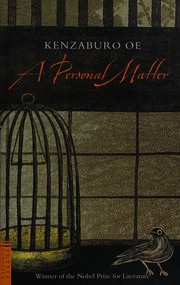 Kenzaburō Ōe · 1964A Personal MatterLvl 5Medium pace