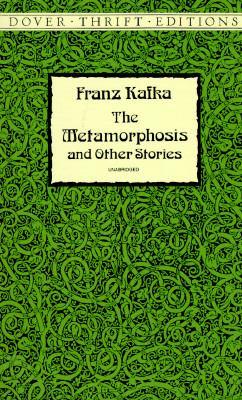
The Metamorphosis
Franz Kafka · 1883–1924 · Czechia (Bohemia)
Originally Die Verwandlung (German)
Why it matters
Gregor Samsa wakes as a monstrous insect, and the story's horror is how quickly everyone adjusts. The twentieth century's most famous opening sentence, and the parable every era rereads as its own.
At a glance
Short and clearly told, but its flat affect toward the grotesque takes deliberate reading.
Deep dive
The story never says what species Gregor becomes — this dive follows why that refusal, and his family's swift recalibration around a lost paycheck, is scarier than the bug itself.
Written for readers who have finished the book. No plot recap, and nothing here is safe to read first.
Themes & symbolism
Kafka's real trick is procedural, not gothic: Gregor's first reaction to waking as vermin is annoyance at missing his train and dread of a boss who'd never believe an employee's illness. The horror gets domesticated instantly, and that flatness is the joke and the tragedy at once — a man whose selfhood has already been hollowed out by years on the road as a traveling salesman doesn't even get a beat of existential shock, because the job had emptied that reflex out of him long before the transformation. The insect is never given a taxonomy — "ungeheures Ungeziefer," monstrous vermin, is a category, not a species — because specificity would let readers domesticate the metaphor into an entomology lesson. Left vague, it stays purely functional: a literalized image of uselessness and dependency whose exact shape matters less than what it does to everyone standing near it.
The family's arc runs on two mirrored curves. Grete starts as Gregor's sole caretaker and translator, and gains standing precisely as she stops treating him as a brother and starts treating him as a problem to be managed and then removed — her final verdict that "it" must go is her graduation into the adult who speaks for the household's interest over sentiment. The father runs the opposite direction to the same cruelty: reduced to dependency after his business failed, he re-arms himself the moment Gregor stops earning, restoring patriarchal authority over the one body now weaker than his own. The apple he throws that lodges and rots in Gregor's back is the story's cruelest symbol — an ordinary piece of fruit turned into a permanent, untreated wound inflicted by family authority, carried in silence exactly like the shame nobody in the flat will name aloud.
A Story With No One to Blame
Kafka withholds cause as deliberately as he withholds species. No curse, no dream logic, no explanatory frame ever arrives — the transformation simply is, on page one, and the narrative's entire interest lies in what people do next rather than why it happened. That refusal is the story's argument: origin doesn't matter to a family deciding how much a dependent body is worth feeding. Read against Kafka's own letters about his father's contempt for his writing and his sense of being a professional disappointment, the tale reads less as fantasy than as a ledger of exactly how conditional familial love turns out to be once the provider role reverses.
The last seal: what actually happens, and why it lands the way it does.
The ending, explained
Weakened by infection from the embedded apple and by weeks of near-starvation, Gregor is moved almost to tears one night by Grete's violin-playing for the lodgers the family has taken in to cover his lost income — a last flicker of longing for beauty and connection even in his degraded state. He dies alone before dawn, quietly, almost as an afterthought, no death scene at all. The family's first response is relief, immediate and unguilty, followed by a countryside outing on a train — the same commute that structured Gregor's whole working life, now taken for pleasure. Watching Grete stretch in the sun, her parents notice for the first time that she's become a marriageable young woman. The novella closes on the family's renewal, made possible only by his erasure: his death is the precondition for their future, not an interruption of it.