
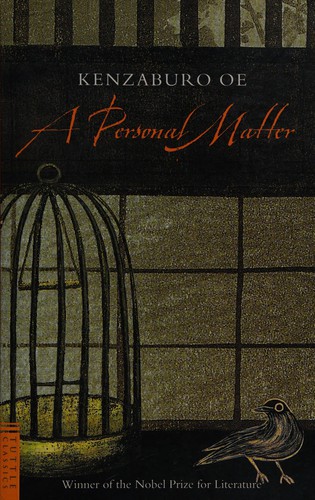
A Personal Matter
Kenzaburō Ōe · 1935–2023 · Japan
Originally Kojinteki na Taiken (Japanese) · translated by John Nathan
Why it matters
Bird dreams of Africa while his newborn son lies brain-damaged in an incubator, and escape, whisky, and shame consume him as he decides what a father owes a dying child. Ōe's transformation of his own family into the postwar era's moral test case.
At a glance
Intense interior focus and unsparing self-scrutiny in a single fevered timeframe.
Deep dive
A novel that stages its narrator's cowardice without a shred of sympathy, then asks whether a man capable of contemplating his own son's death can still be trusted with a rewrite.
Written for readers who have finished the book. No plot recap, and nothing here is safe to read first.
Themes & symbolism
Bird's Africa fantasy is the novel's clearest symbol, and Ōe is careful never to let it curdle into something admirable: it's an escapist daydream nursed since childhood, activated precisely at the moment adult responsibility becomes unbearable, and the novel keeps returning to it as evidence of arrested development rather than romantic longing. Whisky and Himiko's bed serve the same function — not tragic flaws so much as a coward's toolkit, deployed the moment his son's brain hernia demands something from him that escapism can't supply. What makes the book hard to read comfortably is that Ōe refuses to soften the worst of it: Bird and Himiko's scheme to let the infant die by neglect, dressed up as a kind of mercy, is presented starkly as a moral failure, not a forgivable stress response, and the narrative holds him to account for it rather than explaining it away.
The title's irony is the whole architecture of the book: what looks like the most private matter imaginable — a man's reaction to his own child's disability — turns out to be inseparable from a fully adult, fully public ethical obligation, and Bird's attempt to treat it as something he can quietly manage or escape is exactly the delusion the novel dismantles. Ōe's decision to draw this directly from his own life — his son Hikari was born with a comparable condition, survived surgery, and became a composer — means the book isn't a hypothetical case study but something closer to an author interrogating, in fiction, the version of himself who might have chosen differently.
Fiction as a father's rehearsal
It matters that Ōe wrote this so close to the actual events of his son's birth: the novel functions less as memoir-with-names-changed than as a kind of moral rehearsal space, where the worst possible version of the father's response — cowardice, escapism, a quiet conspiracy toward the child's death — gets played out fully and condemned, clearing room for the harder, better version Ōe would go on to actually live. Hikari's later life as a composer, well outside this book's frame, retroactively sharpens the stakes of Bird's near-miss: the child the novel almost lets die of neglect is not, in the world outside the fiction, a life that turned out to be without value or possibility. That afterlife doesn't get narrated here, but it's impossible to read the novel today without it hovering over the ending's insistence on responsibility.
The last seal: what actually happens, and why it lands the way it does.
The ending, explained
Bird reverses himself before the neglect plan can run its course, refusing to let his son die and insisting instead on the surgery he had spent the whole novel trying to avoid facing. The Africa fantasy is dropped, the affair with Himiko ends, and the surgery succeeds, leaving the child alive with some disability. Nothing about the ending is triumphant or easy — Ōe doesn't erase how close Bird came to choosing the opposite — but the shift from escape to presence is treated as Bird's first genuinely adult act, the moment the "personal matter" of the title stops being something he can outsource or flee and becomes, simply, his life.
Where to go next
 Kenzaburō Ōe · 1958Nip the Buds, Shoot the KidsLvl 5Fast paced
 Kenzaburō Ōe · 1967The Silent CryLvl 8Slow burn
 Kenzaburō Ōe · 1983Rouse Up O Young Men of the New Age!Lvl 6Slow burn
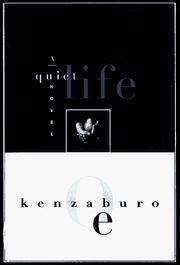 Kenzaburō Ōe · 1990A Quiet LifeLvl 5Slow burn
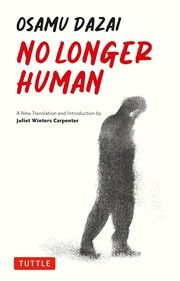 Osamu Dazai · 1948No Longer HumanLvl 4Medium pace
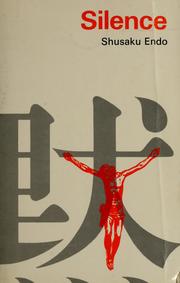 Endō Shūsaku · 1966SilenceLvl 5Slow burn