
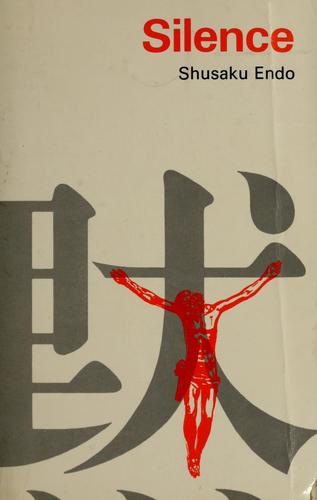
Silence
Endō Shūsaku · 1923–1996 · Japan
Originally Chinmoku (Japanese) · translated by William Johnston
Why it matters
A Portuguese missionary in seventeenth-century Japan faces persecution and the agonizing question of whether God is present or absent in suffering. Endō's masterpiece of faith and doubt, and its most searching test of belief.
At a glance
Clear narrative surface carrying heavy theological and moral weight.
Deep dive
Why a Portuguese priest crossing into a country actively hunting Christians keeps hearing not a divine answer but a divine silence, and what Endo does with the one voice that finally breaks it.
Written for readers who have finished the book. No plot recap, and nothing here is safe to read first.
Themes & symbolism
Rodrigues arrives in Japan expecting the clean choice missionary literature has prepared him for: confess Christ under torture and become a martyr, or deny him and become a coward. Endo spends the novel dismantling that binary. The fumie, a carved image of Christ that suspected believers are ordered to step on to prove their apostasy, is designed by the magistrate Inoue precisely to avoid making martyrs, since a public execution only advertises the faith's appeal. What the Japanese authorities offer instead is a quiet, private capitulation with no drama attached to it at all, and Rodrigues discovers that his own vanity has been preparing him for the wrong test.
Ferreira, Rodrigues's revered teacher, has already apostatized when the novel finds him, and his argument for why is the book's real theological center: Japan is a swamp, he says, where any sapling planted takes root, grows, and rots into something unrecognizable, so that the Christianity practiced in hiding by Japanese peasants was never quite the faith the missionaries brought. Rodrigues wants to refuse this as despair talking, but the novel keeps supplying evidence, in the hidden believers' garbled prayers and folk substitutions, that Ferreira might simply be right.
Kichijiro, the guide who leads Rodrigues into Japan and then betrays him, more than once, for money and out of plain fear, functions as a Judas the novel refuses to let stay condemned. He keeps returning to beg confession, and Rodrigues's growing inability to despise him, even as his own path bends toward the same weakness, is what finally lets the priest understand grace as something extended to cowards specifically, not in spite of their cowardice.
Inoue's Method: Apostasy Instead of Blood
The novel is exact about a real historical shift in how the Tokugawa shogunate suppressed Christianity. Earlier persecutions produced visible martyrs, crucified peasants at Nagasaki, the crushed Shimabara Rebellion of 1637 to 1638, which only fed the faith's underground prestige. The magistrate Inoue, himself once a Christian convert, redesigns the process around psychological pressure instead: hang believers in a pit to bleed slowly from behind the ear rather than kill them outright, and force a foreign priest to watch, since his apostasy, not their deaths, is the actual target. Endo bases Ferreira on a real Jesuit who apostatized under this method in 1633, and the novel's interest in bureaucratic cruelty over spectacle comes directly from that history.
The last seal: what actually happens, and why it lands the way it does.
The ending, explained
Held in a cell and made to listen to Japanese Christians suffering in the pit on his account, Rodrigues is finally brought to the fumie and told that his apostasy, and only his apostasy, will end their suffering. As he hesitates, he hears a voice from the image itself telling him to step, that it was born into the world to be trampled on by men. He does. Taken into custody as Okada San'emon, given a dead man's name and a Japanese wife, he spends the rest of his life assisting the inquisition, examining confiscated religious objects for signs of hidden faith, ostensibly complicit in hunting the very believers he once served. A closing account from a Dutch clerk's diary suggests, without ever confirming outright, that Rodrigues continued secretly hearing confessions his whole life, faith not destroyed by the act but driven somewhere the official record can't reach.
Where to go next
 Endō Shūsaku · 1993Deep RiverLvl 6Slow burn
 Yukio Mishima · 1956The Temple of the Golden PavilionLvl 6Slow burn
 Kenzaburō Ōe · 1964A Personal MatterLvl 5Medium pace
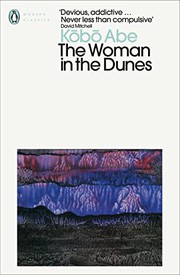 Kōbō Abe · 1962The Woman in the DunesLvl 5Medium pace
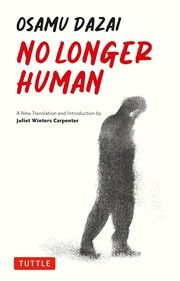 Osamu Dazai · 1948No Longer HumanLvl 4Medium pace
 Graham Greene · 1940The Power and the GloryLvl 5Medium pace