
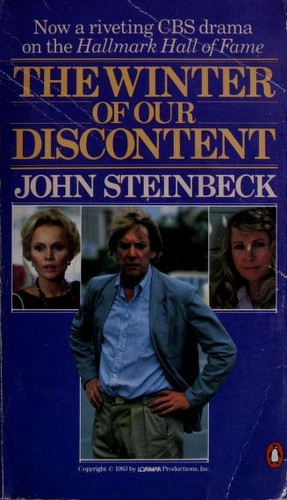
The Winter of Our Discontent
John Steinbeck · 1902–1968 · United States
Why it matters
A New England grocery clerk descended from old money lets ambition talk him into betrayal, fraud, and a slow moral collapse. Steinbeck's last novel, cited by the Nobel committee, trades Dust Bowl grandeur for suburban American corruption.
At a glance
Interior moral reasoning and irony carry a plot that is otherwise straightforward.
Deep dive
How a Yankee grocery clerk talks himself into betraying almost everyone who trusts him, one reasonable-sounding justification at a time, and what a single inherited object still has the power to do once he's alone with the tide.
Written for readers who have finished the book. No plot recap, and nothing here is safe to read first.
Themes & symbolism
Ethan Allen Hawley, descendant of a once-grand New England whaling and merchant fortune, now clerks in the very grocery store his own family used to own before his father's bad investments sold it off. Steinbeck builds the novel as a study in rationalization, tracing exactly how a fundamentally decent, self-aware man narrates himself past every one of his own scruples: he informs on his Italian immigrant employer Marullo to take over the store, and quietly steers his alcoholic friend Danny Taylor into a fatal drinking bender by financing it, in exchange for land Ethan can flip to developers.
Ethan keeps invoking the family's Puritan founder, Old Cap'n Hawley, and the heirlooms he left behind, a sword, a talisman stone, as proof of the family's former righteousness, even while doing the opposite of what those ancestors would sanction. The irony sharpens because Ethan narrates his own scheming in a wry, self-aware voice, addressed at points to a silent listener he calls only 'you,' fully capable of seeing what he's doing and doing it anyway. Steinbeck's late style trades the Dust Bowl grandeur of his earlier work for something quieter and more damning: corruption that requires no villain, only a smart, likable man persuading himself one clause at a time.
Marullo, the employer Ethan eventually informs on, turns out to have engineered his own downfall with something close to affection, choosing to let the store pass to Ethan rather than a stranger once his immigration status is exposed, which only makes Ethan's betrayal harder to metabolize as anything but what it is. Steinbeck sets the whole scheme against a Fourth of July backdrop, a national holiday of professed virtue running underneath a plot about a man robbing a bank and a friend blind, and the irony is played completely straight: nobody in New Baytown, least of all Ethan, seems to notice the contradiction until it's already cost him something.
Allen's Prize Essay and Corruption Inherited Whole
Ethan's son Allen enters a national essay contest with 'I Love America' and wins, a triumph that curdles the moment it comes out the speech was copied wholesale from a radio broadcast. The real horror for Ethan isn't watching his own moral shortcut reproduced in his child, it's watching it arrive without any of the residual guilt that has been eating at him all book. Allen shrugs the plagiarism off as simply how things are done, and Steinbeck lets that shrug land harder than any accusation could: the next generation has skipped straight past the rationalizing and gone right to the ease.
The last seal: what actually happens, and why it lands the way it does.
The ending, explained
Ethan gets away with everything: Marullo's grocery, Danny's land, the town's renewed respect, right up until Allen's plagiarism comes out and forces the reckoning Ethan has been outrunning all novel. He walks to the shoreline cave the family has always called the place, carrying his father's old razor, meaning not to come back. What stops him is the family talisman in his coat pocket, an heirloom stone passed down the Hawley line for generations, which his daughter Ellen has quietly slipped there because she alone has guessed what he means to do. Steinbeck ends the novel there, Ethan turning back toward the light rather than finishing the act, not because his guilt has lifted but because the talisman was always meant to be handed on, and someone is still waiting for it.
Where to go next
 John Steinbeck · 1937Of Mice and MenLvl 3Fast paced
 John Steinbeck · 1939The Grapes of WrathLvl 5Medium pace
 John Steinbeck · 1945Cannery RowLvl 3Medium pace
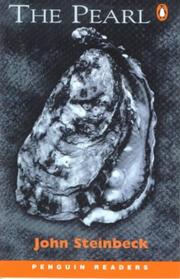 John Steinbeck · 1947The PearlLvl 2Fast paced
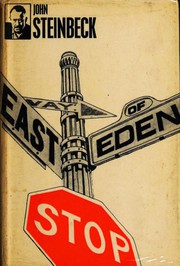 John Steinbeck · 1952East of EdenLvl 5Medium pace
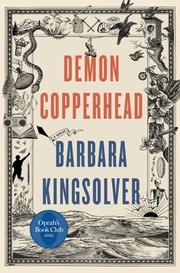 Barbara Kingsolver · 2022Demon CopperheadLvl 4Fast paced