
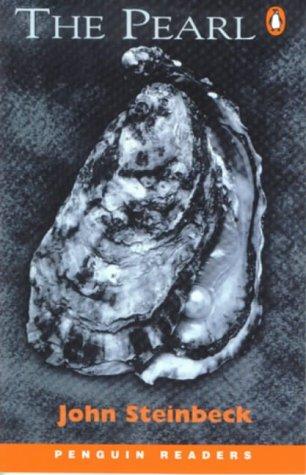
The Pearl
John Steinbeck · 1902–1968 · United States
Why it matters
A poor pearl diver finds a pearl 'as large as a sea-gull's egg' and watches greed, violence, and envy destroy everything it was supposed to buy. Steinbeck's short parable strips the American dream down to a folk tale's bones.
At a glance
A brief, simple parable structure in plain prose makes this Steinbeck's most accessible book.
Deep dive
What a poor pearl diver's family loses chasing the fortune buried inside the pearl of the world, once every person in town decides they have a claim on it too.
Written for readers who have finished the book. No plot recap, and nothing here is safe to read first.
Themes & symbolism
Kino finds an extraordinary pearl days after a scorpion stings his infant son Coyotito and the town doctor, who had refused to treat a poor Mexican family, suddenly discovers an interest in curing the child once word of the pearl spreads. Steinbeck structures the whole novel as a folk parable, spare, deliberately told like the La Paz legend he heard directly and adapted, and gives Kino's shifting mental state an explicit musical vocabulary: he perceives his life through internal songs, the Song of the Family, the Song of Evil, that rise and fall as the pearl's promise curdles into threat.
The pearl buyers of La Paz, who Kino assumes are competing against each other for his prize, are revealed to be working for a single unnamed patron, quietly colluding to lowball every seller in town, a detail Steinbeck plants early and lets the reader understand well before Kino does. The collusion turns the pearl's value from an economic fact into a colonial one: Kino isn't simply unlucky in the marketplace, he's up against a system built specifically to keep wealth from reaching hands like his no matter what he finds.
The Doctor's Refusal as the Novel's First Violence
Before any pearl exists, the doctor turns Kino and Juana away from Coyotito's scorpion sting because they can't pay, a refusal Steinbeck places at the very start of the novel so that everything Kino does afterward reads as response rather than cause. The doctor's sudden interest once the pearl is found, offering treatment he'd have withheld an hour earlier, exposes the entire town's relationship to the Kino family as purely transactional, care extended only when there's profit attached to it. Steinbeck never gives the doctor a name, only a title and a set of contemptuous mannerisms, a choice that keeps him representative of the whole colonial medical system rather than an isolated villain.
The last seal: what actually happens, and why it lands the way it does.
The ending, explained
Kino's pursuit of a fair price destroys everything the pearl was meant to buy: his canoe is wrecked, his house burned, and he kills a man in the darkness defending himself against an attacker sent to take the pearl by force, which leaves Kino and Juana fleeing into the mountains with Coyotito to escape the trackers now hunting them. The trackers fire blind into the dark at a sound they take for an escaping adult, and the shot kills Coyotito instead, the child the pearl was supposed to save for. Kino and Juana walk back into La Paz together, publicly, refusing to hide their failure, and Kino throws the pearl back into the sea himself, ending the novel exactly where it began, poor, but no longer under the illusion that the pearl was ever going to change that.
Where to go next
 John Steinbeck · 1937Of Mice and MenLvl 3Fast paced
 John Steinbeck · 1939The Grapes of WrathLvl 5Medium pace
 John Steinbeck · 1945Cannery RowLvl 3Medium pace
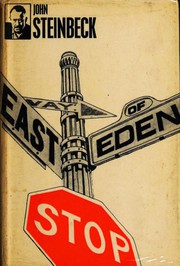 John Steinbeck · 1952East of EdenLvl 5Medium pace
 John Steinbeck · 1961The Winter of Our DiscontentLvl 5Medium pace
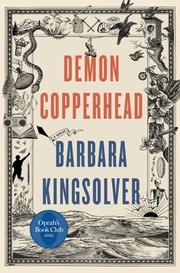 Barbara Kingsolver · 2022Demon CopperheadLvl 4Fast paced