
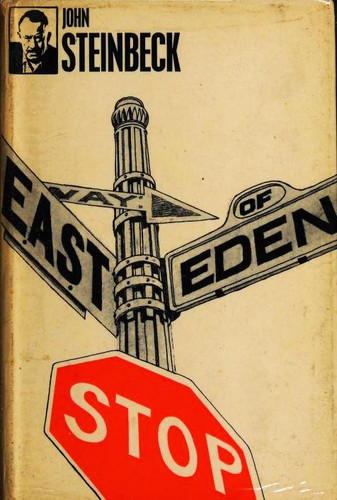
East of Eden
John Steinbeck · 1902–1968 · United States
Why it matters
Two families in California's Salinas Valley replay Cain and Abel across generations, anchored by Cathy Ames, one of American fiction's purest villains. Steinbeck called it the one book all his others had been leading toward.
At a glance
A long multi-generational cast and biblical allegory add weight to otherwise clear prose.
Deep dive
How two sets of brothers in California's Salinas Valley keep replaying the same Old Testament sibling rivalry, and what one dying father's choice of a single word does to break the pattern.
Written for readers who have finished the book. No plot recap, and nothing here is safe to read first.
Themes & symbolism
East of Eden tracks the Trask and Hamilton families across two generations in the Salinas Valley, but its engine is the Cain and Abel story Steinbeck restages twice: first between Adam Trask and his half-brother Charles, competing for their father's approval, and then between Adam's own twin sons, Cal and Aron, competing for Adam's. Steinbeck names the pattern outright through Lee, the Trask family's Chinese servant and the novel's real intellectual center, who spends years researching the Genesis story in Hebrew alongside a circle of local elders and returns with a translation that reframes the whole book's argument.
That word is timshel, thou mayest, which Lee's research finds buried in a King James mistranslation that had rendered God's warning to Cain as a promise, thou shalt, rather than a choice. Steinbeck makes the distinction the novel's whole philosophy: Cal, convinced he's inherited his mother Cathy's cruelty the same way Cain inherited a curse, spends the book waiting to become the villain he assumes he already is, and timshel is Lee's answer to that fatalism, an insistence that character is chosen rather than issued at birth.
Cathy Ames, who shoots Adam and abandons their infant sons to become Kate, the madam of a brutal local brothel, is the novel's flattest character by design: Steinbeck writes her with almost no interiority, a person seemingly incapable of the choice timshel offers everyone else, and her flatness works as argument rather than failure, proof by contrast that whatever damns Cal isn't inherited from her so simply as he believes.
Lee's Hebrew Argument
Lee's research into timshel takes years and involves consulting a panel of elderly Chinese scholars back in San Francisco specifically because he refuses to trust a translation he can't verify himself, a level of scholarly rigor Steinbeck gives to a character most of the novel's white characters initially dismiss as a domestic servant. The scene where Lee finally explains his findings to Samuel Hamilton and Adam functions as the novel's real climax of ideas, arriving well before the plot's climax of action, because everything Cal does afterward is being measured against the choice Lee has just proven was always available.
Charles's Scar and the First Rejected Gift
Before Cal and Aron exist, Adam's brother Charles nearly kills their father in a rage after their father favors Adam's gift over his own, a fight that leaves Charles permanently scarred and establishes, one generation early, the exact shape the Cal and Aron plot will later repeat. Steinbeck's decision to run the Cain and Abel pattern twice, rather than once, argues that the story isn't a single family's tragedy but a structure that keeps reasserting itself until somebody, finally, refuses to let it.
The last seal: what actually happens, and why it lands the way it does.
The ending, explained
Cal, jealous of Adam's clear preference for Aron and wounded by his father's rejection of a wartime investment gift, takes Aron to meet their mother Kate at her brothel, a cruelty calculated to shatter Aron's idealized image of his family; Aron enlists in the army in his devastation and is killed in the war, and the news brings Adam a paralyzing stroke. On his deathbed, Adam, struggling to speak, gives Cal the one thing that can release him from the guilt of having caused Aron's death: not forgiveness exactly, but the word timshel itself, the confirmation that whatever Cal becomes next is still, actually, his own choice to make.
Where to go next
 John Steinbeck · 1937Of Mice and MenLvl 3Fast paced
 John Steinbeck · 1939The Grapes of WrathLvl 5Medium pace
 John Steinbeck · 1945Cannery RowLvl 3Medium pace
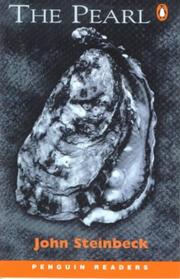 John Steinbeck · 1947The PearlLvl 2Fast paced
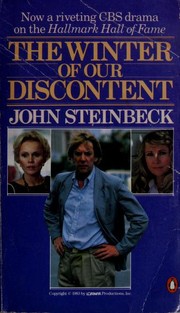 John Steinbeck · 1961The Winter of Our DiscontentLvl 5Medium pace
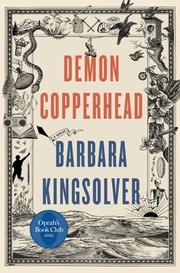 Barbara Kingsolver · 2022Demon CopperheadLvl 4Fast paced