
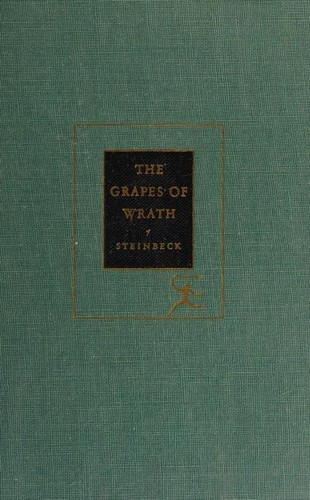
The Grapes of Wrath
John Steinbeck · 1902–1968 · United States
Why it matters
The Joad family is driven off its Dust Bowl land toward a California that betrays them. Steinbeck gave the Depression's dispossessed an Old Testament grandeur: the great American novel of migration and dignity.
At a glance
Interchapters shift registers, but the core narrative reads in clear realist prose.
Deep dive
Steinbeck keeps interrupting the Joads' story to zoom out to the whole country — and the interruptions turn out to be the argument.
Written for readers who have finished the book. No plot recap, and nothing here is safe to read first.
Themes & symbolism
The intercalary chapters — turtle crossing the highway, land auctioned to banks, migrants haggling over used cars — aren't padding, they're Steinbeck insisting the Joads' particular suffering is structural, one instance of a system converting people into surplus labor everywhere at once; the novel keeps sliding from 'I' to 'we' because that's precisely the political transformation it's arguing for. Jim Casy, the fallen preacher who reworks his faith into something closer to Emersonian oversoul than Christian doctrine — 'maybe all men got one big soul ever'body's a part of' — supplies the theology underneath that shift, and his death at the hands of strikebreakers, echoing Christ's, converts Tom Joad from a man protecting his own family into one willing to organize for everyone's.
The title, drawn from the Battle Hymn of the Republic and Isaiah's winepress of wrath, works two ways at once: California's fields are literally rotting with abundance — oranges sprayed with kerosene, potatoes dumped in rivers, price-supported destruction while the Joads starve within sight of it — a grotesque bounty ripening into violence rather than nourishment. Ma Joad becomes the novel's actual center of gravity as the family patriarchy visibly fails, Pa Joad's authority quietly ceding to hers chapter by chapter; her insistence that 'we're the people that live' reframes survival itself as the family's — and the class's — real inheritance, outlasting land, house, and even, eventually, the family's own intact shape, as members peel away — Noah, Connie, Al, finally Tom himself — while the core somehow persists.
The Fight Over the Ending
The novel was banned, burned, and denounced from pulpits and the floor of Congress on publication, and Rose of Sharon's final act was the flashpoint — reviewers called it obscene, unnecessary, an affront that Steinbeck refused to soften even under pressure from his editor. His insistence on keeping it intact is itself part of the book's argument: American squeamishness about depicting need is exactly the moral failure the whole novel is diagnosing in the growers, the banks, and the bystanders who look away from Dust Bowl suffering as an embarrassment rather than a catastrophe.
Journalism Underneath the Fiction
Steinbeck reported on migrant labor camps for the San Francisco News before writing the novel, material later collected as The Harvest Gypsies, and the intercalary chapters carry that documentary DNA directly into the fiction — the used-car-lot patter and the tenant-farmer/bank dialogues read like transcribed testimony because they're built from the same close observation as his reportage. The ecological argument matters as much as the economic one: he frames the Dust Bowl not as a natural disaster but as a man-made one, monoculture and absentee ownership stripping topsoil the way the banks strip families from land, so the Joads' displacement is diagnosed as a single system's failure, not bad weather and bad luck arriving together by coincidence.
The last seal: what actually happens, and why it lands the way it does.
The ending, explained
Stranded by flood in a barn, the Joads shelter with a starving stranger too weak to eat solid food. Rose of Sharon, who has just delivered a stillborn baby — the novel's bleakest image of a future refused — meets Ma's eyes, understands without being told, and offers the man her breast, a wordless, deliberately Madonna-like tableau of survival stripped of sentimentality or shame. It's not redemption in any triumphant sense; the family has lost nearly everything named in its opening chapters. But it enacts the 'we' the intercalary chapters spent the whole book arguing for — kinship extended past blood, dignity generated out of nothing but the willingness to keep each other alive.
Where to go next
 John Steinbeck · 1937Of Mice and MenLvl 3Fast paced
 John Steinbeck · 1945Cannery RowLvl 3Medium pace
 John Steinbeck · 1947The PearlLvl 2Fast paced
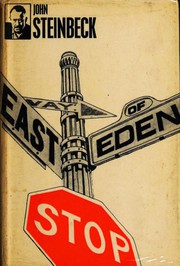 John Steinbeck · 1952East of EdenLvl 5Medium pace
 John Steinbeck · 1961The Winter of Our DiscontentLvl 5Medium pace
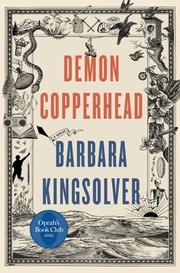 Barbara Kingsolver · 2022Demon CopperheadLvl 4Fast paced