
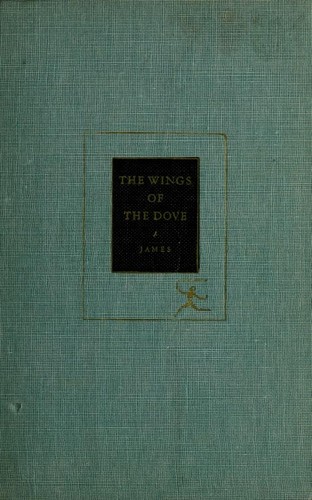
The Wings of the Dove
Henry James · 1843–1916 · USA / England
Why it matters
A dying American heiress and the impoverished couple who scheme to inherit her fortune through a deathbed marriage: betrayal refracted through the latest, most demanding James style. His late masterpiece on money, love, and the weight of a generous ghost.
At a glance
James's late style pushes syntax to its limit, circling motive in long, indirect sentences.
Deep dive
A poor Londoner in love with a poor journalist, and a fabulously wealthy, dying American woman drawn into their circle, arrive at the same drawing rooms, and James spends the whole novel asking how much of a scheme built on real affection is still a scheme.
Written for readers who have finished the book. No plot recap, and nothing here is safe to read first.
Themes & symbolism
Kate Croy, intelligent and poor, is financially dependent on her formidable aunt Maud Lowder, who disapproves of Kate's attachment to Merton Densher, a journalist with no money of his own. Into their circle comes Milly Theale, a wealthy young American dying of an unnamed illness, whom Kate befriends, and whose evident fondness for Densher, once Kate introduces them, hands Kate the outline of a plan she never once states outright, not even to Densher: let Milly fall for him, and let a dying woman's generosity accomplish, after her death, what neither of them can afford while she's alive.
James renders the scheme almost entirely through implication and withheld dialogue, Kate never speaks the plan aloud and Densher never quite agrees to it in words, so that how much either of them privately admits to themselves becomes the novel's real subject rather than the plot mechanics of the plan itself. Milly is no naif either: aware at some level of being courted for reasons beyond affection, she chooses to love Densher anyway, a generosity the novel treats as a kind of moral scale Kate and Densher can't match.
Lord Mark's Betrayal, Kept Offstage
Lord Mark, a rejected suitor of Milly's, informs her directly of Kate and Densher's understanding, but James stages the scene where Milly absorbs the betrayal entirely offstage, granting the reader only its aftermath, a formal choice consistent with the whole novel's habit of keeping its most decisive moments just out of view, forcing every character, and every reader, to infer motive from consequence rather than confession. The title's image, wings spread wide enough to shelter rather than merely to fly, belongs to Milly in Densher's own late reckoning, a dead woman's forgiveness covering two people who did nothing to deserve the shelter of it.
The last seal: what actually happens, and why it lands the way it does.
The ending, explained
Having learned of the scheme, Milly turns her face to the wall and declines rapidly, but leaves Densher a substantial legacy regardless, an act of forgiveness so complete it becomes its own unbearable judgment on the two people who plotted around her. Densher, transformed by grief and by the enormity of what Milly's generosity now asks of his conscience, refuses to touch the inheritance and tells Kate she can have him only without the money, or the money only without him, a condition that exposes exactly how much of their bond depended on the plan neither of them ever named aloud. Kate, still practical and unwilling to pretend the money was never part of it, understands that taking Densher now on his terms means living permanently inside Milly's shadow, and the novel's last line, that the two of them will never again be as they were, closes the book on an attachment that has survived its own scheme only by turning into something neither of them actually wanted.
Where to go next
 Henry James · 1880Washington SquareLvl 4Medium pace
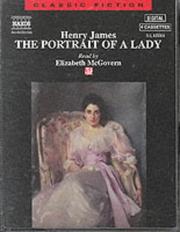 Henry James · 1881The Portrait of a LadyLvl 6Slow burn
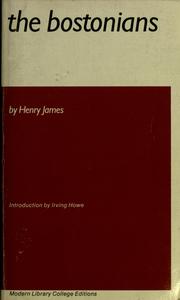 Henry James · 1886The BostoniansLvl 6Slow burn
 Henry James · 1898The Turn of the ScrewLvl 7Medium pace
 Henry James · 1903The AmbassadorsLvl 9Slow burn
 Edith Wharton · 1905The House of MirthLvl 5Medium pace