
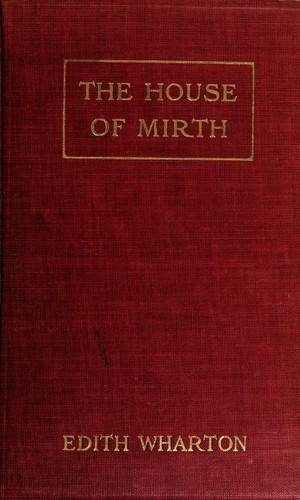
The House of Mirth
Edith Wharton · 1862–1937 · USA
Why it matters
Lily Bart, beautiful and almost ruthless enough, is priced out of old New York marriage market by degrees. Society as a machine for destroying women who hesitate: Wharton's coldest, finest tragedy.
At a glance
Elegant but socially dense prose tracks the subtle status codes of old New York.
Deep dive
Wharton's coldest trick is narrative, not plot: a heroine punished at every turn for scruples the novel never quite lets her — or the reader — call virtue.
Written for readers who have finished the book. No plot recap, and nothing here is safe to read first.
Themes & symbolism
Lily Bart is raised entirely for the marriage market and then punished by that same market for every hesitation — refusing a dull, secure proposal, accepting money from Gus Trenor without registering what he believes he's purchased, declining to use compromising letters that would save her socially at someone else's expense. Wharton's genius is refusing to frame these hesitations as moral triumphs even though they are the only things that keep Lily sympathetic; the novel's society runs on ruthless self-interest, and anything short of it, including basic decency, reads as fatal miscalculation. Money in the novel is never just money — it's a leash, and every man's 'gift' to Lily (Trenor's especially) comes with an unstated sexual claim she only belatedly understands she's accrued.
Lawrence Selden offers an alternative in his idea of a republic of the spirit, a life measured by taste and freedom from social calculation rather than money — and neither he nor Lily can actually afford to live there. Their mutual hesitation, compounded by mistimed encounters and one damaging misreading (Selden seeing Lily leave another man's apartment and drawing the wrong conclusion), turns their compatibility into dramatic irony rather than romance: the one relationship built on something other than transaction is the one neither of them risks enough to save. Bertha Dorset's use of Lily as a decoy to cover her own affair, then as a scapegoat the moment Lily becomes inconvenient, shows the same machine operating between women: Lily's ruin is enabled as much by other women protecting their own precarious positions as by any single man's malice.
The Economics of Being Looked At
Lily's beauty is treated throughout as a depreciating financial asset rather than a personal quality — she is quite literally aging out of her own market value, and the novel tracks her social collapse with the clinical precision of a balance sheet, right down to her disastrous, unskilled stint as a milliner, a trade she has no practical competence for because she was never trained to do anything except be seen.
The Tableau Vivant
The novel's most self-aware set piece has Lily posing in a society tableau vivant, arranged to resemble a famous portrait, and the scene is Wharton's whole argument staged literally: a room full of people applauding a woman for successfully becoming a static image rather than a person, the highest compliment her world has to offer being that she has, for a moment, stopped being alive at all.
The last seal: what actually happens, and why it lands the way it does.
The ending, explained
Destitute and dependent on chloral to sleep, Lily receives a small inheritance large enough to rescue her own situation — and uses it instead to repay her debt to Gus Trenor, clearing the one entanglement she finds morally unbearable, even at the cost of her own survival. That same night she takes a fatal overdose of her sedative, left deliberately ambiguous between suicide and accident from someone too depleted to track her own dose. Selden arrives the next morning to finally propose, finds her dead, and discovers proof of the debt repaid and of letters she burned rather than used against a rival — realizing, one day too late, the integrity she'd kept entirely to herself.
Where to go next
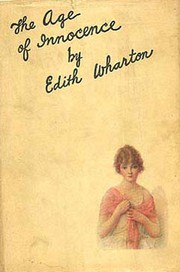 Edith Wharton · 1920The Age of InnocenceLvl 4Medium pace
 Henry James · 1881The Portrait of a LadyLvl 6Slow burn
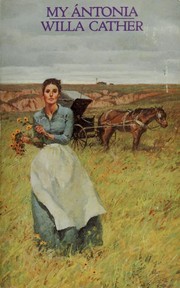 Willa Cather · 1918My ÁntoniaLvl 3Medium pace
 Thomas Hardy · 1891Tess of the d'UrbervillesLvl 4Medium pace
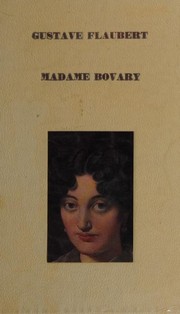 Gustave Flaubert · 1857Madame BovaryLvl 5Slow burn
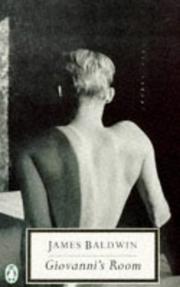 James Baldwin · 1956Giovanni's RoomLvl 5Medium pace