
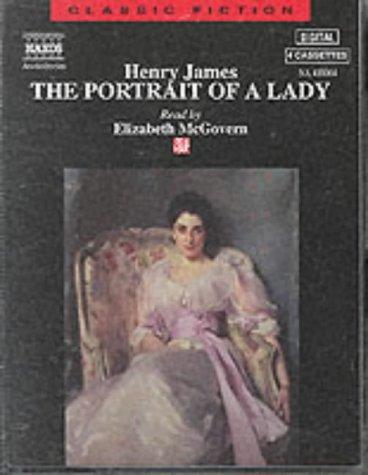
The Portrait of a Lady
Henry James · 1843–1916 · USA / England
Why it matters
Isabel Archer, 'affronting her destiny,' chooses freely and chooses her own cage: the novel of consciousness coming into full power. James's midnight-vigil chapter of her thinking is a hinge in fiction's history.
At a glance
Long Jamesian sentences and sustained interior deliberation demand close attention.
Deep dive
The gift meant to set its heroine entirely free from having to marry for security — and the novel's most famous chapter, which has almost no plot in it at all, is spent entirely on what she does with that freedom.
Written for readers who have finished the book. No plot recap, and nothing here is safe to read first.
Themes & symbolism
Isabel Archer's American faith in self-determination — her refusal of two devoted, entirely reasonable suitors in the name of keeping her future unwritten — is precisely what Madame Merle and Gilbert Osmond exploit. Ralph Touchett arranges Isabel's inheritance so she can become whatever she wants rather than marry for security; the money is meant as pure liberation, and it functions instead as bait, making her the target of a scheme she can't see because she mistakes Osmond's calculated aestheticism for depth. The novel's irony is total: the more freedom Isabel is given, the more precisely she can be maneuvered into a cage of her own choosing, because choice itself, absent real information, is not the same as freedom.
James stages this as a problem of consciousness rather than plot. The famous night-long vigil in which Isabel sits alone reconstructing the true shape of her marriage — realizing what Osmond actually wants from her, and what she has actually become to him — advances nothing externally and everything internally; it's the moment the novel's whole method (extended free indirect access to a single mind turning a fact over and over) becomes the story's real center of gravity, a technical landmark that reoriented what novels could do with interiority.
Chapter 42: A Plot Made of Thought
Nothing happens in the vigil chapter except a woman sitting by a dying fire, thinking — and it is nonetheless the novel's climax, because Isabel's marriage was always a problem of perception rather than event. James lets the chapter run at the pace of actual reconsideration, unhurried and exact, and in doing so demonstrates that consciousness itself can carry a novel's dramatic weight without a single line of dialogue.
Ralph's Gift
Ralph's dying revelation that he engineered Isabel's fortune specifically so she could be free reframes the entire marriage plot as an unintended tragedy of good intentions: the one character who wanted nothing from her is the one whose generosity destroyed her, a crueler irony than anything Osmond or Merle could have designed on purpose.
Osmond the Collector
Osmond's defining trait is a connoisseur's need to arrange beautiful, valuable things around himself, and the novel makes clear that Isabel and his daughter Pansy occupy the same category in his mind as his antique furniture and curated taste — prized for how they reflect on him, punished the moment they display a will of their own. Isabel's crime, in his eyes, is never disobedience exactly; it's having opinions at all.
The last seal: what actually happens, and why it lands the way it does.
The ending, explained
Isabel learns that Madame Merle is Pansy's real mother and that the whole courtship was engineered for her money; she defies Osmond to be with the dying Ralph, who confesses his role in her inheritance just before he dies. Caspar Goodwood, still in love with her, makes one last urgent case for her to leave Osmond entirely and start over. Isabel instead returns to Rome and to her marriage — an ending James leaves genuinely open, readable either as a tragic but coherent commitment to a freely chosen life even at ruinous cost, or as the same retreat from full self-determination she once refused her safer suitors, now dressed up as principle.
Where to go next
 Henry James · 1880Washington SquareLvl 4Medium pace
 Henry James · 1886The BostoniansLvl 6Slow burn
 Henry James · 1898The Turn of the ScrewLvl 7Medium pace
 Henry James · 1902The Wings of the DoveLvl 8Slow burn
 Henry James · 1903The AmbassadorsLvl 9Slow burn
 Edith Wharton · 1905The House of MirthLvl 5Medium pace