
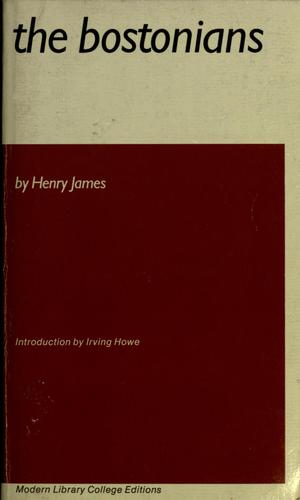
The Bostonians
Henry James · 1843–1916 · USA / England
Why it matters
A fervent Boston feminist and a reactionary Southern cousin battle for the soul, and the stage career, of a young woman with a gift for speeches. James's satire of reform movements and possessive love still cuts uncomfortably close.
At a glance
Long expository passages on reform politics slow a plot that turns on subtle psychological pressure.
Deep dive
A fervent Boston reformer and her reactionary Mississippi cousin fight over the same gifted young public speaker, and James builds the whole novel around whether either one actually wants what's good for her.
Written for readers who have finished the book. No plot recap, and nothing here is safe to read first.
Themes & symbolism
Olive Chancellor, wealthy, intense, and committed to the women's movement with an ardor that borders on the religious, discovers Verena Tarrant, the teenage daughter of an itinerant mesmeric healer, delivering an improvised speech with an oratorical gift Olive is certain the cause needs, and all but adopts her, financially and emotionally, asking for a devotion exclusive enough to crowd out any future husband. James renders the bond with a charge closer to romantic possession than mentorship, the era's real, unnamed intimacy between women folded into a plot about political conviction.
Basil Ransom, Olive's poor cousin from Mississippi, unreconciled to Northern reform culture or the postwar politics that produced it, meets Verena and begins courting her against everything Olive has built around her, and James refuses to make either side simply right: Olive's sisterhood and Basil's romance read, side by side, as two different appetites for controlling the same young woman's talent, neither of them asking Verena much about what she actually wants until the book is nearly over.
Verena's Gift as Everyone's Property
Verena's father charged admission for her mesmeric platform performances before Olive ever discovered her, and James keeps that commercial framing visible throughout: Olive's reform movement, Basil's courtship, and her father's earlier hucksterism all treat Verena's talent as a resource to be managed by somebody else, the novel's satire of reform-movement rhetoric turning on how easily a cause's language of liberation slides into just another way of owning a person.
Miss Birdseye and the Fading Abolitionist Generation
James sets the elderly reformer Miss Birdseye, a veteran of the abolitionist movement now half-blind and gently mocked even by allies for her earnestness, against Olive's more calculating, self-interested version of reform, and the contrast lets the novel register something closer to elegy than pure satire: a generation that fought a genuine moral catastrophe giving way to one that treats causes as vehicles for personal intensity and possession.
The last seal: what actually happens, and why it lands the way it does.
The ending, explained
At the Boston Music Hall, where Olive has arranged the triumphant public lecture meant to launch Verena's career in earnest, Basil arrives backstage and persuades her to abandon the platform and elope with him instead; torn but drawn to him against her own sense of duty to Olive and the cause, Verena leaves through a side door while a packed hall waits for a speaker who never appears, leaving Olive to face the crowd's confusion and her own public humiliation alone. James's famous closing line, noting that the tears Verena sheds under her veil on the way out are unlikely to be the last she sheds in the marriage she's just chosen, denies the courtship plot its usual reward: neither Basil's win nor Olive's loss reads as clean, and the marriage that ends the book is left an open question rather than a happy one.
Where to go next
 Henry James · 1880Washington SquareLvl 4Medium pace
 Henry James · 1881The Portrait of a LadyLvl 6Slow burn
 Henry James · 1898The Turn of the ScrewLvl 7Medium pace
 Henry James · 1902The Wings of the DoveLvl 8Slow burn
 Henry James · 1903The AmbassadorsLvl 9Slow burn
 Edith Wharton · 1905The House of MirthLvl 5Medium pace