
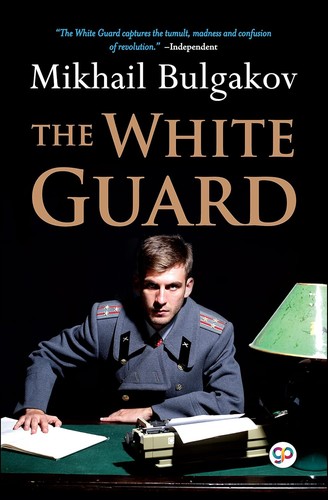
The White Guard
Mikhail Bulgakov · 1891–1940 · Ukraine / Russia
Originally Belaya Gvardiya (Russian)
Why it matters
A Kyiv doctor's family clings to shifting loyalties as Ukrainian nationalists, Bolsheviks, and the retreating Whites all fight over their city in one catastrophic winter. Bulgakov transposed his own wartime Kyiv into fiction just clear-eyed enough to get him hauled in for questioning.
At a glance
Multiple shifting factions and a large family cast require tracking amid civil-war chaos.
Deep dive
A family holds onto its cream-colored curtains and its tiled stove while the city outside changes hands between four different armies in little more than a year, and Bulgakov, whose own brothers lived through it, refuses to tell you which side deserved to win.
Written for readers who have finished the book. No plot recap, and nothing here is safe to read first.
Themes & symbolism
The Turbin siblings, Alexei, Nikolka, and Elena, keep house in a Kyiv apartment that Bulgakov describes down to the cream-colored blinds and the Dutch-tiled stove scrawled with years of family jokes and inscriptions, and that specificity is the point: the apartment is the one fixed thing in a novel where the city outside is governed first by a German-backed Hetman, then by Symon Petliura's nationalist forces, then, as the book closes, by the advancing Bolsheviks. Alexei serves as a doctor with a White volunteer detachment that the Hetman abandons at the last minute, fleeing the city in a German officer's uniform and leaving the men he commanded to be slaughtered or scattered by Petliura's forces without ever having been told the fight was already lost.
Bulgakov, who lived through this same rotation of occupying armies in his own Kyiv apartment and whose brothers fought on the White side, refuses his characters, and his reader, the comfort of a cause worth the violence. Colonel Nai-Tours, the novel's one figure of unambiguous honor, dies ordering his cadets to strip their insignia and run rather than die for a command already deserted by the men who gave it, and his death reads as a verdict on the entire White cause: courage spent defending an authority that had already abandoned its own soldiers.
A City That Changed Hands by the Season
Kyiv passed through roughly a dozen changes of government between the 1917 revolution and 1920, German occupation, Ukrainian nationalist rule, White Russian control, Bolshevik seizure, and back again, each transition arriving with its own currency, its own patrols, and its own executions. Bulgakov sets The White Guard inside a single one of those rotations, the Hetman's fall and Petliura's brief occupation over the winter of 1918 to 1919, and lets the sheer velocity of it, one army replacing another before the last one's slogans have even come down from the walls, stand in for the whole chaotic sequence without needing to narrate all of it.
The Play a Dictator Kept Watching
Bulgakov adapted the novel for the Moscow Art Theatre as Days of the Turbins, and the play became one of the strangest survival stories in Soviet letters: Stalin reportedly saw it more than a dozen times, drawn, by his own account, to its sympathetic portrait of White officers as fully human rather than caricatured class enemies. That personal fondness is widely credited with the informal protection that let Bulgakov keep working, and keep being published in tiny doses, through years when writers with far less politically awkward material vanished into the same purges his own fiction kept circling.
The last seal: what actually happens, and why it lands the way it does.
The ending, explained
Alexei survives a near-fatal wound in the street fighting, nursed back to health by Julia Reiss after what the novel frames as an almost supernatural intervention, a vision of his dead mother steering him toward her door. Nikolka retrieves Nai-Tours's body from a makeshift morgue and carries the news of his death to the colonel's mother, one of the book's few scenes played without irony. The Bolsheviks arrive in the final pages as simply the next army, no more or less alien than the ones before them, and Bulgakov closes not on a battle but on the night sky over the city, the stars indifferent to which flag is currently flying, a deliberately anticlimactic ending that treats the change of regime as weather the Turbins have learned, exhausted, to wait out.
Where to go next
 Mikhail Bulgakov · 1925Heart of a DogLvl 4Fast paced
 Mikhail Bulgakov · 1925The Fatal EggsLvl 3Fast paced
 Mikhail Bulgakov · 1965Black SnowLvl 4Fast paced
 Mikhail Bulgakov · 1967The Master and MargaritaLvl 6Fast paced
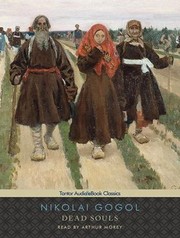 Nikolai Gogol · 1842Dead SoulsLvl 5Medium pace
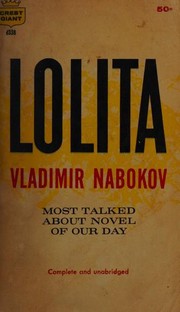 Vladimir Nabokov · 1955LolitaLvl 8Medium pace