
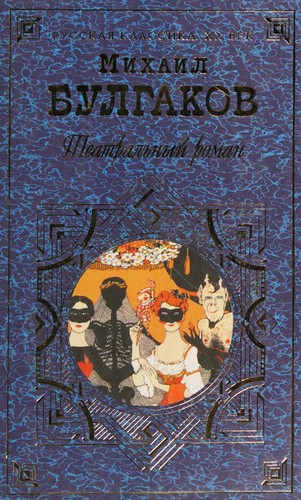
Black Snow
Mikhail Bulgakov · 1891–1940 · Ukraine / Russia
Originally Teatralny Roman (Russian)
Why it matters
A failed novelist stumbles into Moscow's theater world and discovers its rehearsal rooms are as vicious and vain as anything in Soviet politics. Bulgakov's roman à clef skewers Stanislavski's own methods from the inside, unfinished at his death and unmistakably furious.
At a glance
A brisk, anecdotal satire, though its theatrical in-jokes reward knowing Bulgakov's own career.
Deep dive
Bulgakov spent years as a resentful assistant director inside Moscow's most famous theater, and this novel is what he did with everything he was never allowed to say out loud about the man running it.
Written for readers who have finished the book. No plot recap, and nothing here is safe to read first.
Themes & symbolism
Maksudov, a failed novelist saved from suicide by an unexpected letter accepting his manuscript, gets pulled into the Independent Theatre's orbit and discovers that getting produced is its own catastrophe: the theatre runs less like an ensemble than a court, presided over by two founding directors who have not agreed on anything in decades and route every decision through students, secretaries, and old grudges rather than each other directly. Bulgakov, who spent years as a staff director at the actual Moscow Art Theatre under Konstantin Stanislavski, gives the fictional Independent Theatre's rehearsal room the texture of a workplace he knew from the inside: petty seniority battles, actors auditioning their vanity rather than their craft, a bureaucracy of approvals that exists mainly to protect the directors from ever having to say no themselves.
Ivan Vasilievich, the theatre's revered elder statesman, is Bulgakov's most pointed creation: a director whose acting system has calcified into scripture, applied by rote to every scene regardless of whether it helps, defended by a staff too invested in his legend to admit the exercises have stopped producing anything but delay. Maksudov's own play, adapted from his novel, gets slowly strangled by rehearsals that revise it into unrecognizability, each note delivered as artistic wisdom rather than what it actually is, institutional self-preservation dressed up as craft. Bulgakov narrates all of it through Maksudov's own bewildered, increasingly bitter first-person account, so the satire never has to argue its case directly; the reader simply watches a promising script get workshopped, committee by committee, into something its own author no longer recognizes as his.
Two Directors Who Never Agreed
Ivan Vasilievich and his rarely seen rival co-director, Aristarkh Platonovich, split the Independent Theatre's authority without ever appearing in the same room, forcing every decision through intermediaries because the two men have been feuding for so long that direct contact has become unthinkable. The real Moscow Art Theatre's founders, Stanislavski and Vladimir Nemirovich-Danchenko, ran their own famously strained partnership along similar lines for decades, and Bulgakov's satire gains its precision from having watched that dynamic firsthand rather than invented it. The novel breaks off mid-manuscript, unfinished at Bulgakov's death in 1940 and unpublished in the Soviet Union until 1965, its abrupt ending less a flaw than a fitting last word from a book about an institution that never let anything reach a clean conclusion either.
Where to go next
 Mikhail Bulgakov · 1925Heart of a DogLvl 4Fast paced
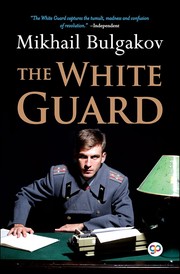 Mikhail Bulgakov · 1925The White GuardLvl 5Medium pace
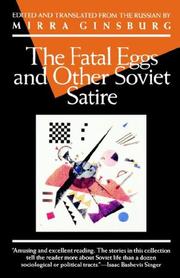 Mikhail Bulgakov · 1925The Fatal EggsLvl 3Fast paced
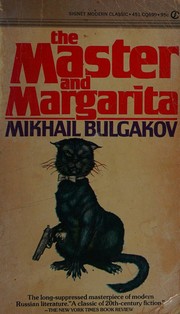 Mikhail Bulgakov · 1967The Master and MargaritaLvl 6Fast paced
 Nikolai Gogol · 1842Dead SoulsLvl 5Medium pace
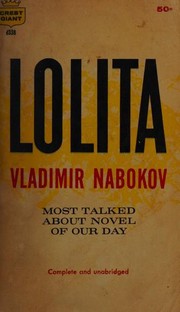 Vladimir Nabokov · 1955LolitaLvl 8Medium pace