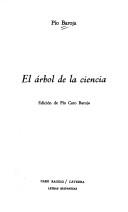
The Tree of Knowledge
Pío Baroja · 1872–1956 · Spain
Originally El árbol de la ciencia (Spanish)
Why it matters
A disillusioned young doctor watches poverty, professional corruption, and personal tragedy dismantle his idealism in turn-of-the-century Madrid. Baroja's terse pessimism won him Hemingway's lasting admiration.
At a glance
Terse, pessimistic prose threaded with essayistic digression on ideas.
Deep dive
A young doctor in Madrid watches every ideal he entered medicine with get worn down by the profession's routine cruelty, and Baroja follows him past disillusionment into a much harder question about whether a decent life is even survivable.
Written for readers who have finished the book. No plot recap, and nothing here is safe to read first.
Themes & symbolism
Andres Hurtado enters medical school believing in the science he's about to learn, and Baroja spends the novel's Madrid chapters stripping that belief down one clinical rotation at a time: overcrowded hospital wards where patients are treated as teaching material, professors more invested in institutional turf than in curing anyone, a public health system that manages poverty rather than addressing it. The title's allusion to Genesis is deliberately double-edged; medical knowledge is the tree Andres eats from, and what it delivers isn't mastery over suffering but a much fuller, much less bearable awareness of how much of it there is and how little can actually be done.
Andres's uncle Iturrioz supplies the novel's philosophical counterweight in a series of long dialogues built around Schopenhauerian pessimism: since existence itself generates more suffering than any action can meaningfully reduce, the only rational position is abstention, a deliberate withdrawal from ambition, attachment, and the illusion of progress. Andres absorbs the argument intellectually while his actual life keeps contradicting it, drawing him toward his patients, toward political sympathy for Spain's poor, and eventually toward Lulu, a shopkeeper's daughter whose plain, undramatic affection is the one thing in the novel Andres never manages to philosophize his way out of wanting.
Baroja structures the novel episodically rather than around a single dramatic arc, following Andres through a provincial posting, a brief stint of political engagement, and a return to Madrid that reads less like a homecoming than a retreat, and the looseness of that structure is itself an argument: a life this thoroughly convinced of its own futility has no natural shape to build a conventional plot around, only a sequence of disappointments Andres keeps absorbing without ever fully breaking under them.
The Generation of '98 and a Diagnosed Spain
Baroja wrote The Tree of Knowledge in 1911 as part of the loose group of writers, the Generation of '98, responding to Spain's collapse as an imperial power after losing Cuba and the Philippines in 1898, and Andres's medical diagnoses of individual bodies double throughout as a diagnosis of the nation itself, corrupt institutions, provincial stagnation, a ruling class more interested in appearances than function. Unlike the more lyrical nostalgia of some of his contemporaries, Baroja's prose stays clinical and unsentimental even at its bleakest, matching the novel's own argument that clear sight, not consoling myth, is the one thing worth preserving from the wreck.
The last seal: what actually happens, and why it lands the way it does.
The ending, explained
Andres marries Lulu after years of resisting exactly the kind of ordinary domestic happiness his pessimism told him to distrust, and Baroja lets the marriage work, briefly, as the novel's one unguarded suggestion that Iturrioz's philosophy of abstention might have been wrong. The reprieve is short: Lulu dies giving birth to their child, who dies with her, and Andres, left with nothing the marriage was supposed to prove, takes an overdose of a poison he has kept on hand since his medical training. Baroja denies the pessimist a vindicating final argument; Andres doesn't die debating Iturrioz's theories but simply enacting the abstention his uncle always recommended, taken to its only fully consistent conclusion, that a life this exposed to suffering is better ended deliberately than endured.