
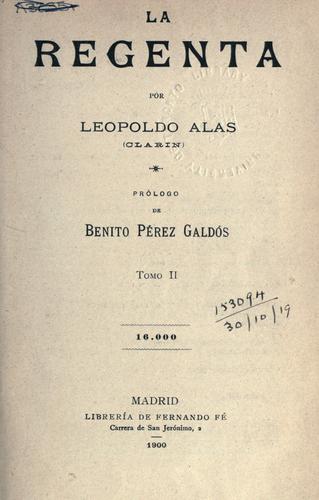
La Regenta
Leopoldo Alas "Clarín" · 1852–1901 · Spain
Originally La Regenta (Spanish)
Why it matters
In a fog-bound provincial capital modeled on Oviedo, a bored young wife drifts between a cathedral canon's spiritual seduction and a local seducer's literal one. Spain's answer to Madame Bovary anatomizes a whole town's hypocrisy with Flaubertian precision and real venom.
At a glance
A long, digressive social panorama demanding patience before its ironies compound.
Deep dive
In a fog-bound provincial capital modeled on Oviedo, a bored young wife becomes the object of two rival campaigns — a cathedral canon claiming her soul, a practiced seducer wanting her body — and Clarín uses both to anatomize an entire town's hypocrisy.
Written for readers who have finished the book. No plot recap, and nothing here is safe to read first.
Themes & symbolism
Ana Ozores is triangulated by two men who read as mirror images of the same appetite wearing different institutional costumes: Fermín de Pas, the ambitious canon-theologian, channels a jealous, quasi-romantic possessiveness into his role as her confessor, guarding her soul the way a lover guards a mistress, while Álvaro Mesía pursues her as a straightforward sexual and social conquest. Clarín refuses to let the reader treat de Pas's claim as the clean, spiritual alternative to Mesía's carnal one — Ana's own religious ecstasies are written as disturbingly continuous with her sexual longing, the same hunger finding two different vocabularies, which is exactly why the town's moral categories collapse under scrutiny rather than holding.
Vetusta itself — its fog, its narrow enclosed geography, its clergy and aristocracy and professional gossips — functions as a character in its own right, a physical correlate for the moral suffocation closing in on Ana from every direction. In the Flaubertian tradition of Madame Bovary, Clarín's real subject is never just one unhappy wife but a whole provincial society whose institutional hypocrisies — religious, marital, social — all converge on a single woman's body as the place where the town's contradictions finally have to be worked out.
Spain's Answer to Flaubert
Clarín had read his Flaubert closely, and La Regenta announces the debt openly while pushing past homage into something more comprehensively venomous — Madame Bovary anatomizes one woman and her small circle, while Clarín widens the satirical lens to the entire clerical and social hierarchy of Vetusta, giving the novel a scope and a bitterness that later critics have ranked among the finest achievements of nineteenth-century European realism, even as it remained comparatively little known outside Spain for decades.
A Reputation Rehabilitated
The novel scandalized clerical and conservative opinion on publication, partly for its frank treatment of Ana's inner life and partly for its unsparing portrait of a cathedral canon's jealous, barely sublimated desire, and it took decades of critical reassessment — much of it well into the twentieth century — before Clarín's reputation caught up with the novel's actual ambition. It's now routinely placed alongside Fortunata and Jacinta as one of the two towering achievements of nineteenth-century Spanish realism.
The last seal: what actually happens, and why it lands the way it does.
The ending, explained
Ana finally succumbs to Mesía, and Fermín de Pas, consumed by jealous rage at losing what he'd considered his own spiritual possession, ensures the affair becomes public knowledge that reaches her elderly husband. The husband challenges Mesía to a duel and is killed; Mesía flees Vetusta immediately, leaving Ana to face the full scandal alone. In the bleak final scene, prostrate and friendless in the cathedral, she's approached by an altar boy she once treated kindly, who kisses her — the only human contact left to her in a town that has otherwise closed ranks against her entirely, an image critics have never agreed is mercy or mockery.
Where to go next
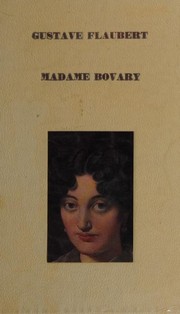 Gustave Flaubert · 1857Madame BovaryLvl 5Slow burn
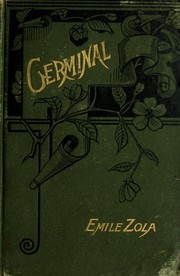 Émile Zola · 1885GerminalLvl 5Medium pace
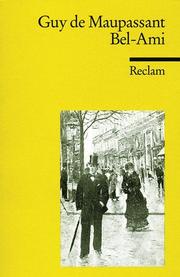 Guy de Maupassant · 1885Bel-AmiLvl 4Medium pace
 Kate Chopin · 1899The AwakeningLvl 5Medium pace
 Thomas Hardy · 1891Tess of the d'UrbervillesLvl 4Medium pace
 Joris-Karl Huysmans · 1884Against Nature (À rebours)Lvl 7Slow burn