

Nada
Carmen Laforet · 1921–2004 · Spain
Originally Nada (Spanish)
Why it matters
A young woman arrives at her family's decaying, feuding Barcelona apartment expecting university freedom and finds postwar hunger and repression instead. Written by a twenty-three-year-old, it remains Spain's essential novel of the immediate postwar years.
At a glance
Charged, claustrophobic sentences rendering a feverish domestic atmosphere.
Deep dive
An eighteen-year-old arrives in postwar Barcelona expecting the freedom of university and finds her mother's old apartment turned into a battleground between two uncles who can barely stand to share a roof.
Written for readers who have finished the book. No plot recap, and nothing here is safe to read first.
Themes & symbolism
Andrea moves into her grandmother's crumbling flat on Calle de Aribau for university, and Laforet spends the opening chapters inventorying the household's decay in sensory, almost violent detail: peeling walls, a starving cat, furniture sold off piece by piece, an aunt, Angustias, who polices Andrea's comings and goings with the zeal of a woman substituting control for any life of her own. The apartment reads less as a home than as a small, hungry country still fighting its own civil war years after the official one ended.
Andrea's two uncles carry the household's real violence: Juan, a failed painter married to Gloria, beats his wife in scenes Andrea overhears through thin walls and never fully witnesses, while Román, a musician who charms and manipulates everyone including Andrea herself, keeps a locked attic room that functions as the flat's one space of forbidden intimacy and menace. Laforet lets Andrea remain a partial witness throughout, catching fragments of violence and old grievance she can never quite assemble into a full account, which puts the reader in exactly Andrea's own state of frightened incomprehension.
Ena, Andrea's wealthy university friend, offers an escape from the Aribau flat's suffocation and then complicates it: Ena deliberately courts Román's attention as part of a private reckoning with her own mother, who loved Román decades earlier and was cruelly discarded by him. Andrea, caught between two households now instead of one, spends the novel's second half less as a protagonist choosing her own path than as an anxious bystander to other women's older, unfinished business.
Ena's Inheritance of Her Mother's Grudge
Ena's late-novel confession, that she pursued Román deliberately to avenge her mother's humiliation at his hands a generation earlier, reframes everything Andrea has watched all along: the seduction she assumed was about her friend's own desire turns out to be a debt collection running on a much longer clock than Andrea's one university year. Laforet uses the reveal to argue that Barcelona's civil war never really ended, it just moved indoors, into rooms where women settle their mothers' scores instead of the country's.
The last seal: what actually happens, and why it lands the way it does.
The ending, explained
Román, exposed by Ena as having preyed on her mother years before and now cornered by the collapse of his hold over the household, is found dead by his own hand, an end the novel reports with the same flat, secondhand quality it gives most of the flat's violence, Andrea learning of it rather than seeing it. With her one ally in the house gone and Angustias's tyranny broken by then anyway, Andrea takes Ena's offer of a job and a room in Madrid and leaves Barcelona with, as the title insists throughout, nothing gained from the year but her own survival of it.
Where to go next
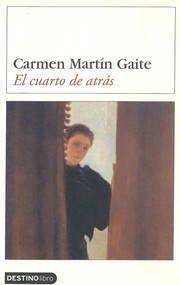 Carmen Martín Gaite · 1978The Back RoomLvl 6Slow burn
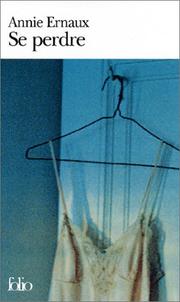 Annie Ernaux · 2008The YearsLvl 6Slow burn
 Edna O'Brien · 1960The Country GirlsLvl 3Medium pace
 Tsitsi Dangarembga · 1988Nervous ConditionsLvl 4Medium pace
 David Storey · 1976SavilleLvl 5Medium pace
 D. H. Lawrence · 1913Sons and LoversLvl 5Medium pace