
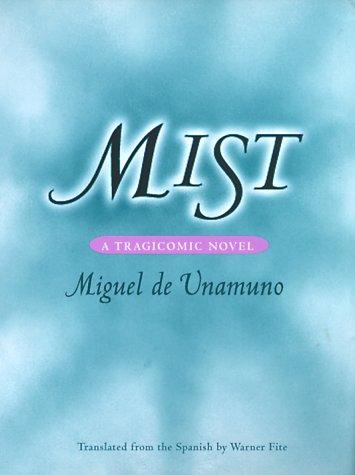
Mist
Miguel de Unamuno · 1864–1936 · Spain
Originally Niebla (Spanish)
Why it matters
A heartbroken man travels to Salamanca to confront the author writing his story and beg not to be killed off. Unamuno's 'nivola' turns metafiction into a genuine existentialist argument about free will and mortality.
At a glance
Metafictional argument between author and character demands philosophical attention.
Deep dive
What happens when a suicidal man travels to Salamanca to beg his own author for his life — and why Unamuno lets him ask.
Written for readers who have finished the book. No plot recap, and nothing here is safe to read first.
Themes & symbolism
The Spanish title, Niebla, names the book's whole condition: Augusto drifts through Madrid on the strength of a chance sighting and a stray dog's bark, builds an entire romance around Eugenia before she has said a word to him, then rebounds into marrying his housekeeper's helper, Rosario, in a sequence that plays as grand tragedy to him and open farce to everyone around him — including, pointedly, to the narrator, who keeps breaking in to remind us that Augusto's feelings, however real they seem to him, are sentences on a page. Unamuno coined the term "nivola" specifically to dodge "novela" and its realist obligations, and has his mouthpiece Víctor Goti lay out the theory in a mid-book digression: a nivola can invent its own laws, interrupt itself, dispense with plot logic, because its subject isn't the world but the strangeness of being a consciousness inside a story someone else is telling.
Augusto's dog, Orfeo, is his only real confidant precisely because a dog can't argue back or reveal him to himself — and Unamuno grants Orfeo the novel's closing word, a silent, mournful verdict on human vanity that lands harder than anything Augusto himself manages to say. The recurring arguments between Augusto and Víctor about whether to write a novel or a "nivola" aren't a subplot; they're Unamuno rehearsing, in miniature, the confrontation still to come between a character who wants to matter and an author who has already decided he doesn't get to.
Author as God, Character as Petitioner
Augusto's journey to Salamanca to beg Unamuno-the-character not to kill him is a prayer scene dressed as literary metafiction: a creature pleading with an unmoved, unanswering creator for continued existence. Unamuno spent his career, in essays like Tragic Sense of Life, tormented by exactly this asymmetry — a God who might not be listening, an immortality no one can verify — and here he stages his own doubt from the other side of the equation, playing the silent, sovereign author whose only real power is the power to stop writing.
A Prologue That Argues With Itself
Unamuno frames the novel with a prologue in his own name and a "post-prólogo" supposedly written afterward by Víctor Goti, Augusto's friend, who complains on the record about how the real Unamuno has misrepresented events and even claimed characters as his own private property. The device multiplies the novel's central question outward past Augusto: if a fictional character can talk back to his author in an appendix, who exactly is in charge of a book once it's finished, and what does that say about the reader's own claim on a story once it leaves the writer's hands?
The last seal: what actually happens, and why it lands the way it does.
The ending, explained
Planning suicide after Eugenia jilts him for another man, Augusto instead travels to Salamanca to confront "Unamuno," a fictionalized version of the real author who appears as a character within his own novel, and begs him not to be killed off. Unamuno-as-character refuses on principle: he is the creator, Augusto is invented, and he has already decided, before Augusto ever arrived, that Augusto will die — reversing the planned suicide into an authorial execution instead. Stripped of even the agency to end his own life, Augusto returns home and dies shortly after, the cause left ambiguous between shock, illness, and simple narrative fiat. The reversal is the whole argument: free will, Unamuno suggests, might always have looked this arbitrary from the inside.
Where to go next
 Miguel de Unamuno · 1930San Manuel Bueno, MartyrLvl 5Medium pace
 Pío Baroja · 1911The Tree of KnowledgeLvl 5Medium pace
 Jean-Paul Sartre · 1938NauseaLvl 6Slow burn
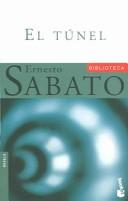 Ernesto Sabato · 1948The TunnelLvl 5Fast paced
 Nikos Kazantzakis · 1946Zorba the GreekLvl 5Medium pace
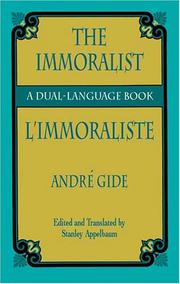 André Gide · 1902The ImmoralistLvl 5Medium pace