

The Child of Pleasure
Gabriele D'Annunzio · 1863–1938 · Italy
Originally Il piacere (Italian)
Why it matters
Aesthete Andrea Sperelli pursues beauty and sensation through Rome's aristocratic drawing rooms, juggling two ruinous love affairs while his own will slowly withers. D'Annunzio's Huysmans-indebted debut novel imported French Decadence wholesale into Italian fiction and made style itself the subject.
At a glance
Ornate, digressive prose luxuriates in sensory description at the expense of narrative momentum.
Deep dive
Why an aesthete fluent enough in beauty to costume any feeling in it turns out to have no fluency left for honesty, especially toward the woman who deserves it most.
Written for readers who have finished the book. No plot recap, and nothing here is safe to read first.
Themes & symbolism
Andrea Sperelli is less a character than a theory of living: every room he enters, every fabric and gesture and love affair, gets described with the same worshipful attention, because for D'Annunzio's aesthete beauty isn't a value among others, it's the only one. The novel's famous epigraph, that one must make one's own life as one would a work of art, is the thesis Andrea spends four hundred pages testing to destruction, since a life organized entirely around aesthetic sensation turns out to have no mechanism for choosing between two women, or for honesty toward either.
Elena and Maria are constructed as opposites, the femme fatale of memory against the innocent of the present, but D'Annunzio's real interest is in how thoroughly Andrea's aestheticism has hollowed out his capacity to actually distinguish them once desire is running. A war wound sustained early in the book, in a pointless duel, becomes the physical correlative for what's happening underneath: his will is withering exactly as elegantly as everything else about him. Even his convalescence is staged for effect, described in the same lush, appreciative prose D'Annunzio gives a tapestry or a sonnet, so that the reader absorbs Andrea's own habit of aestheticizing everything, including his own decline, well before the plot forces him to pay for it.
Huysmans Relocated to Roman Drawing Rooms
D'Annunzio's debt to À rebours is total and openly stated, but transplanting French Decadence into a Catholic, aristocratic Rome changes its temperature: where Des Esseintes withdraws entirely from society to curate sensation in private, Andrea performs his aestheticism in public, across salons and love affairs, making decadence a social competition rather than a hermit's discipline. The result founded a genuinely Italian strain of the movement, one D'Annunzio would spend the rest of his flamboyant public life living out rather than just writing about, first as literary celebrity and later as the self-styled soldier-poet who seized Fiume.
Prose Written to Be Worn, Not Just Read
D'Annunzio's sentences accumulate ornament the way Andrea accumulates lovers and objects, clause after clause of fabric, scent, and gesture stacked until narrative incident nearly disappears under description. That's not a stylistic excess incidental to the book's argument, it is the argument: a novel about a man who has made style his whole ethics has to be written in a style willing to risk the same excess, and D'Annunzio's willingness to let the prose become as self-indulgent as its subject is what makes the critique land rather than read as mere moralizing from outside.
The last seal: what actually happens, and why it lands the way it does.
The ending, explained
Undone by his own cultivation of feeling over honesty, Andrea calls Maria by Elena's name in the middle of making love to her, a slip that costs him everything at once: Maria leaves Rome, and a compromising letter surfaces confirming the affair with Elena he'd never actually ended. He spends his last pages haunting an auction of Maria's furniture, buying back a single cabinet that once held her private mementos, a gesture as empty as it is expensive. D'Annunzio leaves him alone in his apartment among beautiful objects that can no longer organize a self around them, the aesthetic philosophy revealed as having produced, in the end, only a very tasteful ruin.
Where to go next
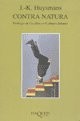 Joris-Karl Huysmans · 1884Against Nature (À rebours)Lvl 7Slow burn
 Oscar Wilde · 1890The Picture of Dorian GrayLvl 4Medium pace
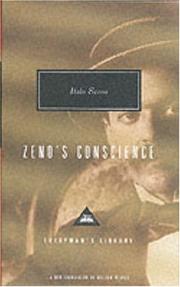 Italo Svevo · 1923Zeno's ConscienceLvl 6Medium pace
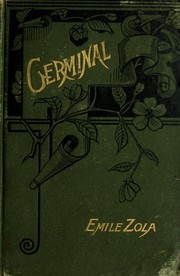 Émile Zola · 1885GerminalLvl 5Medium pace
 Henrik Pontoppidan · 1904Lucky PerLvl 6Medium pace
 Luigi Pirandello · 1904The Late Mattia PascalLvl 5Medium pace