
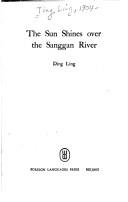
The Sun Shines over the Sanggan River
Ding Ling · 1904–1986 · China
Originally Taiyang Zhao Zai Sanggan He Shang (Chinese) · translated by Yang Xianyi and Gladys Yang
Why it matters
Land reform sweeps a north China village as peasants turn on landlords under Party direction, cadres' own doubts left uncomfortably visible. Ding Ling's Stalin Prize-winning novel, written just before the Party turned its scrutiny on her instead.
At a glance
A large village cast and shifting political loyalties require tracking many minor characters.
Deep dive
Why Ding Ling gives the land reform's most devious landlord kinship ties running in every direction through the very village sent to expose him.
Written for readers who have finished the book. No plot recap, and nothing here is safe to read first.
Themes & symbolism
Set in Nuanshui Village in 1946, the novel tracks a Communist land reform work team's arrival with the straightforward mission of building peasants' collective courage to challenge and dispossess the local landlords who've controlled the region for generations. Ding Ling structures the story around Gu Yong, a middle peasant with marriage and kinship ties running in both directions, to the peasantry the reform is meant to liberate and to the landlord families it's meant to dismantle, so that the novel's central tension isn't simply villagers versus landlords but the far messier problem of a community whose bloodlines and debts of gratitude cut straight across the class lines the campaign needs everyone to see clearly.
Qian Wengui, the village's most entrenched landlord, survives the reform's early stages precisely because he understands this messiness better than the work team does. He deflects blame onto more visible, less connected landlords, calls in old favors, and manipulates the villagers' habitual deference toward him, and Ding Ling refuses to make him a simple monster for it; his cunning reads as a rational response to a system he correctly senses is capable, this once, of actually costing him everything. What eventually breaks his advantage isn't the work team's ideology so much as the accumulated, specific grievances of villagers who finally decide their fear of him matters less than their fear of staying poor forever.
A Stalin Prize, Then a Purge
The novel drew directly on Ding Ling's own work in 1946 with a land reform team in Hebei province, and its unusual candor about cadres' internal doubts and disagreements, work team members second-guessing tactics, worrying aloud about overreach, helped make it the first Chinese novel to win the Soviet Union's Stalin Prize, in 1951. That same candor became a liability within a decade: in 1957, Ding Ling was denounced as a rightist during the Anti-Rightist Campaign, expelled from the Party, and sent to a labor camp in China's northeast, her fiction banned for two decades afterward. A novel written to demonstrate the Party's methods working as intended ended up as evidence against its own author once the political weather changed.
The last seal: what actually happens, and why it lands the way it does.
The ending, explained
The reform reaches its turning point at a mass struggle session where villagers who spent the novel's first half too frightened or too indebted to speak finally accuse Qian Wengui to his face, breaking the deference that had protected him. The assembly strips him of the bulk of his land and property, redistributing it among the village's poor peasants, while allowing his immediate family a small remaining plot rather than leaving them with nothing. Ding Ling stages the moment less as triumphant justice than as exhausting, hard-won transformation: the peasants who finally speak against Qian Wengui aren't liberated by ideology so much as they've simply run out of reasons to stay silent, and the novel closes with the reform's work only beginning rather than neatly finished.
Where to go next
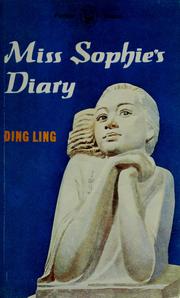 Ding Ling · 1928Miss Sophie's DiaryLvl 4Fast paced
 Lu Xun · 1921The Real Story of Ah-Q and Other TalesLvl 5Fast paced
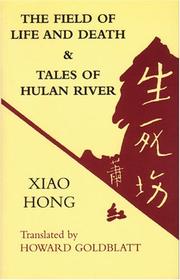 Xiao Hong · 1935The Field of Life and DeathLvl 6Slow burn
 Lao She · 1937Rickshaw BoyLvl 3Medium pace
 Mo Yan · 1986Red SorghumLvl 7Fast paced
 Luo Guanzhong · 1400Romance of the Three KingdomsLvl 8Fast paced