
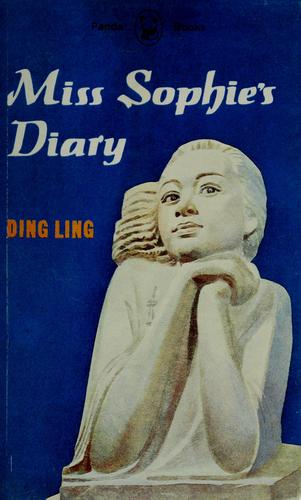
Miss Sophie's Diary
Ding Ling · 1904–1986 · China
Originally Shafei Nüshi de Riji (Chinese)
Why it matters
A young woman confides her frank sexual longing and restlessness in a diary that shocked 1920s China. Ding Ling's landmark of female interiority in a literature that had rarely permitted a woman's desire.
At a glance
Intimate diary form with introspective, sometimes fragmented emotional shifts.
Deep dive
What a restless, tubercular young woman actually wants from two men she can't stand equally, and why Ding Ling trusts a diary form frank enough to embarrass its own narrator.
Written for readers who have finished the book. No plot recap, and nothing here is safe to read first.
Themes & symbolism
Sophie's diary gives Ding Ling a form capable of recording contradictions no Chinese fiction had let a woman character keep in her own voice before: contempt for Weidi's clinging, sincere devotion, which she nonetheless strings along for the entertainment of watching him suffer, sitting right beside an open, specifically physical desire for Ling Jishi's beauty even as she recognizes, clearly and in real time, that he is shallow, vain, and unworthy of the feeling he provokes in her. The diary form lets both truths stand unresolved on the page rather than forcing Sophie to resolve into either the virtuous or the fallen woman Chinese fiction had mostly offered up until then.
Sophie's tuberculosis functions less as tragic Victorian ornament than as the engine of the diary's urgency: isolated in a Beijing boardinghouse, acutely aware of her own failing body, she has little patience left for the social performances expected of her, which is part of why she records her wanting so bluntly. Ding Ling's real innovation is refusing to judge that wanting from outside, the way earlier male-authored May Fourth fiction tended to frame women's desire as either symptom or scandal; Sophie's diary judges nothing but simply reports, which was itself the scandal in 1928.
Sophie's contempt for Weidi is never simply cruelty for its own sake. He offers her a devotion so complete and so undemanding that accepting it would mean accepting a life reduced entirely to being adored, and her repeated cruelty toward him reads, on a close look, as her only available way of refusing a comfortable trap dressed up as love, since the diary form gives her no other outlet, legal or social, for saying no to him outright.
A Landmark of May Fourth Interiority
Published in 1928, Miss Sophie's Diary arrived as part of a wave of Chinese women writers, Ding Ling among the most controversial of them, reworking the confessional diary form that male May Fourth writers had already used to dramatize individual consciousness against tradition. Applying that same form to a young woman's frank, often unflattering sexual desire was new enough to unsettle reviewers who had no existing vocabulary for a female narrator reporting her own wanting without either apologizing for it or being narratively punished for having it.
The last seal: what actually happens, and why it lands the way it does.
The ending, explained
Sophie comes to see clearly that neither man can give her what she actually wants: Weidi's devotion is suffocating precisely because it asks nothing difficult of her, while Jishi's beauty conceals a materialistic, faithless character, already effectively promised to a wealthy fiancee abroad regardless of what he lets Sophie believe. Rejecting both, she resolves in her final entries to leave Beijing for the south, choosing to let what remains of her life pass quietly somewhere no one who knows her can watch it happen. Ding Ling frames the choice as neither victory nor collapse but as Sophie's own act of authorship over an ending she refuses to let either man supply for her.
Where to go next
 Ding Ling · 1948The Sun Shines over the Sanggan RiverLvl 5Medium pace
 Lu Xun · 1921The Real Story of Ah-Q and Other TalesLvl 5Fast paced
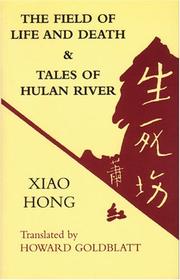 Xiao Hong · 1935The Field of Life and DeathLvl 6Slow burn
 Lao She · 1937Rickshaw BoyLvl 3Medium pace
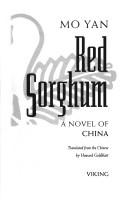 Mo Yan · 1986Red SorghumLvl 7Fast paced
 Luo Guanzhong · 1400Romance of the Three KingdomsLvl 8Fast paced