
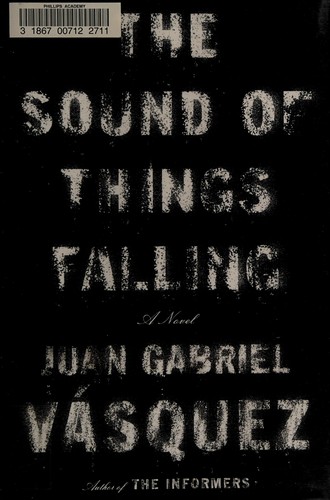
The Sound of Things Falling
Juan Gabriel Vásquez · b. 1973 · Colombia
Originally El ruido de las cosas al caer (Spanish) · translated by Anne McLean
Why it matters
A random shooting witnessed by the narrator sends him back through Colombia's drug-war decades to understand trauma he never chose to inherit. Post-Boom Colombian fiction turned deliberately away from magic toward documented history.
At a glance
Braided past-and-present timelines trace inherited trauma in clear, controlled prose.
Deep dive
What a stranger's violent death asks a bystander to inherit, and why Vásquez insisted on documents and dates instead of Macondo's magic.
Written for readers who have finished the book. No plot recap, and nothing here is safe to read first.
Themes & symbolism
The title is literal before it's metaphorical: the black-box recording of a small plane's final descent — the crash that killed Elaine's father years before the novel's present — captures an actual sound of something falling, and Antonio's own life becomes an extension of that recording, a slow-motion crash he's still listening to. His real subject isn't the drug war's kingpins but its collateral damage: he has no stake in Ricardo Laverde's trafficking past, never chose a side, and yet ends up shot and permanently altered by it anyway. The novel keeps asking whether trauma has to be earned through direct experience to count, and answers that Colombia's violence doesn't check credentials before it reaches you.
Antonio's investigation is assembled entirely from other people's testimony — cassette tapes, newspaper clippings, the black box transcript, Maya's inherited archive — rather than anything he witnesses firsthand, which mirrors how an entire generation of middle-class Colombians absorbed the cartel years: as secondhand dread relayed through television and rumor rather than direct danger, and no less damaging for that. Maya's choice to keep her father's tapes for years without playing them is the novel's other model of managed memory — not confrontation, not denial, just a long, deliberate deferral.
Post-Boom Realism and the Turn Away from Magic
Vásquez has been explicit about writing against García Márquez's shadow, arguing that magical realism had calcified into an export brand that let the world read Colombia as folklore instead of engaging its actual, documented history — the Medellín cartel, the assassinated judges and presidential candidates of the 1980s and '90s, Escobar's rise and death tracked in real time on television. The prose here is deliberately flat and dated, cross-referenced against real events rather than heightened into myth, because Vásquez's argument is that Colombia's violence needed no magical amplification: it was already extraordinary as plain fact.
The last seal: what actually happens, and why it lands the way it does.
The ending, explained
Piecing together Laverde's tapes and Maya's memories, Antonio reconstructs a life: a commercial pilot recruited into ferrying drug shipments in the trade's early years, an American wife whose own father died in an Andean plane crash the black box transcript memorializes, and a long prison sentence that ends just before Laverde is shot dead from a passing motorcycle — one more entry in a decades-long ledger of drug-war killings, incidental to whatever grievance actually motivated it. Antonio, wounded in the same attack, spends the rest of the book metabolizing a trauma that was never really his to inherit. His path eventually crosses Maya's, who has quarantined herself from her father's violent history by building an anonymous, self-sufficient life keeping bees outside Bogotá. Their meeting doesn't solve anything so much as let two people carrying the same secondhand wound sit with it together — the novel's quiet suggestion that Colombia's violence doesn't conclude, it just keeps finding new bystanders to fall on.
Where to go next
 Juan Gabriel Vásquez · 2015The Shape of the RuinsLvl 6Medium pace
 Roberto Bolaño · 1998The Savage DetectivesLvl 7Medium pace
 Samanta Schweblin · 2014Fever DreamLvl 6Fast paced
 Javier Marías · 1992A Heart So WhiteLvl 8Slow burn
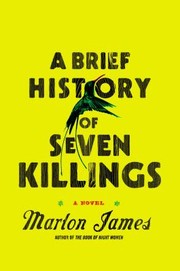 Marlon James · 2014A Brief History of Seven KillingsLvl 8Fast paced
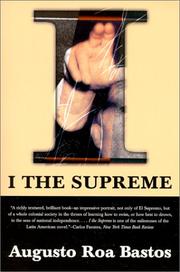 Augusto Roa Bastos · 1974I, the SupremeLvl 9Slow burn