
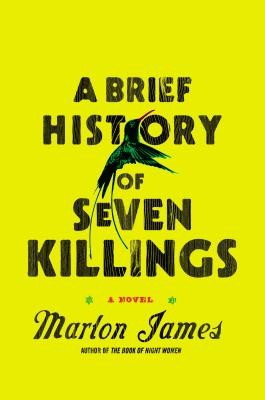
A Brief History of Seven Killings
Marlon James · b. 1970 · Jamaica
Why it matters
The near-fatal 1976 shooting of an unnamed Bob Marley radiates outward through dozens of colliding narrators (gunmen, ghosts, journalists, CIA agents) across three decades of Jamaican political violence. Winner of the 2015 Booker Prize, and patois fiction's most ambitious epic.
At a glance
Dozens of shifting first-person narrators in dense Jamaican patois demand sustained close attention.
Deep dive
Why a novel with dozens of narrators refuses to let any single one of them own the story of a man everybody's talking about but almost nobody hears speak.
Written for readers who have finished the book. No plot recap, and nothing here is safe to read first.
Themes & symbolism
James's polyphony is the novel's thesis, not just its method: by refusing a single controlling narrator, the book argues that political violence in 1970s Jamaica was never anyone's story alone, but a system distributed across gunmen, journalists, CIA handlers, and the dead, each fluent only in their own patch of it. The Singer — an unnamed stand-in for Bob Marley — sits at the novel's structural center while almost never narrating himself, present mostly as the thing everyone else projects meaning onto: peacemaker, target, commodity, myth. That absence is the point. The book isn't a Marley novel; it's a novel about the political machinery that turned an assassination attempt on him into decades of exported, metastasizing violence.
Sir Arthur George Jennings, murdered in the novel's opening pages, returns throughout as a ghost-narrator threading commentary between the living voices — a device that turns the book's Cold War carnage into something closer to Greek tragedy, witnessed by a chorus who is already dead and therefore has nothing left to lose by telling the truth. The ironic understatement of the title — far more than seven people die across the novel's three decades — mirrors how casually the body count outstrips anyone's ability, or willingness, to keep an honest tally, in a country and a genre (the ballad, the patois toast) built on rounding real violence down into song.
Patois as Formal Argument
Each narrator's chapters are written in a distinct register of Jamaican patois, American vernacular, or journalistic English, unsmoothed for an outside reader's convenience. That refusal to translate is itself political: James stages linguistic ownership as a form of narrative power, insisting that Jamaican voices don't need to be softened into standard English to carry a five-hundred-page epic, and that whoever controls the telling of a killing controls its meaning.
The CIA as Ghost Author
American intelligence operatives move through the novel less as villains twirling mustaches than as bureaucrats managing a proxy conflict, funneling guns and money into Kingston's garrison politics to keep Jamaica out of Cuba's orbit, indifferent to the actual bodies their policy produces on the ground. James's insistence on including these Cold War handlers alongside the gunmen and the ghost widens the book's scope past a Jamaican crime story into an argument about who actually authors Third World violence — and how rarely that author appears anywhere in the official account.
The last seal: what actually happens, and why it lands the way it does.
The ending, explained
The novel resists a single closing event, instead letting its Cold War-seeded violence keep replicating outward — gunmen who survived Jamaica's political wars scatter into the New York and Miami drug trade of the 1980s and 90s, carrying the same logic of turf and reprisal into a new economy and a new decade. Nothing like justice or closure arrives for the Singer's shooting itself, which recedes from view as the consequences it triggered dwarf the original act. Jennings's ghostly, recurring voice underlines the point: violence here doesn't resolve, it just changes address, and the dead keep talking because the living never stop generating more of them.
Where to go next
 Toni Morrison · 1987BelovedLvl 8Slow burn
 Arundhati Roy · 1997The God of Small ThingsLvl 7Slow burn
 Gabriel García Márquez · 1967One Hundred Years of SolitudeLvl 6Medium pace
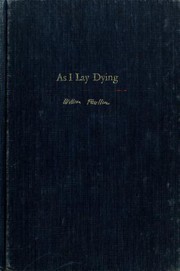 William Faulkner · 1930As I Lay DyingLvl 9Medium pace
 Roberto Bolaño · 1998The Savage DetectivesLvl 7Medium pace
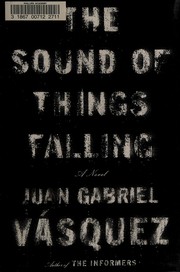 Juan Gabriel Vásquez · 2011The Sound of Things FallingLvl 5Medium pace