
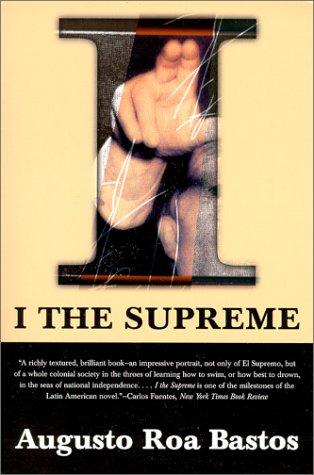
I, the Supreme
Augusto Roa Bastos · 1917–2005 · Paraguay
Originally Yo el Supremo (Spanish) · translated by Helen Lane
Why it matters
Paraguay's real nineteenth-century dictator-for-life narrates himself into being through dictation, forged documents, and his own marginal corrections. The dictator novel pushed to its most linguistically extreme, self-annotating limit.
At a glance
A fractured, self-interrupting monologue layered with footnotes and forged documents demands sustained, deliberate reading.
Deep dive
How a dictator who controls every voice in his country still can't control the one document that's supposedly his own — and why the novel's real subject is the footnote, not the decree.
Written for readers who have finished the book. No plot recap, and nothing here is safe to read first.
Themes & symbolism
Everything in the novel is dictation, and dictation is the whole argument: El Supremo talks, his secretary Patiño transcribes, and the gap between the two — mishearings, omissions, Patiño's small acts of scribal resistance — is where the book locates the one thing absolute power can never fully absorb. Francia opens by raging against an anonymous pasquinade nailed to the cathedral door, mocking him and demanding his corpse be quartered after death, and he spends the novel trying to identify its author using the same interrogative, quasi-legal reasoning he applies to everything else. He never manages it. The pasquinade sits at the book's center as proof that even a dictator who has monopolized the printing press, the courts, and the mail cannot monopolize the anonymous, collective voice of ridicule.
The 'perpetual circulars' Francia dictates to the provinces are one register; his private notebook, where he argues with himself, backtracks, and contradicts the public Supremo, is another; the compiler's footnotes — citing real chronicles, invented sources, and contradictory testimony — are a third, and none of them agree. Roa Bastos builds the novel as a single body of text that can't cohere into one authoritative version of Francia, which is exactly the fate the historical dictator feared for his own literal body: a self that, once it stops being able to speak, becomes an object other people fight over and rewrite. The book's real villain isn't a rival general or a foreign power, it's the plurality of language itself, which El Supremo can command but never own.
The Real Dr. Francia, and Roa Bastos's Own Exile
José Gaspar Rodríguez de Francia was a real, and genuinely strange, historical figure: a Cordoba-trained lawyer steeped in Rousseau and the Enlightenment who used that education to seal Paraguay off from the outside world for over two decades, ruling as 'El Supremo Dictador Perpetuo' from 1814 until his death in 1840, executing rivals, banning the church's independent authority, and turning the country into the hemisphere's strangest experiment in isolationist absolutism. Roa Bastos assembled the novel from genuine archival fragments, travelers' accounts, and Francia's own writings, splicing real documents in among invented ones so thoroughly that no reader — and reportedly no scholar — can cleanly sort fact from fabrication, which is the point: the historical record on any dictatorship is already a forged, compiled, contested thing.
Roa Bastos wrote the novel from exile in France, having been expelled from Paraguay by Alfredo Stroessner's dictatorship, and the choice to write about a dead nineteenth-century tyrant instead of a living one wasn't evasion — it let him build a general anatomy of Latin American absolute power without the book being reducible to a simple roman à clef. The novel arrived within a year of García Márquez's The Autumn of the Patriarch and Carpentier's Reasons of State, and the three together are usually read as the high-water mark of the 'dictator novel,' a genre that found, unexpectedly, that the most damning way to depict a tyrant is to hand him the microphone and let his own language expose him.
The last seal: what actually happens, and why it lands the way it does.
The ending, explained
As Francia's body fails — ulcerated, incontinent, rotting from within — the prose itself degrades alongside it, the dictation growing more fragmented, contradictory, and interrupted by the compiler's increasingly intrusive footnotes, until the two forms of decay, physical and textual, become the same event. He dies, and the novel doesn't grant him a final, consolidating word; instead the compiler's scholarly apparatus takes over the page entirely, closing the book as a contested archive rather than a settled biography. That's the deliberate irony the whole novel has been building toward: a man who spent his life trying to become the sole author of Paraguay's history is instead survived only by a fragmentary, multi-voiced, endlessly annotated text — precisely the fate the historical Francia dreaded, having ordered his own remains destroyed so his body could never become a relic for others to fight over and refashion in his absence.
Where to go next
 Augusto Roa Bastos · 1960Son of ManLvl 7Medium pace
 Miguel Ángel Asturias · 1946El Señor PresidenteLvl 8Slow burn
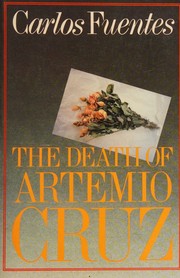 Carlos Fuentes · 1962The Death of Artemio CruzLvl 8Slow burn
 Mario Vargas Llosa · 1963The Time of the HeroLvl 6Medium pace
 José Donoso · 1970The Obscene Bird of NightLvl 9Slow burn
 Gabriel García Márquez · 1967One Hundred Years of SolitudeLvl 6Medium pace