
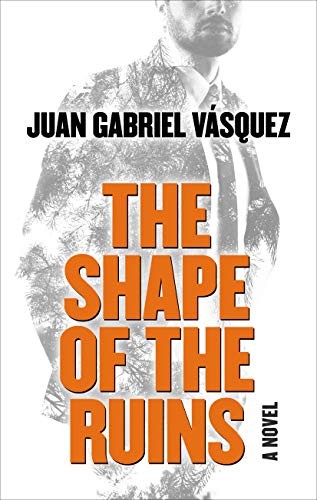
The Shape of the Ruins
Juan Gabriel Vásquez · b. 1973 · Colombia
Originally La forma de las ruinas (Spanish) · translated by Anne McLean
Why it matters
A novelist investigates two unsolved political assassinations, one from 1914 and one from 1948, and the conspiracy theorists obsessed with them, blurring his own biography into Colombia's buried, unresolved violence.
At a glance
A braided true-crime investigation and autobiographical fiction complicate a dense historical mystery.
Deep dive
A novelist gets pulled into a stranger's obsession with two of Colombia's most consequential political assassinations, decades apart, and the deeper he goes the harder it gets to tell serious historical inquiry apart from the conspiracy theories that feed on the same unanswered questions.
Written for readers who have finished the book. No plot recap, and nothing here is safe to read first.
Themes & symbolism
Vásquez writes himself directly into the novel as narrator and protagonist, a version of the author drawn reluctantly into the orbit of Carlos Carballo, a conspiracy obsessive convinced that Colombia's two defining twentieth-century political assassinations, Liberal leader Rafael Uribe Uribe in 1914 and populist presidential candidate Jorge Eliécer Gaitán in 1948, whose killing triggered the Bogotazo riots that reshaped the country's politics for decades, are connected by a hidden conspiracy the official record has never acknowledged. Vásquez initially keeps Carballo at arm's length, treating him as a crank, until the theft of Gaitán's preserved vertebrae from a private collection pulls the narrator into an investigation he can no longer dismiss as someone else's fixation.
The novel's real subject isn't whether Carballo's specific theories are correct, most of which Vásquez treats skeptically even as he investigates them, but what a country does with unresolved political violence when the official account never fully satisfies the people living with its aftermath. Colombia's repeated failure to produce a conclusive, trusted explanation for either assassination, Vásquez argues through the novel's structure, doesn't just leave a historical gap, it manufactures the exact conditions, suspicion, half-evidence, competing rumor, in which conspiracy theory becomes a rational person's only available way of imposing order on events the state has left permanently unresolved.
Vásquez keeps returning to the physical remnants both killings left behind, the vertebrae, a skull once displayed as a curiosity, an assassin's confiscated diary, and treats these objects as a kind of evidence Colombia never managed to convert into a settled verdict. Their persistence outside any museum or official archive, passed among private collectors and obsessives like Carballo instead, becomes the novel's clearest image of a history the state has never fully claimed responsibility for narrating, leaving its most consequential violence to be curated, and mythologized, by amateurs.
Autofiction as Historical Method
By naming his narrator Juan Gabriel Vásquez and drawing on his own family's real involvement, distant relatives who were present at some of the historical events described, the novel blurs the line between documented research and invented scene-setting deliberately, forcing readers to do the same interpretive work Vásquez's narrator is doing: deciding, without reliable external confirmation, how much of what they're being told to trust. That formal choice mirrors the book's argument about conspiracy theory directly, since a reader uncertain where memoir ends and fiction begins is experiencing, in miniature, the same evidentiary uncertainty that lets Colombia's assassinations keep generating new, unfalsifiable explanations more than a century and half a century later.
The last seal: what actually happens, and why it lands the way it does.
The ending, explained
Vásquez's investigation into Carballo's theories and the missing vertebrae never produces the tidy revelation a conventional thriller would deliver. Instead it surfaces a mass of genuine historical detail, forgotten witnesses, buried testimony, plausible but unprovable connections between the two killings three decades apart, without resolving into a single confirmed conspiracy. The novel closes by turning that irresolution into its actual conclusion: Colombia's violent twentieth century isn't a puzzle with a missing final piece so much as a wound that has scarred over without ever being properly diagnosed, and Vásquez, no longer able to dismiss Carballo's obsession as mere paranoia, ends the book having gained not certainty but a clearer sense of exactly how much certainty the country was always going to be denied.
Where to go next
 Juan Gabriel Vásquez · 2011The Sound of Things FallingLvl 5Medium pace
 Roberto Bolaño · 1998The Savage DetectivesLvl 7Medium pace
 Samanta Schweblin · 2014Fever DreamLvl 6Fast paced
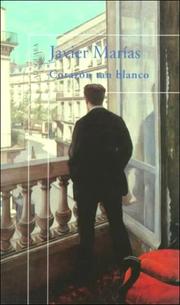 Javier Marías · 1992A Heart So WhiteLvl 8Slow burn
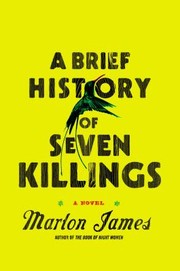 Marlon James · 2014A Brief History of Seven KillingsLvl 8Fast paced
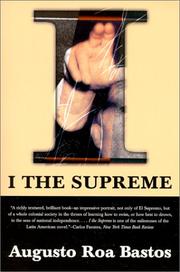 Augusto Roa Bastos · 1974I, the SupremeLvl 9Slow burn