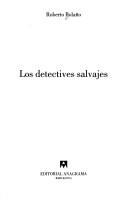
The Savage Detectives
Roberto Bolaño · 1953–2003 · Chile / Mexico / Spain
Originally Los detectives salvajes (Spanish) · translated by Natasha Wimmer
Why it matters
Two 'visceral realist' poets pursued across twenty years by fifty-odd witnesses' testimonies: the literary life as quest, farce, and elegy. The novel that made Bolaño a generation's password.
At a glance
Fifty-plus testimonial narrators fragment the central quest across two decades and continents.
Deep dive
A structural gamble: what happens when a novel refuses to let its two central figures narrate a single page of their own story.
Written for readers who have finished the book. No plot recap, and nothing here is safe to read first.
Themes & symbolism
Belano and Lima are the novel's suns, but they never get to speak in their own voice once the opening diary section ends — everything we learn about their next twenty years comes secondhand, through dozens of former lovers, rivals, editors, and chance acquaintances scattered across Mexico, Europe, Israel, and Africa. That withholding is the point: visceral realism, their teenage poetry movement, produces almost no lasting work, and the two men who founded it become, over two decades, less like protagonists and more like a rumor other people keep half-remembering. Bolaño is building an elegy for a generation of Latin American writers and radicals — his own generation — for whom literary ambition, political upheaval, poverty, and exile were inseparable, and for whom obscurity, not genius, turned out to be the more common outcome.
The testimony structure also refuses the reader a stable, adjudicating perspective. Accounts contradict each other, wander into unrelated tangents, and never resolve into a single verdict on who Belano and Lima really were or what became of them. That fragmentation isn't a failure of design; it's the closest thing to honesty a novel about a scattered, half-forgotten literary movement can offer — the truth of these lives is genuinely distributed across many unreliable witnesses, not held by any one of them. Bolaño's own biography — poverty, political exile from Pinochet's Chile, decades of itinerant, marginal literary life before late success — sits close enough beneath Belano's that the novel reads less like autobiography than like Bolaño writing his own possible failure, the life he might have had if the fiction hadn't eventually broken through.
Cesárea Tinajero as buried origin
The search for Cesárea Tinajero, the nearly mythical 1920s poet whose visceral realism the younger movement claims as ancestry, gives the fragmented novel its one clean quest structure. Finding her alive, aged, and reclusive in the desert — only to lose her instantly to a violent confrontation — dramatizes the book's larger point in miniature: origins, once located, turn out to be fragile, mortal, and nearly impossible to hold onto, no matter how mythologized they became in the telling.
Testimony as a genre choice
Handing the bulk of the novel over to dozens of unnamed or barely-introduced witnesses — rather than a single retrospective narrator assembling a tidy biography — mimics the way literary reputations actually travel: through gossip, rumor, half-remembered encounters at parties and borders, contradicting each other freely. Some witnesses barely knew Belano or Lima and speak for pages anyway; others who knew them intimately get only a paragraph. That imbalance is deliberate. It insists that a life, especially a writer's life lived on the move and mostly in obscurity, is recoverable only as a chorus, never as a single authoritative account.
The last seal: what actually happens, and why it lands the way it does.
The ending, explained
The frame narrative closes the way it opened: García Madero's diary catches up to the desert shootout, Cesárea Tinajero's death, and the group's scattering, resolving the one plot the novel ever fully commits to. But the larger question the testimonies have spent hundreds of pages circling — what actually became of Belano and Lima, whether visceral realism amounted to anything, whether their lives were failures or just illegible successes — is left unresolved, distributed across witnesses who never agree. The final pages return to García Madero's cryptic geometric diagrams, images to be puzzled over rather than a sentence to be read, which is exactly the shape of closure the novel has been arguing for all along: not an answer, but a form you have to sit with.