

Fever Dream
Samanta Schweblin · b. 1978 · Argentina
Originally Distancia de rescate (Spanish) · translated by Megan McDowell
Why it matters
A dying woman and a strange boy race against her fading consciousness to pinpoint the exact moment her daughter crossed into fatal, poisoned danger. Schweblin's International Booker-shortlisted novel compresses an entire ecological horror story into one unbroken, unbearable conversation.
At a glance
A single unbroken dialogue with withheld context and mounting dread demands close, uneasy attention.
Deep dive
A dying woman and a boy who isn't her son race through her last memories searching for the exact moment something went wrong, and the novel keeps insisting they're running out of time to find it.
Written for readers who have finished the book. No plot recap, and nothing here is safe to read first.
Themes & symbolism
Amanda narrates from a rural clinic bed, dying, guided through her own memory by David, the neighbor's son, who keeps steering her away from anything he judges irrelevant and back toward what he calls the important thing. The device Schweblin builds this urgency from is Amanda's own private metric, rescue distance, the exact radius within which she believes she can still reach her daughter Nina before something happens to her, a number she's been silently calculating since Nina's birth and that keeps shrinking and stretching throughout the book depending on how frightened she is. That anxious arithmetic, usually invisible interior noise in any parent, becomes the novel's entire narrative engine once David starts forcing Amanda to account, retroactively and under real time pressure, for the one moment the distance actually mattered.
David's own history supplies the novel's other engine: his mother Carla tells Amanda that David was poisoned as a small child after wandering near contaminated water on a neighboring property, and that she saved him only by carrying him to a local healer for a 'migration,' a ritual that split his consciousness and moved part of it into another body to keep the poison from finishing him off. Carla insists the boy who came back from that ritual isn't quite the son she had before. Schweblin never explains the science or debunks the folklore. She lets the migration stand exactly where Amanda's rescue-distance calculations stand, as the only vocabulary a rural community has for a slow, diffuse, agricultural poisoning nobody wants to name directly.
A Horror Novel About Soybeans
Nothing in the book states outright that industrial soy farming and its agrochemicals are the actual threat behind David's poisoning and the town's unexplained clusters of sick and deformed animals, but the geography makes it unmistakable: this is rural Argentina during the soy boom, fields worked right up to houses and irrigation ditches, and the migration ritual functions as the only explanatory framework available to people who have watched their children and animals sicken with no doctor able to tell them why. Schweblin's choice to route a documented environmental crisis through folk horror rather than reportage doesn't soften the material. It makes the helplessness legible in a way statistics wouldn't.
An Interrogation With No Room to Breathe
David's constant redirection, cutting Amanda off, insisting she's wasting time, refusing to let her narrate anything in its natural order, keeps the book moving forward through pure withheld urgency rather than conventional chronology, and Schweblin sustains that pressure for the entire short novel without once relaxing it. The effect replicates rescue distance formally: the reader, like Amanda, is being made to hunt for the specific instant that mattered inside a flood of ordinary, seemingly safe moments, and denied any confirmation of when that hunt will actually end.
The last seal: what actually happens, and why it lands the way it does.
The ending, explained
David finally forces Amanda to the memory she's been avoiding: a moment at Carla's property when her rescue distance briefly failed and Nina touched the same contaminated water that had already poisoned David, the exact instant, replayed and re-examined under David's questioning, that started whatever is now killing Amanda in the clinic bed. The novel never confirms what became of Nina afterward, whether Amanda underwent her own desperate migration ritual to save her, or whether the David guiding her through this account is entirely himself or carries some part of another child's consciousness inside him. Schweblin ends on that irresolution deliberately, denying Amanda, and the reader, the one piece of information the entire interrogation was supposedly building toward: whether the rescue actually worked.
Where to go next
 Kazuo Ishiguro · 1989The Remains of the DayLvl 5Slow burn
 Han Kang · 2007The VegetarianLvl 6Fast paced
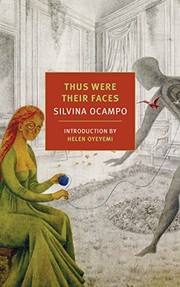 Silvina Ocampo · 1959Thus Were Their FacesLvl 5Fast paced
 Javier Marías · 1992A Heart So WhiteLvl 8Slow burn
 Gabriel García Márquez · 1967One Hundred Years of SolitudeLvl 6Medium pace
 Jorge Luis Borges · 1944FiccionesLvl 7Slow burn