
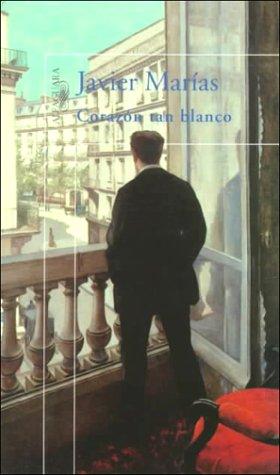
A Heart So White
Javier Marías · 1951–2022 · Spain
Originally Corazón tan blanco (Spanish) · translated by Margaret Jull Costa
Why it matters
A newlywed translator is slowly drawn toward a family secret that began with a suicide. Marías turns the withheld confession into moral vertigo, spun out in long, hypnotic, digressive sentences.
At a glance
Long, recursive, digressive sentences that circle a single revelation for pages.
Deep dive
A newlywed shoots herself in the heart just after her honeymoon, and the nephew who eventually tells this story has to decide how much of his own new marriage he's willing to risk finding out why.
Written for readers who have finished the book. No plot recap, and nothing here is safe to read first.
Themes & symbolism
Teresa returns from her honeymoon, goes into the bathroom, takes her father's gun, and shoots herself in the book's very first pages, an act witnessed only in its immediate aftermath and left publicly unexplained for decades; Marías structures the entire book as an extended argument that some knowledge, once possessed, cannot be unknown, and that the withholding of a secret is itself a form of intimacy as binding as any confession. Teresa's husband, Ranz, later marries her sister Juana, and their son Juan, the narrator, spends his own recent marriage circling the question of what actually happened in that bathroom without ever directly asking his father.
Marías writes in long, recursive, digressive sentences that loop back on their own clauses, mimicking the way Juan's mind circles the family secret without landing on it, and the prose style is inseparable from the novel's theme: knowing, for Marías, is rarely a single clean revelation but a slow accumulation of overheard fragments, half-understood conversations, and translated ambiguities that Juan, a professional interpreter by trade, is uniquely positioned to both decode and distrust.
Juan's work as a simultaneous interpreter for international diplomats, rendering one language's meaning into another in real time, gives Marías his structural metaphor for the whole novel: translation always involves a choice about what to preserve and what to smooth over, and Juan's own marriage to Luisa, contracted in the novel's opening pages, becomes the live test of whether he can build intimacy without demanding the kind of total disclosure that destroyed his father's first marriage.
Overheard Through a Hotel Wall
A recurring scene has Juan and Luisa, honeymooning in Havana, overhearing a violent argument through a hotel wall without ever seeing the couple involved, a set piece Marías returns to explicitly as a miniature of the whole novel's method: partial, mediated knowledge of someone else's crisis, filtered through a wall, a language, a translator's judgment, standing in for the way Juan will eventually come to understand his own father's past. The scene's suspended, unresolved tension is never fully closed, which is precisely Marías's point about what genuinely knowing another person's history actually feels like.
The last seal: what actually happens, and why it lands the way it does.
The ending, explained
Ranz eventually tells Juan the truth: Teresa's death was not simply a suicide provoked by some undisclosed shame but the result of Ranz himself killing his first wife in her sleep after a moment of marital contempt, staging the scene and covering his tracks in the decades since, a revelation the novel has been circling with dread rather than suspense. Juan receives this confession as an interpreter would, translating his father's self-justifying account into his own private judgment without ever repeating it forward to Luisa or to the reader in any triumphant unmasking. The novel closes on Juan choosing, deliberately, to carry this knowledge alone into his marriage rather than pass it on, converting his father's secret into his own, and suggesting that some inheritances are kept not out of loyalty but because there is genuinely nowhere safe to set them down.
Where to go next
 Javier Marías · 1994Tomorrow in the Battle Think on MeLvl 8Slow burn
 Marcel Proust · 1913Swann's WayLvl 8Slow burn
 W. G. Sebald · 1995The Rings of SaturnLvl 7Slow burn
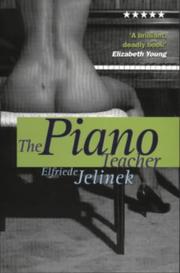 Elfriede Jelinek · 1983The Piano TeacherLvl 7Slow burn
 Samanta Schweblin · 2014Fever DreamLvl 6Fast paced
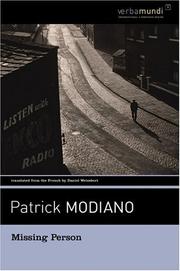 Patrick Modiano · 1978Missing PersonLvl 5Medium pace