
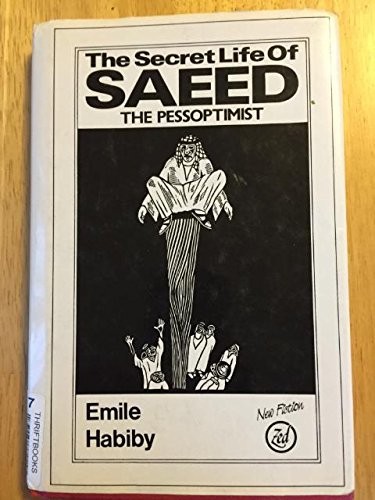
The Secret Life of Saeed the Pessoptimist
Emile Habibi · 1922–1996 · Palestine / Israel
Originally al-Mutasha'il (Arabic) · translated by Trevor Le Gassick and Salma Khadra Jayyusi
Why it matters
A hapless collaborator-informant navigates Israeli rule with absurdist passivity, his contradictions piling up past anything a sane man or a sane state could resolve. Satire so sharp its title coined a new Arabic word for the condition it describes.
At a glance
Absurdist, episodic picaresque with epistolary framing and dense political allegory.
Deep dive
Saeed's letters home explain how a talent for saying yes to whoever holds power turned an ordinary, frightened man into an informant for the state that dispossessed his own people, and why he insists on calling himself an optimist anyway.
Written for readers who have finished the book. No plot recap, and nothing here is safe to read first.
Themes & symbolism
Saeed, one of the Palestinians who remained inside the borders of the new Israeli state after 1948 rather than fleeing into exile, survives by becoming an informant, a career built entirely on his talent for telling authority whatever it wants to hear and calling the resulting humiliations good fortune. Habiby's title, the Arabic al-Mutashail welding together the words for pessimist and optimist into one portmanteau, names Saeed's entire survival strategy: a willed, almost pathological cheerfulness about a life built on collaboration, docility mistaken by Saeed himself, and demanded by everyone around him, for wisdom.
The novel structures itself in three books, the first named for Saeed and the next two for the two women he loves and loses, Baqiyya, whose name means the remaining, and Yuaad, whose name means to be returned, and Habiby uses that naming to fold the fate of individual Palestinian women directly into the fate of the land itself, staying versus being sent back, presence versus a promise endlessly deferred. Saeed's own son Walaa joins the fedayeen resistance and is killed in an Israeli raid Saeed himself is pressured into helping facilitate, the plainest statement the novel makes of collaboration's actual cost, paid by someone else. Habiby, who was himself a member of the Israeli Knesset for the Israeli Communist Party even as he wrote so searing an account of what participation in the state actually required, gives Saeed's compromises a specificity that comes from watching that machinery operate at close range rather than from the outside.
A Portmanteau as a Whole Politics
Habiby's coinage, muddling pessimism and optimism into a single unstable state rather than letting Saeed settle into either, is doing more than characterizing one man's temperament. It describes an entire minority's condition inside a state that calls itself democratic while treating them as a security problem, a position from which straightforward optimism is dishonest and straightforward pessimism is unlivable, so that Saeed's absurd cheer becomes less a personality flaw than the only coherent stance left available to him.
The last seal: what actually happens, and why it lands the way it does.
The ending, explained
Cornered and impaled atop a stake, having climbed there to escape pursuers after years of accumulating small betrayals and larger griefs, from Walaa's death to his own repeated humiliations, Saeed is finally lifted away by the same extraterrestrial visitor who has appeared to him throughout the novel, and the two rise together to the sound of ululation from the people below. Habiby appends a closing note revealing that Saeed's letters were actually written from a mental hospital on the Acre seashore, and that when someone eventually goes looking for their author, no record of him exists at all. The alien rescue and the asylum explanation are never reconciled, and Habiby wants it that way: whether Saeed genuinely escaped the machinery he had spent his life serving, or simply broke under the weight of everything he agreed to, is left for the reader to decide, with both readings equally damning of what was actually asked of him.
Where to go next
 Ghassan Kanafani · 1963Men in the SunLvl 5Medium pace
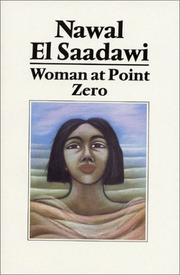 Nawal El Saadawi · 1975Woman at Point ZeroLvl 3Fast paced
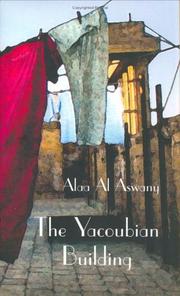 Alaa Al Aswany · 2002The Yacoubian BuildingLvl 4Fast paced
 Abdul Rahman Munif · 1984Cities of SaltLvl 6Slow burn
 Venedikt Yerofeev · 1970Moscow-PetushkiLvl 7Fast paced
 Raymond Queneau · 1959Zazie in the MetroLvl 5Fast paced