
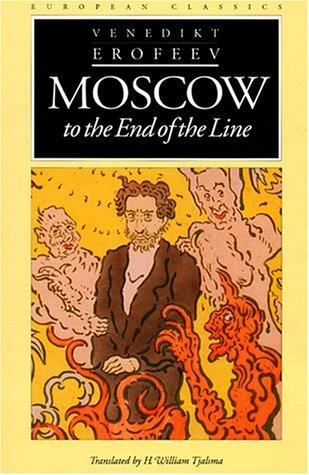
Moscow-Petushki
Venedikt Yerofeev · 1938–1990 · USSR
Originally Moskva-Petushki (Russian)
Why it matters
A hopeless drunk narrates a train journey toward his beloved that never quite arrives, mixing high philosophy with gutter comedy. Circulated for years only in samizdat, it became late Soviet life's defining absurdist monologue.
At a glance
A drunken, digressive, hallucinating narrator and dense literary parody complicate the simple journey.
Deep dive
A drunk intellectual narrates his train ride toward the woman he loves, mixing Hegel and gutter comedy with baroque cocktail recipes, while the stations keep slipping out of order around him.
Written for readers who have finished the book. No plot recap, and nothing here is safe to read first.
Themes & symbolism
Venichka's monologue — equal parts Scripture, Hegel, and recipes for cocktails built from shoe polish and cheap perfume — is the only surviving register of intellectual seriousness available under late Soviet stagnation, a society where direct political or moral speech has become impossible and irony has to carry the whole weight of dissent instead. Petushki, the hoped-for destination where his beloved and child wait, functions as a drunk's version of the Promised Land: the more devotedly Venichka drinks his way toward it, the further his grip on where he actually is dissolves, until it's unclear to the reader, and to him, whether he's still moving forward, has already passed the station, or never left Moscow at all.
Read as blasphemous-but-sincere religious allegory, Venichka's journey tracks a Passion: his suffering intensifies and his persecutors multiply as the book darkens, and his drunkenness, initially comic, curdles into something closer to martyrdom. The book's own history enacts its theme — written for years to travel only by samizdat, hand-copied and passed silently from reader to reader, it modeled exactly the kind of displaced, oblique truth-telling its narrator practices, because saying anything honest straight was never survivable, only saying it drunk, ironic, and half-deniable.
Yerofeev's own biography, expelled from multiple universities and institutes for his uncooperative temperament and eventually diagnosed with the throat cancer that would kill him not long after glasnost finally allowed the book's official publication, gives Venichka's doomed, digressive momentum a grim afterlife: a writer who spent most of his career unpublishable in his own country lived just long enough to see his single, era-defining book finally arrive in print. He never completed another work of comparable scale, and the novel's cult status in Russia today is inseparable from that sense of a single, irreplaceable testimony rather than one entry in a larger body of work. Statues and plaques marking Venichka's fictional route between Moscow and Petushki have since been installed along the real rail line, an odd civic honor for a novel that spends its whole length insisting the journey never actually arrives anywhere.
The last seal: what actually happens, and why it lands the way it does.
The ending, explained
The final chapters abandon comedy outright: Venichka, who can no longer say where or when he is, is chased through streets that may or may not be real Moscow by four silent men who read less like muggers than executioners, an avenging chorus with no comic register left in them. Cornered in a stairwell, his consciousness dissolves into blackness that the text refuses to specify as death, blackout, or something closer to a void the whole journey was always heading toward. The comic momentum that spent the whole book promising an arrival at Petushki collapses instead into this: no reunion, no redemptive station, just the narrator's own extinguishing, staged with the same deadpan precision as his cocktail recipes.
Where to go next
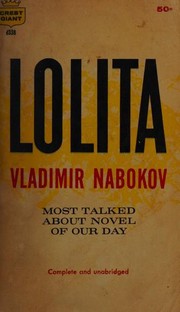 Vladimir Nabokov · 1955LolitaLvl 8Medium pace
 Yuri Olesha · 1927EnvyLvl 7Medium pace
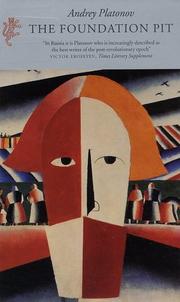 Andrei Platonov · 1930The Foundation PitLvl 8Slow burn
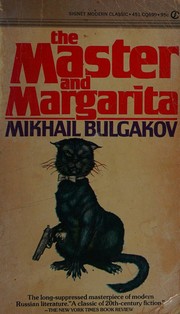 Mikhail Bulgakov · 1967The Master and MargaritaLvl 6Fast paced
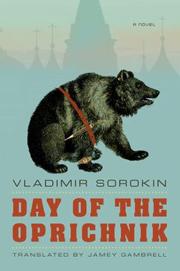 Vladimir Sorokin · 2006Day of the OprichnikLvl 5Fast paced
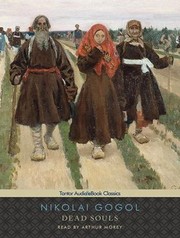 Nikolai Gogol · 1842Dead SoulsLvl 5Medium pace