
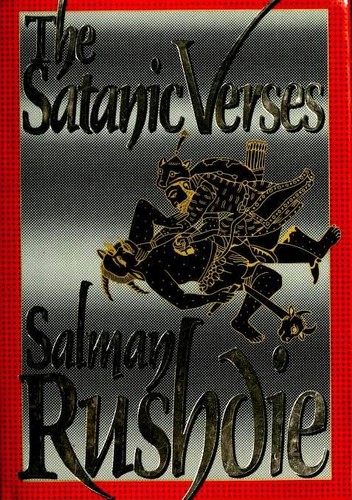
The Satanic Verses
Salman Rushdie · b. 1947 · India / England
Why it matters
Two men fall from an exploded jumbo jet and land as angel and devil: migration, faith, and doubt in delirious registers. The fatwa made it history; the novel beneath the noise remains his most daring.
At a glance
Dreamlike interpolated narratives, dense theological allusion, and constantly shifting registers.
Deep dive
Two actors survive an impossible fall from an exploding jet and wake up transforming into an angel and a devil, and how that premise lets Rushdie ask what migration actually does to a self.
Written for readers who have finished the book. No plot recap, and nothing here is safe to read first.
Themes & symbolism
Gibreel Farishta and Saladin Chamcha plunge from a hijacked, exploding jumbo jet over the English Channel and land, absurdly, alive on a British beach, one sprouting a halo, the other growing horns and hooves, and Rushdie uses the magical premise to literalize what he treats as migration's real psychic cost: Saladin has spent years disciplining himself into an acceptable, anglicized voice and persona, and his sudden physical demonization is the novel's blunt joke about how thoroughly Britain still reads a brown migrant as monstrous no matter how completely he's assimilated. Gibreel, a Bollywood star who has lost his faith, gets the opposite trajectory, transformed into an angel while sliding into a genuine, terrifying religious mania, since Rushdie treats sanctity and madness as much closer neighbors than either believers or skeptics tend to admit.
Threaded through Gibreel's breakdown are his own dreamed episodes of Mahound, a merchant-prophet in the city of Jahilia, including a retelling of the historical tradition in which the Prophet briefly recites verses endorsing three pagan goddesses before retracting them as a satanic temptation, a genuinely disputed episode from early Islamic historiography that Rushdie dramatizes rather than invents from nothing. What makes the novel's method distinctive is refusing to keep the sacred material safely quarantined in dream logic: it bleeds directly into Gibreel's waking collapse, so the reader experiences revelation and delusion through the same unstable narrator, unable to fully separate the novel's theology from its psychiatry.
A Tradition Rushdie Didn't Invent
The satanic verses episode comes from early Islamic historians including al-Tabari, who recorded and later largely discounted the account of Muhammad briefly reciting lines honoring three goddesses before Gabriel corrected him, and Rushdie's use of that contested tradition, filtered through a mentally unraveling character's dream rather than presented as historical claim, is exactly what much of the controversy that followed either missed or refused to accept as a meaningful distinction.
The Fatwa the Novel Outlived
Ayatollah Khomeini's 1989 fatwa calling for Rushdie's death, issued months after publication, sent Rushdie into hiding for close to a decade under police protection and led to violence against the book's translators and publishers worldwide, including the killing of its Japanese translator, Hitoshi Igarashi, consequences so far beyond any literary novel's usual reception that they've often overtaken discussion of the book itself, even as Rushdie continued publishing and, decades later, survived a near-fatal onstage attack still connected to the fatwa.
The last seal: what actually happens, and why it lands the way it does.
The ending, explained
Saladin's transformation reverses once his rage at his unfaithful wife and his estranged, dying father finally breaks into something closer to reconciliation, and he returns to Bombay to sit with his father through his final illness, his demonic features receding as the anger that seemed to fuel them drains away, a hopeful, if quiet, resolution for the character the novel treated most sympathetically throughout. Gibreel's arc ends far darker: his religious delusion and jealous obsession with the woman he loves, Allie Cone, curdle into violence against her and, finally, against himself. Rushdie sets the two men's opposite fates side by side deliberately, one migrant finding a way back to identity and family, the other consumed entirely by the same instability that made him briefly seem divine.
Where to go next
 Salman Rushdie · 1981Midnight's ChildrenLvl 8Medium pace
 Salman Rushdie · 1983ShameLvl 7Medium pace
 Salman Rushdie · 1990Haroun and the Sea of StoriesLvl 2Fast paced
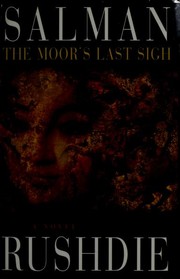 Salman Rushdie · 1995The Moor's Last SighLvl 7Medium pace
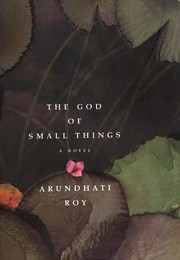 Arundhati Roy · 1997The God of Small ThingsLvl 7Slow burn
 Gabriel García Márquez · 1967One Hundred Years of SolitudeLvl 6Medium pace