
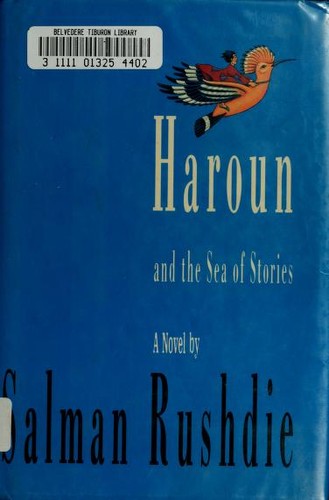
Haroun and the Sea of Stories
Salman Rushdie · b. 1947 · India / England
Why it matters
A boy sails to a moon of living stories to unstop his father's silenced voice, battling a villain bent on poisoning every tale into silence. Written the year after the fatwa, Rushdie's slyest defense of storytelling itself.
At a glance
A brisk, playful children's fable, though its free-speech allegory rewards adult readers too.
Deep dive
A professional storyteller loses his gift the day his wife leaves him, and his son sets off to fix a problem grown-ups usually just call real life.
Written for readers who have finished the book. No plot recap, and nothing here is safe to read first.
Themes & symbolism
Rashid Khalifa, known across his city as the Ocean of Notions for his gift of endless invented tales, goes silent the moment his wife Soraya leaves him for a joyless neighbor, and Rushdie treats the loss of a storyteller's voice as a literal plumbing failure: somewhere, the actual Ocean of the Streams of Story that feeds every tale ever told is being poisoned and dammed, and Haroun's quest to reach it and fix the supply is his father's silence made into a place a child can travel to and repair.
Khattam-Shud, whose name means roughly completely finished, rules the land of Chup in permanent darkness and silence, opposed across the moon Kahani by Gup, a land of ceaseless argument and democratic chatter under permanent daylight, and Rushdie, writing this in the years right after Ayatollah Khomeini's fatwa drove him into hiding, builds the whole geography as an argument for speech's plurality and noise against any single, silencing authority's claim to have the last word.
Haroun's own attention span, famously stuck at eleven seconds, a joke about a child unable to hold on to anything for long, turns out to be exactly the flaw the plot needs him to overcome: the quest asks him to hold his concentration, and his father's stories, for longer than he has ever managed, so that the fantastical journey is quietly also a story about growing the capacity to keep believing in something past the first difficulty.
Gup and Chup: A Cold War Fought in Talk and Silence
The moon Kahani is split between Gup's ceaseless democratic chatter and Chup's silence-worshipping rule under Khattam-Shud, and the novel's political charge comes from how literally it takes the metaphor: an army that talks too much fighting an army that has forgotten how to talk at all, with the Ocean of Stories itself as the territory both sides are really contesting.
A Telegram to a Son, Turned Into a Novel
The dedication, a poem structured like a telegram, addressed to Rushdie's own son Zafar, sets the tone for a book written explicitly to be read aloud to a child while working, at every turn, as a coded account of what censorship costs a storyteller and the family depending on him, so that Haroun's mission to save his father's voice reads, once you know the context, as Rushdie describing his own stakes without ever breaking the fairy tale's surface.
The last seal: what actually happens, and why it lands the way it does.
The ending, explained
Haroun's practical wish, granted in exchange for saving the Ocean, isn't for riches but for his own city to have happy endings again, and the novel obliges on every front at once: the Guppees free Princess Batcheat and destroy Khattam-Shud's army in Chup, Khattam-Shud himself is crushed under the weight of his own vanity statue, and the poisoned Ocean of the Streams of Story is repaired and set flowing again. Back in the human world, Rashid regains his storytelling voice at a rally for the corrupt politician Snooty Buttoo and uses it to expose him instead, getting Buttoo run out of town. Haroun and his father come home to find Soraya has returned, and it starts raining on the sad city for the first time in the novel, joy arriving as literal weather.
Where to go next
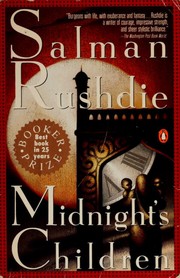 Salman Rushdie · 1981Midnight's ChildrenLvl 8Medium pace
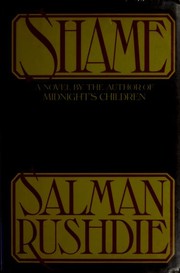 Salman Rushdie · 1983ShameLvl 7Medium pace
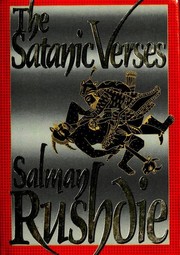 Salman Rushdie · 1988The Satanic VersesLvl 9Slow burn
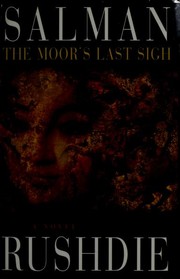 Salman Rushdie · 1995The Moor's Last SighLvl 7Medium pace
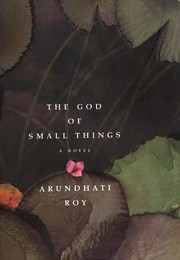 Arundhati Roy · 1997The God of Small ThingsLvl 7Slow burn
 Gabriel García Márquez · 1967One Hundred Years of SolitudeLvl 6Medium pace